PART 1
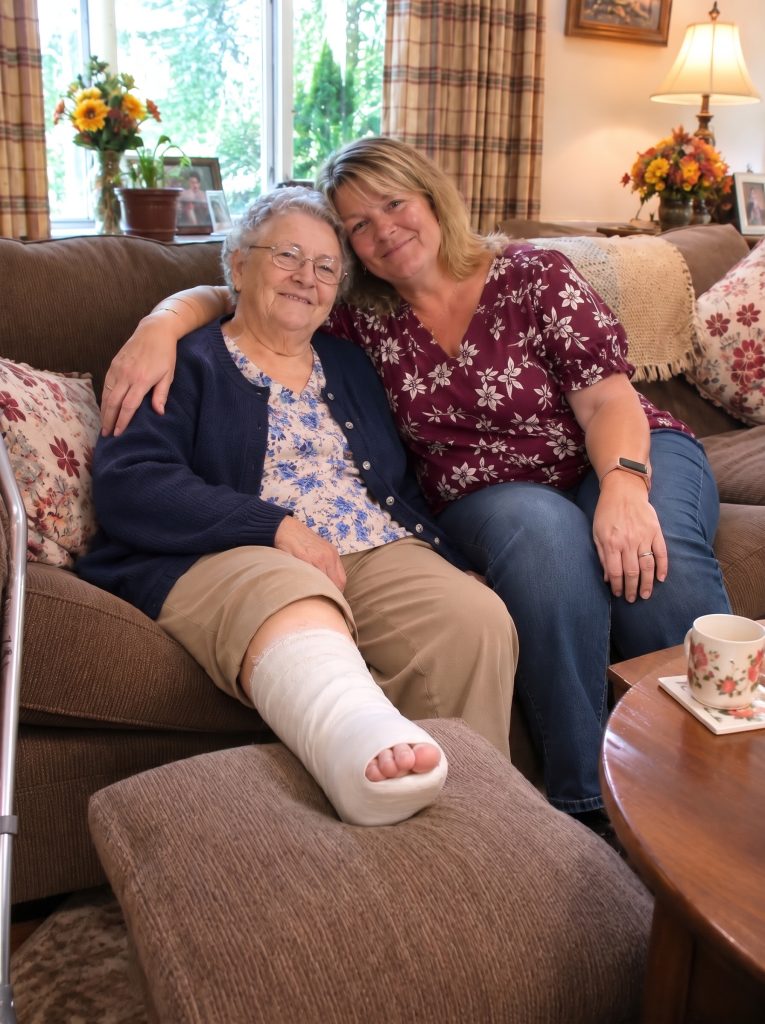
My ex-mother-in-law, Elora, had always treated me warmly, even after I divorced her son.
Five years earlier, I’d ended my marriage to Shane after learning he was cheating.
When Elora discovered what he’d done, she was furious.
“I can’t believe my own son treated you that way! You deserved a better husband.”
Naturally, she still cared about Shane. He was her child.
But she refused to excuse his betrayal, and that meant a lot to me.
We kept in touch afterward, sometimes chatting on the phone or getting coffee together.
I’d asked only that we avoid talking about Shane, and she honored that boundary.
Then one afternoon, Elora called in tears.
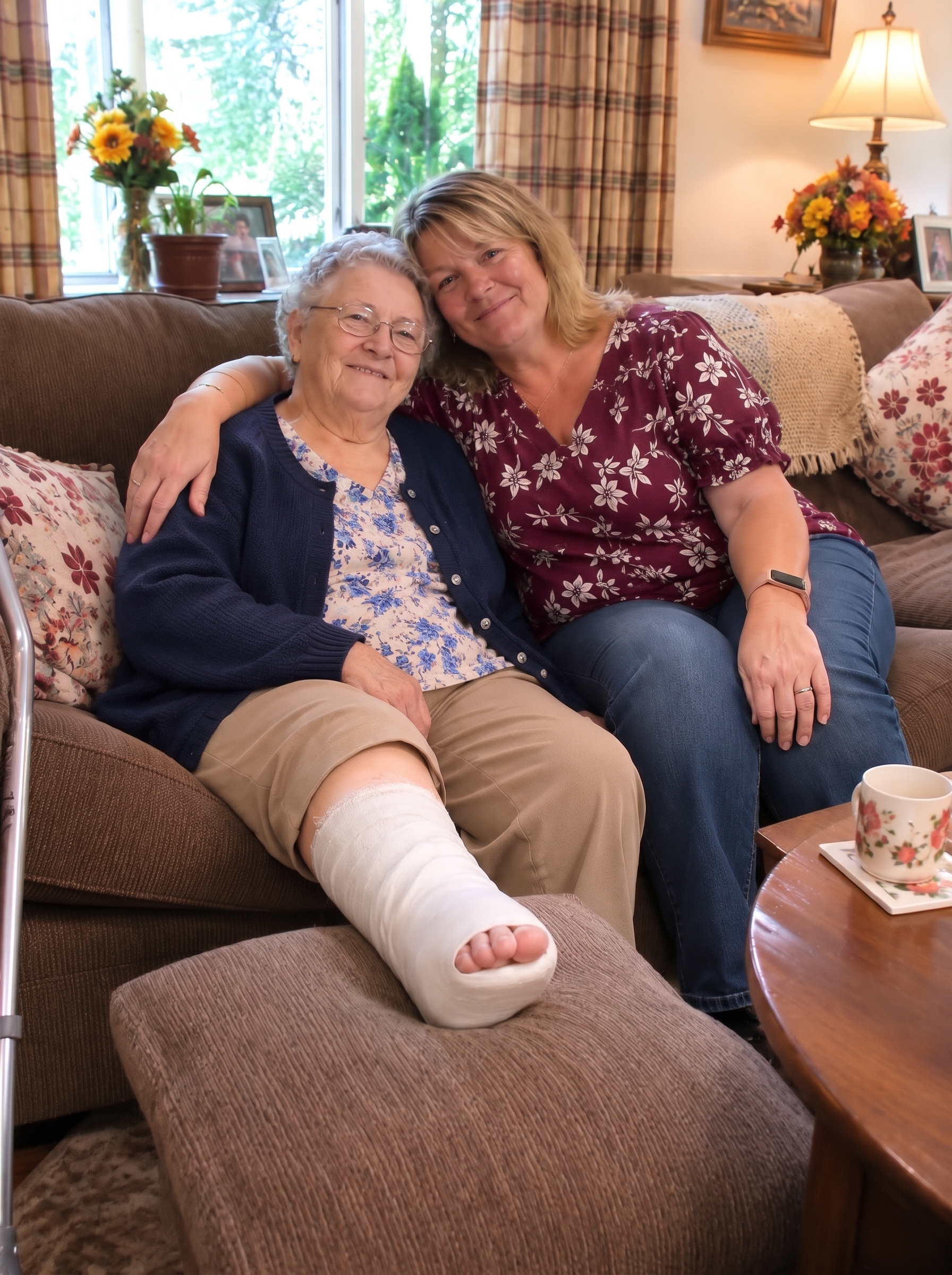
“Sweetheart, I hate troubling you, but I fractured my leg last week. I’m struggling to take care of myself.”
“Why didn’t you call sooner? Couldn’t your children stay with you?”
“I’ve spoken to all three, but each one has an excuse for why they can’t help.”
My heart went out to her.
“Come stay at my house until you’re able to manage again.”
“Oh, honey, I couldn’t impose on you like that.”
“You aren’t imposing. I’m inviting you.”
For the next four weeks, I prepared her meals, handled the housework, and took her to medical appointments.
But about two weeks into her visit, something began bothering me.
Elora frequently wanted to know when I’d be leaving the house.
And whenever I returned earlier than expected, she sometimes acted startled or uneasy.
I noticed it more than once.
Still, I convinced myself she was simply embarrassed about depending on someone else during her recovery.
Eventually, Elora was well enough to return home.
Before leaving, she wrapped her arms around me.
“You’ll never understand how much you’ve done for me.”
I hugged her back, assuming she was expressing her gratitude.
But only a few hours after she departed, my neighbor Patricia knocked on my door.
She was holding a worn shoebox.
Her expression was unusually serious.
“I hate having to tell you this,” Patricia said, “but there’s something about Elora you ought to know. You should look at what’s inside.”
I stared at the box.
“Patricia, what are you talking about?”
She stepped closer and spoke almost in a whisper.
“Elora had another reason for staying in your home. She planned the whole thing beforehand, and she was determined to keep you from discovering why.”
PART 2
I opened the shoebox with trembling hands.
Inside were photographs of my house, handwritten notes, and several receipts.
One photograph showed Elora standing beside Shane outside a lawyer’s office.
The date was three weeks before she called about her broken leg.
My stomach tightened.
“Patricia, where did you find this?”
“Elora asked me to keep it while she stayed here.”
“Why?”
“She said Shane must never discover it.”
I stared at the photographs.
“Then why are you giving it to me?”
Patricia’s eyes filled with tears.
“Because yesterday, I heard her arguing with him.”
I slowly unfolded a handwritten letter.
It contained detailed notes about my daily schedule.
My work hours.
My appointments.
Even the times I visited the grocery store.
A terrible suspicion settled over me.
“Was she spying on me?”
Patricia shook her head.
“Keep reading.”
Beneath the notes was a list of unfamiliar bank transfers.
Every payment had been made to a company owned by Shane.
Then I noticed the dates.
The transfers began shortly after our divorce.
“Elora was giving him money?”
“Not willingly,” Patricia whispered.
“Shane had been threatening her.”
I looked up sharply.
“With what?”
Patricia handed me another envelope.
Inside was a copy of a property agreement bearing my signature.
Except I had never signed it.
The document supposedly transferred my grandmother’s lakeside cottage to Shane.
My heart pounded.
“That’s impossible.”
“Elora discovered the forgery last month.”
I sank onto the sofa.
“Then why stay with me?”
“She wanted to find the original documents before Shane could destroy them.”
Suddenly, I remembered her frequent questions about my schedule.
She hadn’t been hiding from me.
She had been searching.
I hurried upstairs to my study.
Behind the bookshelf, an old filing cabinet stood slightly open.
Inside was a sealed envelope addressed to me.
Elora’s handwriting covered the front.
“My darling, please forgive my silence.”
I unfolded the letter.
She explained that Shane had threatened to ruin her financially if she exposed his deception.
But the final paragraph made my hands shake.
“I found evidence that Shane never acted alone.”
Beneath it was a photograph taken on our wedding day.
Shane stood beside my former attorney.
Both were smiling.
On the back, Elora had written five chilling words.
“Your divorce was planned beforehand.”
Then my phone rang.
It was Elora.
“Sweetheart,” she whispered, “please tell me you found the box before Shane did.”
My hands tightened around the phone. “Elora, what is this? What does it mean, my divorce was planned?”
A long, ragged breath came from the other end of the line. “Not the divorce itself, darling. Shane’s cheating was real, and your decision to leave him was entirely your own. But the way it happened, the timing, the attorney you hired, the settlement you accepted, none of that was accidental.”
“Tyler Brennan,” I said slowly, remembering my divorce attorney’s name, the one Shane had casually recommended when I’d been too devastated to research anyone myself. “He went to law school with Shane.”
“They’ve been close since college,” Elora confirmed. “Tyler made certain the settlement favored Shane in ways you never noticed, buried inside language that looked standard. The cottage was supposed to transfer to him eventually too, quietly, through that forged agreement, once enough time had passed that you wouldn’t think to question an old document resurfacing.”
“Why would you help me find this now?” I asked, my voice shaking. “Why not just tell me from the start, the day you arrived?”
“Because Shane told me he’d ruin my relationship with my grandchildren if I said anything directly,” Elora said, her voice breaking. “He controls access to his sister’s children too, through money, through guilt, through every manipulation he’s perfected over the years. I needed proof solid enough that you’d believe me without my having to risk everything just to make an accusation he could easily deny.”
“So you used me,” I said quietly. “You came here under false pretenses.”
“My leg was genuinely broken,” Elora said. “That part was never a lie. But yes, I also needed access to your house, to the study where I suspected Shane might have hidden something, because I remembered him mentioning once, years ago, that he kept ‘insurance documents’ somewhere he trusted you’d never think to look.”
I looked down at the photograph of Shane and my own divorce attorney smiling together outside that lawyer’s office, understanding, with dawning horror, exactly how deep this deception actually extended.
“Elora,” I said slowly, “I need you to tell me everything. Right now. Before Shane finds out what we know.”
Elora was quiet for a long moment, and I could hear her shift, as though settling more carefully into a chair, bracing herself for a conversation she’d clearly been dreading.
“It started almost a year before your divorce,” she finally said. “Shane came to me, frantic, saying he’d made a terrible mistake and needed help managing the fallout before you discovered it. I assumed he meant the affair. I didn’t understand, until much later, that he was also referring to money, debts he’d accumulated from a failed business venture he’d never told you about.”
“He never mentioned any business venture,” I said.
“Because it failed before you two had been married even two years,” Elora said. “He borrowed against assets that weren’t entirely his to borrow against, Tyler helped him structure loans in ways that obscured the real risk, and by the time the affair happened, Shane was already desperate to find some way out of the marriage that would let him walk away without you discovering the debt, or worse, without you being legally entitled to half of what remained once it surfaced.”
“So the affair wasn’t simply recklessness,” I said slowly, the pieces shifting into a considerably darker shape. “It was a way to force the divorce before the financial truth came out.”
“I believe so,” Elora said quietly. “I didn’t understand the full scope until months afterward, when Shane started pressuring me for money, first small amounts, then considerably larger ones, always with some excuse about needing to ‘protect the family’s reputation’ if I didn’t help him quietly manage what he called old complications.”
“And you paid him.”
“I paid him,” Elora admitted, shame heavy in her voice. “I told myself I was protecting you from further pain, protecting my grandchildren from watching their father’s reputation collapse publicly. I understand now I was simply protecting Shane from consequences he’d earned entirely himself, and I let that protection cost both of us considerably more than either of us should have paid.”
I sat with this for a long moment, the shoebox’s contents spread across my lap, understanding that the woman who had cared for me so gently these past four weeks had been carrying this particular, devastating knowledge the entire time, searching my house quietly while I was at work, terrified of a son she still somehow loved despite everything he’d done.
“I need the original documents,” I said finally. “If they exist, if they’re real, I need actual proof, not just your letter and some photographs.”
“I know,” Elora said. “That’s exactly why I came to stay with you in the first place. I believe the real documents are still hidden somewhere Shane doesn’t know I suspect. I just ran out of time before my leg healed enough to search properly.”
“Then we’re not finished,” I said, standing, the shoebox cradled carefully in my arms. “Elora, I need you to come back. Tonight if you can manage it. We’re going to find whatever’s left to find, together, before Shane realizes exactly how much we already know.”
“I’ll come,” Elora said, her voice steadier now, something resolved settling into it after the long months of carrying this alone. “But Rosalind, please, be careful what you say around anyone else before we understand exactly who else might be involved. If Tyler helped Shane once, I don’t know who else might still be protecting him.”
“I’ll be careful,” I promised. “I’m calling a cab for you now. I’ll have the door unlocked.”
After we hung up, I sat alone in my study for a long moment, the photograph of Shane and Tyler Brennan still resting in my palm, five years of carefully constructed grief about a simple, devastating affair reshaping itself into something considerably more calculated and cruel.
Patricia, who had remained quietly in the doorway throughout the entire phone call, finally spoke. “Will you be alright tonight? I can stay, if you’d like company while you wait for her.”
“I think I need to do this with just Elora,” I said. “But thank you, Patricia. For bringing this to me. I know it couldn’t have been an easy decision.”
“She asked me to protect you,” Patricia said simply. “I’ve known Elora for fifteen years. Whatever mistakes she made keeping silent, I believe she genuinely wanted to protect you in the end, even if her methods were considerably more complicated than either of us would have preferred.”
PART 4
The court order arrived five days later, Diane calling with evident satisfaction as she relayed the judge’s ruling. “We have authorization to access the box,” she said. “I’d like both of you present when we open it, along with a court-appointed observer to document everything properly.”
We met at the bank the following morning, a small, unremarkable building that gave no indication of the significance it was about to carry in unraveling five years of careful deception. A bank officer led us to the vault, Diane and a court clerk accompanying us, the particular formality of the moment settling heavily over all of us as the officer inserted the key and withdrew a long metal box.
“Would you like privacy to review the contents?” the officer asked.
“We’ll review here,” Diane said. “Everything needs to be documented as it’s found.”
The officer set the box on a small table, and Diane carefully lifted the lid, both Elora and I leaning forward despite ourselves.
Inside were considerably more documents than I’d anticipated. The original property transfer agreement, exactly as Elora had described, my signature forged with disturbing precision. A series of financial statements documenting Shane’s failed business venture, considerably more extensive than Elora’s account had suggested, debts totaling nearly four hundred thousand dollars. And beneath it all, a folder marked simply “insurance,” containing correspondence between Shane and Tyler Brennan spanning nearly two years.
Diane read through the correspondence carefully, her expression growing increasingly grim. “This is considerably worse than I initially suspected,” she said finally. “Tyler didn’t simply structure your settlement to favor Shane. He actively advised Shane on exactly how to conceal assets from you during discovery, violating his professional obligations to you as his client in catastrophic fashion.”
“Can we use this?” I asked.
“Absolutely,” Diane said. “This correspondence alone likely constitutes sufficient grounds for reopening your original settlement, pursuing malpractice action against Tyler, and potentially criminal fraud charges against both men, depending on how the district attorney’s office chooses to proceed.”
Elora, who had remained quiet throughout the review, finally spoke, her voice unsteady. “There’s a letter near the bottom. I recognize Shane’s handwriting.”
Diane carefully extracted the indicated document, and together we read it in silence, Shane’s words carrying a particular, chilling candor he’d clearly never intended anyone else to witness.
The business failed because I trusted the wrong investors, he’d written, apparently to himself or perhaps as some private confession never meant to be shared. Rosalind can never know. If she finds out before the divorce is final, she’ll be entitled to half of everything, including debts I can’t possibly cover. Tyler says if we move quickly enough, structure the settlement properly, she’ll walk away believing the affair was simply recklessness, never questioning the timing or the terms. I hate what I’m doing to her. But I hate the alternative more.
I sat with those words for a long moment, five years of carefully constructed grief finally revealing its true shape, not simply a husband’s recklessness, but a calculated, deliberate betrayal designed specifically to protect himself at my expense, dressed up afterward as simple infidelity because that particular lie was easier for me to eventually accept and move past.
“He knew exactly what he was doing,” I said quietly.
“He did,” Diane confirmed gently. “I’m sorry, Rosalind. I know this doesn’t make any of it easier to process, understanding the deliberate calculation behind what you believed was simply a painful but honest mistake.”
Elora reached for my hand, her own eyes bright with tears. “I’m so sorry,” she said. “I should have found the courage to tell you so much sooner.”
“We’re here now,” I said, echoing the words I’d offered her days earlier, understanding, with considerable effort, that dwelling on the delay served no genuine purpose beyond deepening wounds that already required considerable healing.
Diane carefully documented every item, the bank officer and court clerk witnessing the entire process, before sealing the evidence properly for whatever legal proceedings followed.
“What happens now?” I asked, as we finally left the bank, the weight of everything we’d discovered settling heavily over all three of us.
“Now,” Diane said, “we file formally. I’ll be requesting an emergency hearing to reopen your settlement, and I’ll be submitting this evidence to both the state bar association regarding Tyler’s conduct, and to the district attorney’s office regarding potential criminal fraud. I’d also recommend you prepare yourself for Shane to discover exactly what we’ve found, likely within days of our filing. He’ll need to be formally notified.”
“I understand,” I said, though understanding did little to settle the particular dread building in my chest at the thought of finally confronting Shane directly, after five years of believing I’d already processed and moved past whatever damage our marriage had caused.
As Diane drove off to begin the formal filing process, Elora and I stood together in the bank’s parking lot, the California sun bright and indifferent overhead, utterly unaware of the particular, devastating truth we’d just confirmed.
“I need to tell you something,” Elora said quietly. “Shane called again this morning, before we left for the bank. He sounded different. Worried, in a way I haven’t heard from him in years.”
“Do you think he suspects something?” I asked.
“I think,” Elora said carefully, “he’s beginning to understand that his careful silence is no longer entirely his to control.”
Three days later, exactly as Diane had warned, Shane called me directly for the first time in nearly a year, his number flashing across my phone screen with a particular, unwelcome familiarity that made my stomach tighten before I’d even answered.
“Rosalind,” he said, his voice carrying a careful, controlled calm that I recognized immediately as performance rather than genuine composure. “I think we need to talk.”
“Anything you need to say to me goes through my attorney now, Shane,” I said, keeping my own voice steady despite the adrenaline flooding through me.
“Please,” he said, something genuinely desperate breaking through his careful control. “Just five minutes. I know what you found. I know what my mother did. I just need you to understand the full context before this becomes something neither of us can take back.”
“The full context is already quite clear,” I said. “You forged my signature. You structured our divorce settlement specifically to hide debts you’d incurred without my knowledge. You pressured your own mother into paying you money for years to keep her silent about it. I don’t think there’s any additional context that changes what those facts actually mean.”
Shane was quiet for a long moment. “I was drowning, Rosalind. The business failure, the debts, I didn’t know how else to protect you from the fallout except by separating our finances as quickly and cleanly as possible.”
“You didn’t protect me,” I said, fury finally breaking through the careful composure I’d maintained throughout the call. “You deceived me. You let me believe, for five years, that our marriage ended because of simple infidelity, something painful but at least honest in its cruelty. Instead, it turns out you calculated the entire thing, down to timing the affair specifically to force a divorce before your financial recklessness could be discovered.”
“I never wanted to hurt you this badly,” Shane said quietly.
“But you did,” I said. “And now you’re going to answer for it, properly, through the legal system, rather than through another carefully constructed phone call designed to manage how badly this actually looks.”
I ended the call before he could respond further, my hands shaking despite my determined composure throughout the exchange. Elora, who had been sitting nearby during the entire conversation, reached for my hand once I’d set the phone down.
“How are you feeling?” she asked gently.
“Angry,” I admitted. “Considerably more angry than I expected, now that I’m actually speaking with him directly rather than simply processing the evidence secondhand.”
“That’s an entirely reasonable response,” Elora said. “I think, honestly, you’ve shown remarkable restraint throughout this entire process. I don’t think I could have managed speaking with him so calmly, given everything.”
“I don’t feel calm,” I admitted. “I feel like I’m barely holding myself together.”
“That’s allowed too,” Elora said gently. “You don’t have to perform composure for my benefit, Rosalind. You’re allowed to simply feel whatever this actually requires you to feel.”
I sat with her words for a moment, grateful for her genuine permission to finally release some of the careful control I’d maintained throughout the preceding difficult days, tears finally breaking through as the full weight of everything we’d uncovered settled completely over me.
Elora pulled me into a careful embrace, mindful of her still-healing leg, and we sat together in my living room for a long while, two women bound together by a betrayal neither of us had fully anticipated, slowly, painfully working through its considerable aftermath together.
PART 5
The emergency hearing to reopen my settlement took place three weeks later, Diane having spent the intervening time building an airtight presentation of evidence, forensic accountants tracing every hidden transaction, a handwriting expert confirming the forgery on the property transfer document, and formal complaints filed against Tyler Brennan with the state bar association.
I arrived at the courthouse with Elora beside me, her walking boot finally removed the week before, though she still carried a careful, deliberate limp that seemed, somehow, to match the particular weight both of us carried into that courtroom.
Shane arrived separately, accompanied by a new attorney, considerably less polished than Tyler Brennan, a sign, Diane noted quietly, that he understood exactly how compromised his previous representation had actually been.
“All rise.”
Judge Patricia Hollings presided, a sharp-eyed woman whose reputation, according to Diane, included considerable expertise in exactly this kind of complex financial fraud case.
“We’re here today,” Judge Hollings began, once the formalities concluded, “to review a motion to reopen a divorce settlement based on allegations of forged documentation and attorney misconduct constituting a severe conflict of interest. Ms. Castellanos, please proceed.”
Diane presented our case methodically, laying out the timeline from Shane’s failed business venture through the carefully structured settlement, the forged property document, and finally the correspondence discovered in the safety deposit box, Shane’s own words condemning him more thoroughly than any outside evidence could have managed.
Shane’s new attorney attempted various defenses, questioning the chain of custody for the shoebox’s contents, suggesting Elora’s testimony might be motivated by some undisclosed family grievance rather than genuine concern for justice. But the forensic evidence proved considerably too solid to meaningfully dispute, the forged signature’s authentication leaving little room for alternative explanation.
When Elora took the stand, her testimony carried a particular, devastating weight, a mother testifying against her own son, her voice occasionally breaking but never wavering from the truth she’d finally found the courage to speak plainly.
“I stayed silent for years,” she told the court, “because I was afraid, afraid of losing my relationship with my son, afraid of the consequences he threatened if I spoke honestly about what I’d discovered. I understand now that my silence allowed considerable additional harm to occur, harm I could have prevented if I’d found my courage sooner. I’m here today because I finally understood that protecting my son from consequences wasn’t actually love. It was simply fear, dressed up as devotion.”
The courtroom remained silent throughout her testimony, and I watched Shane’s expression shift from careful composure to something considerably more fractured as his mother’s words settled over the room.
When it was finally my turn to speak, I found myself surprisingly steady, five years of carefully processed grief transforming, in that moment, into something considerably more like clarity.
“I spent five years believing my marriage ended because of simple infidelity,” I told the court. “Painful, but at least honest in its cruelty. I’ve since learned that what actually happened was calculated, deliberate, designed specifically to protect my former husband from financial consequences he’d earned entirely through his own reckless decisions. I’m not here today seeking revenge. I’m here seeking the truth to finally be formally acknowledged, and for the settlement I accepted under false pretenses to be properly corrected.”
Judge Hollings listened to the remaining testimony and arguments with careful attention before finally delivering her ruling two days later, a formal written decision that granted our motion in full, voiding the fraudulent property document, ordering a complete reassessment of the original settlement to account for the concealed debts and assets, and referring both Shane and Tyler Brennan for separate criminal investigation regarding the forgery and conspiracy allegations.
“This is a significant victory,” Diane told me, once we’d received the official ruling. “Considerably more comprehensive than I initially hoped for, given the complexity of what we were alleging.”
I felt the particular, complicated relief of genuine vindication, five years of quiet, unknowing grief finally receiving formal, legal acknowledgment of exactly how deliberately it had been constructed.
Elora, sitting beside me as we reviewed the ruling together, reached for my hand. “I know this doesn’t undo what happened,” she said quietly. “But I hope it helps, at least, knowing the truth is finally properly documented.”
“It helps considerably,” I said honestly. “More than I think I properly understood it would, until I actually heard Judge Hollings read that ruling aloud.”
That evening, as Elora prepared to finally return to her own home, her leg fully healed, the legal proceedings finally reaching their formal conclusion, she paused at my door, something uncertain in her expression.
“I don’t know what happens now,” she said. “Between us, I mean. I understand if you need distance, after everything.”
I considered her question carefully, weighing the complicated grief of everything she’d kept from me against the genuine courage she’d ultimately demonstrated in finally bringing the truth forward, regardless of what it cost her relationship with her own son.
“I don’t want distance,” I said finally. “I want honesty, going forward. That’s all I’m asking, Elora. Whatever comes next, between us, between you and Shane, I just need to know you’ll choose truth over protecting people from consequences they’ve actually earned.”
“I promise,” Elora said, tears gathering in her eyes. “I learned that lesson considerably more thoroughly than I ever wanted to, these past several weeks.”
We embraced at the doorway, the particular, hard-won understanding between us considerably different now than the careful, surface-level warmth that had once defined our relationship, replaced instead by something built on genuine, difficult honesty.
Over the following weeks, as the criminal investigation proceeded alongside the formal settlement reassessment, I found myself navigating an unexpected flood of attention, several of my own friends and colleagues having heard fragments of the story through local legal circles, Diane’s handling of the case apparently drawing considerable professional notice given the severity of the attorney misconduct involved.
“I keep getting asked how I’m handling all of this,” I told Diane, during one of our regular check-ins. “I’m not entirely certain how to answer that honestly.”
“There’s no single correct way to handle something like this,” Diane said. “Give yourself permission to feel whatever comes up, whenever it comes up. These cases rarely resolve cleanly just because the legal proceedings reach a formal conclusion.”
She proved correct. Some days, I felt genuine, settled relief, grateful for the truth finally surfacing after years of unknowing grief. Other days, fresh anger would surface unexpectedly, triggered by something as simple as passing the lakeside cottage during a drive, now formally restored to my ownership, understanding how close I’d come to losing it entirely through Shane’s careful deception.
Patricia, my neighbor, checked in regularly throughout this period, the particular bond we’d formed through her initial, courageous decision to bring me that shoebox deepening into genuine friendship.
“I keep thinking about that day,” she told me, during one such visit. “Wondering if I made the right choice, bringing you something that upended your entire understanding of your own marriage.”
“You made exactly the right choice,” I said firmly. “I’d rather know the painful truth than continue living inside a comfortable lie, however difficult the reckoning has proven.”
“I’m glad you feel that way,” Patricia said. “I worried, honestly, that I’d simply caused you additional pain without actually helping.”
“You gave me the chance to finally understand what actually happened to me,” I said. “That matters considerably more than simple comfort would have.”
The criminal investigation concluded nearly four months later, Tyler Brennan accepting a plea agreement that included disbarment and restitution, while Shane faced considerably more serious charges, ultimately convicted of fraud and forgery, receiving a sentence that included both prison time and substantial financial penalties.
I attended his sentencing, understanding the particular significance of witnessing this final, formal conclusion to a deception that had shaped five years of my life without my knowledge. Shane looked diminished in the courtroom, considerably different from the confident, charming man I’d once married, his earlier careful composure entirely collapsed under the weight of consequences he’d spent years trying desperately to avoid.
Elora sat beside me during the proceeding, her own grief complicated and genuine, watching her son face the consequences she’d ultimately helped bring about, however painful that particular reckoning proved for both of us.
“I never wanted this for him,” she whispered, as the judge read the final sentence.
“I know,” I said quietly, reaching for her hand. “But Elora, this isn’t something either of us did to him. This is simply the truth, finally, properly accounted for.”
She nodded slowly, tears streaming silently down her face, and together we sat in that courtroom, two women bound by a betrayal that had reshaped both our lives, finally witnessing its difficult, necessary conclusion.
PART 6
Six months after Shane’s sentencing, I found myself slowly rebuilding a sense of normalcy, the lakeside cottage now fully restored to my name, the settlement reassessment finally concluded with a financial correction that, while it could never fully compensate for five years of unknowing deception, at least properly acknowledged the genuine harm I’d experienced.
Elora and I continued seeing each other regularly, our relationship having transformed considerably from its earlier, careful warmth into something built on genuine, hard-won honesty. She visited the cottage with me one weekend that spring, both of us sitting together on the small dock overlooking the lake my grandmother had once loved so dearly.
“I used to bring Shane here, when he was young,” Elora said quietly, watching the afternoon light play across the water’s surface. “Before everything became so complicated. I keep trying to understand where exactly things went wrong, how the boy who used to love fishing off this very dock became someone capable of what he eventually did.”
“I don’t know if there’s a single answer to that,” I said. “People make choices, cumulative small decisions that eventually build into something considerably larger than any single moment could predict.”
“I think about my own choices too,” Elora admitted. “Every time I paid him quietly, every time I told myself I was protecting the family rather than simply enabling his deception to continue. I wonder how different things might have been if I’d found my courage sooner.”
“We can’t know that,” I said gently. “We can only decide what to build from where we actually are now.”
Elora nodded slowly, something settling in her expression, not quite peace, but perhaps its steady, patient beginning.
That same spring, I began dating again for the first time since my divorce, a gradual, careful process that felt, in many ways, like learning an entirely new language after years of believing I already understood every necessary vocabulary. Diane, who had become something like a genuine friend throughout the preceding months of legal proceedings, encouraged this cautious reentry into romantic possibility.
“You deserve genuine happiness,” she told me, during one of our now-regular lunches. “Not performed happiness built on careful deception, the way your marriage to Shane apparently was. Real happiness, built on honesty from the very beginning.”
I met Marcus through a mutual friend that summer, a quiet, thoughtful architect whose steady, consistent presence carried none of Shane’s practiced charm, replaced instead by something considerably more genuine and reliable. Our relationship developed slowly, deliberately, both of us navigating the particular caution that past betrayal inevitably instills.
“I need you to understand something,” I told him, during one of our early conversations, feeling it important to be direct about exactly what I’d survived. “I spent five years believing a lie about my own marriage. I don’t think I can build anything new without complete honesty from the very beginning.”
“I understand completely,” Marcus said. “I’d rather know difficult truths upfront than discover convenient lies later. That’s not a standard I find burdensome, Rosalind. It’s simply how genuine relationships should operate.”
His answer, simple and genuine, carried exactly the kind of reassurance I needed, and over the following months, our relationship deepened into something I’d genuinely believed, after everything with Shane, might never prove possible again: trust, built carefully and deliberately on honest foundation rather than convenient performance.
Elora met Marcus that autumn, during a quiet dinner at my house, the same dining room where she’d once eaten countless meals during her recovery, carrying her particular, hidden secret throughout those entire four weeks.
“He seems like a genuinely good man,” Elora told me, after Marcus had left for the evening. “Considerably different from Shane, in all the ways that actually matter.”
“I think so too,” I said, smiling.
“I’m happy for you,” Elora said, something genuine and warm in her expression. “You deserve this, Rosalind. Genuine happiness, built on actual honesty.”
As autumn deepened into winter, I found myself reflecting often on the particular, improbable journey that had carried me from that terrible phone call about Elora’s broken leg, through the shoebox’s devastating revelations, through months of difficult legal proceedings, toward this considerably more peaceful, honest chapter of my life.
The betrayal had cost me considerably, financially and emotionally, five years of grief reshaped entirely by understanding exactly how deliberately it had been constructed. But from that devastating cost had also grown something unexpectedly valuable: a relationship with Elora built on genuine honesty rather than careful performance, a renewed appreciation for my grandmother’s cottage, properly restored to my name, and the particular, hard-won courage to eventually trust again, carefully and deliberately, with someone who valued truth as thoroughly as I’d learned to demand it.
Patricia continued visiting regularly throughout this period as well, our friendship having grown considerably beyond simple neighborly acquaintance into something built on the particular, significant bond of having navigated genuine crisis together.
“I never expected my little shoebox delivery to lead to all of this,” she said one afternoon, settled comfortably in my kitchen while I prepared tea. “A proper legal reckoning, a new relationship, even Elora finally finding her own kind of peace.”
“None of us expected it,” I agreed. “I think that’s often how genuine change actually works. Not through careful planning, but through someone finally finding the courage to speak an inconvenient truth, regardless of how much easier silence might have seemed.”
“Do you ever think about what would have happened if I hadn’t brought you that box?” Patricia asked. “If Elora had simply kept it hidden forever?”
I considered the question seriously, turning it over the way I had many times across the preceding months. “I think about it sometimes,” I admitted. “I think, eventually, something would have surfaced regardless. Shane’s debts, the forged document, eventually someone would have noticed something that didn’t add up. But I’m grateful it happened this way, honestly. Grateful Elora found her courage, grateful you trusted me enough to deliver that box, however difficult the message it carried.”
That winter, Elora invited me to spend Christmas with her, a gesture that carried particular significance given everything we’d navigated together across the preceding year. I arrived at her modest home carrying a small gift, uncertain exactly how the day might unfold given the particular, complicated history now woven permanently between us.
“I wasn’t certain you’d actually come,” Elora admitted, as she welcomed me inside, her home decorated simply but warmly for the holiday.
“I wanted to,” I said honestly. “I think, despite everything, you’ve become genuinely important to me, Elora. Not simply as my former mother-in-law. As someone who ultimately chose truth, however late, over continued protection of someone who’d earned considerably worse.”
Tears gathered in her eyes. “That means more than I know how to properly express.”
We spent the day together quietly, sharing a simple meal, exchanging small gifts, the particular, hard-won warmth between us carrying none of the careful performance that had once characterized even our friendliest interactions during my marriage to Shane.
“I received a letter from him,” Elora mentioned, partway through the afternoon, her tone careful. “From prison. He’s asking to see me.”
“How do you feel about that?” I asked.
“Uncertain,” Elora admitted. “I love him, despite everything. He’s still my son. But I don’t know if I’m ready to see him yet, not until I understand whether he’s genuinely reckoning with what he did, or simply looking for continued protection and sympathy.”
“That’s a reasonable uncertainty to sit with,” I said. “You don’t owe him immediate forgiveness, Elora, regardless of your love for him. You’re allowed to take whatever time you genuinely need.”
“Thank you,” she said softly. “For understanding that, even though you have every reason to want nothing further to do with him at all.”
“I don’t need anything further from Shane,” I said. “My own reckoning with him concluded in that courtroom. But I understand your relationship with him is considerably more complicated than mine ever was, bound by blood rather than simply marriage. You’re allowed to navigate that complexity on your own timeline.”
As the evening settled over Elora’s small home, the particular, hard-won peace of genuine reconciliation between us firmly established, I found myself grateful for the unlikely, difficult path that had carried us to this moment, two women bound together not by the marriage that had originally connected us, but by the genuine, painful truth we’d uncovered together, and the considerable courage it had taken both of us to finally, properly face it.
Marcus joined us for dessert that evening, Elora’s genuine warmth toward him confirming what I’d already begun to believe: that whatever remained ahead, I was building it now on considerably more solid ground than anything Shane’s careful deception had ever actually provided, grounded finally and completely in honesty rather than convenient, comfortable lies.
PART 7
Spring arrived with its own unexpected developments, Elora finally deciding, after months of careful consideration, to visit Shane at the correctional facility where he was serving his sentence. She told me about the visit afterward, sitting together on my porch as the afternoon light softened toward evening.
“He’s different,” she said slowly. “Quieter. I don’t know if that’s genuine reflection or simply the particular effect of confinement, but he seemed, for the first time in longer than I can remember, genuinely sorry rather than simply sorry he’d been caught.”
“What did he say?” I asked.
“He asked about you,” Elora admitted. “Whether you were doing well. I told him about Marcus, about the cottage, about everything we’d rebuilt together these past months. He cried, actually, which surprised me. I haven’t seen Shane cry since he was a boy.”
“Do you believe his remorse is genuine?” I asked.
“I want to,” Elora said honestly. “I don’t know yet if wanting to believe it is the same as actually trusting it completely. I think I need more time, more visits, more evidence of genuine change before I’ll know for certain.”
“That seems wise,” I said.
“He asked if I thought you might ever be willing to see him,” Elora said carefully. “Not for reconciliation. Just to hear, directly from him, how genuinely sorry he is for everything.”
I considered this request seriously, understanding the particular complexity of what Elora was actually asking on her son’s behalf. “I don’t think I’m ready for that,” I said finally. “I don’t know if I’ll ever be ready, honestly. My healing doesn’t require his apology, Elora. I’ve already found considerable peace without it.”
“I understand completely,” Elora said. “I didn’t want to simply relay the request without also making clear that you’re under no obligation to grant it.”
“Thank you for understanding that,” I said.
That same spring, Marcus proposed, a quiet, genuine moment during a weekend trip to the lakeside cottage, kneeling on the same dock where Elora and I had once discussed her own complicated grief about Shane’s choices.
“I know this comes with its own particular history,” Marcus said, holding a simple ring that carried none of the elaborate performance Shane had once brought to our own engagement years earlier. “I’m not asking you to forget any of it. I’m simply asking if you’d be willing to build something new with me, grounded entirely in exactly the honesty you deserve.”
“Yes,” I said, without hesitation, understanding, with genuine certainty, that this particular commitment carried none of the careful deception that had once defined my understanding of marriage.
We married that autumn, a small, intimate ceremony at the cottage, Elora present among the gathered guests, her joy genuine and unguarded as she watched me exchange vows with a man who had never once given me reason to doubt his honesty.
“Your grandmother would be proud,” Elora told me, during the small reception that followed. “Watching you build this, after everything you survived.”
“I think she would be,” I agreed, grateful for Elora’s continued presence in my life, understanding exactly how significant it was that the woman who had once unknowingly participated in Shane’s deception now stood genuinely, joyfully present for this entirely different, considerably more honest chapter.
Patricia attended as well, having become something like genuine family throughout the preceding two years, her courageous decision to deliver that shoebox having set into motion everything that had eventually led to this particular, joyful afternoon.
“I keep thinking about that day,” she told me, during a quiet moment at the reception. “How frightened I was, bringing you something I knew would shatter everything you believed about your own marriage.”
“I’m endlessly grateful you found that courage,” I said, embracing her warmly. “Whatever pain the truth initially caused, it led me here, eventually. To genuine happiness, built on actual honesty rather than careful performance.”
As the reception continued into evening, string lights glowing softly across the cottage’s familiar dock, I found myself reflecting on the particular, remarkable journey that had carried me from that devastating shoebox to this moment of genuine, hard-won joy.
Shane’s deception had cost me considerably, five years of unknowing grief reshaped entirely by understanding its deliberate construction. But from that devastating cost had grown something I’d genuinely believed, during those darkest early weeks of discovery, might never prove possible: genuine love, built on honesty from its very foundation, a renewed relationship with Elora grounded in truth rather than careful silence, and the particular, hard-won confidence that I could trust again, completely and genuinely, with someone who valued exactly the honesty I’d learned, through considerable pain, to demand as an absolute requirement rather than a hopeful wish.
Diane attended the wedding as well, having become, over the preceding two years, considerably more than simply my legal representation, her steady guidance throughout the entire ordeal having evolved into genuine friendship.
“I don’t normally attend my clients’ weddings,” she told me, laughing, as we shared a dance during the reception. “You’re a special exception, Rosalind. I don’t think I’ve ever watched a case resolve into something quite this genuinely hopeful.”
“I couldn’t have gotten here without you,” I said honestly. “Your thoroughness, your patience through every difficult step of the proceedings. I’m endlessly grateful.”
“You did the hardest part yourself,” Diane said. “Choosing to pursue the truth, however painful, rather than simply accepting whatever comfortable silence might have seemed easier in the moment. That took considerable courage, Rosalind, courage I don’t think everyone in your position would have found.”
As the evening deepened, Marcus found me near the dock’s edge, the lake’s surface catching the last light of sunset in brilliant oranges and purples.
“Happy?” he asked, pulling me close.
“Completely,” I said, meaning it fully. “I don’t think I properly understood what genuine happiness actually felt like until building this with you.”
“I’m grateful you were willing to trust again,” Marcus said quietly. “After everything you survived. I understand what considerable courage that required.”
“You made it easier,” I said. “Every single day, choosing honesty, even when it would have been simpler to withhold something difficult. That’s exactly what taught me trust was possible again.”
We stood together for a while longer, watching the sunset fade fully into evening, the particular, hard-won peace of genuine partnership settling comfortably around us.
Later that night, after most guests had departed, Elora found me alone near the cottage’s small garden, her expression carrying something gentle and reflective.
“I wanted to give you something,” she said, producing a small, carefully wrapped package. “Before I head home tonight.”
I opened it carefully, finding inside an old photograph, considerably older than any of the evidence we’d uncovered together, showing my grandmother standing on this exact dock decades earlier, smiling broadly at whoever held the camera.
“Where did you find this?” I asked, genuinely moved.
“Your grandmother and I were actually friends, years ago, before you and Shane ever met,” Elora said. “I found it going through old boxes recently, and I thought, given everything this cottage has come to represent for you, you might want it properly restored to its rightful place.”
Tears gathered in my eyes as I studied the photograph, genuine joy evident in my grandmother’s smile, utterly unaware of everything her eventual granddaughter would someday need to overcome to properly reclaim this particular, cherished place.
“Thank you,” I said softly, embracing Elora warmly. “For this, and for everything else these past two years. I don’t think I could have survived any of it without your courage, however delayed.”
“Thank you for extending me the grace to finally earn back some measure of your trust,” Elora said. “I don’t take that grace lightly, Rosalind. Not for a single day.”
As she finally departed for the evening, Marcus joined me again near the garden, both of us looking out at the darkened lake, the particular, hard-won peace of this entire journey settling completely over me.
“What are you thinking about?” Marcus asked.
“Everything that led us here,” I said. “The shoebox, the courtroom, every difficult step along the way. I think, strange as it sounds, I’m genuinely grateful for all of it, even the painful parts. Without that journey, I don’t think I’d have ever found my way to exactly this moment, with you, with Elora’s genuine friendship, with my grandmother’s cottage properly restored.”
“Sometimes the most difficult paths lead exactly where we’re meant to be,” Marcus said, pulling me close.
“I think you’re right,” I said softly, resting my head against his shoulder as the stars emerged fully across the night sky above the lake that had witnessed so much of my own difficult, ultimately triumphant journey toward genuine happiness.
PART 8
Two years into my marriage with Marcus, I received an unexpected call from Elora, her voice carrying a particular, careful urgency I hadn’t heard from her since the earliest days of the entire ordeal.
“Shane’s being released early,” she said. “Good behavior, apparently, combined with some program credits. He’s asking to see both of us, properly, once he’s settled somewhere stable.”
I sat with this news for a long moment, understanding the particular, complicated weight of a reckoning I’d believed, in many ways, already concluded.
“How do you feel about it?” I asked.
“Uncertain,” Elora admitted. “I’ve visited him regularly these past two years. I believe his remorse has become genuine, not simply performance designed to secure early release. But I understand if you’re not ready to extend him that same consideration.”
“I need time to think,” I said honestly. “This isn’t something I can decide immediately.”
I discussed it carefully with Marcus that evening, both of us turning the request over from every angle, weighing my own hard-won peace against whatever genuine closure a direct conversation with Shane might eventually provide.
“You don’t owe him anything,” Marcus said gently. “Your healing doesn’t require his participation, Rosalind. You’ve already built genuine peace without it.”
“I know,” I said. “But I keep wondering if there’s something valuable in hearing directly from him, rather than simply through Elora’s careful relay of his apparent remorse. Not for his benefit. For mine, perhaps, some final piece of closure I haven’t yet fully claimed.”
“Then do what feels right for you,” Marcus said. “Whatever that is, I’ll support it completely.”
I agreed, eventually, to a single meeting, carefully arranged through Diane’s continued legal guidance, meeting Shane at a quiet restaurant rather than anywhere carrying particular emotional weight from our shared history.
He looked considerably different from the man I’d once married, thinner, grayer, his earlier careful charm entirely absent, replaced by something considerably more subdued and genuine.
“Thank you for agreeing to this,” he said, as I settled across from him, Diane waiting discreetly at a nearby table in case I needed her support.
“I’m here,” I said simply. “Say what you need to say.”
Shane was quiet for a long moment, visibly gathering courage for whatever he’d prepared across what I suspected had been months of careful consideration.
“I’ve had considerable time to understand exactly what I did,” he said finally. “Not just the forgery, the fraud, though those matter enormously. The fundamental betrayal of letting you believe, for five years, that our marriage ended because of simple recklessness, rather than calculated deception designed specifically to protect myself at your expense. I don’t expect forgiveness, Rosalind. I don’t think I’ve earned it, and I’m not certain I ever will. I simply needed you to hear, directly from me, that I understand completely how profound the harm I caused actually was.”
I studied him carefully, searching for the particular manipulation I’d once been so skilled at missing, finding instead something that read, genuinely, as hard-won accountability.
“Thank you for saying that,” I said. “I don’t know if I’ll ever fully forgive what happened. But I appreciate you finally offering genuine acknowledgment, rather than continued excuse.”
“I understand completely,” Shane said. “I just needed you to know, whatever you decide to do with this conversation, that my remorse is genuine, not simply another careful performance.”
We talked for perhaps twenty more minutes, Shane asking carefully about my life, genuinely pleased to hear about Marcus, about the cottage’s proper restoration, about the particular peace I’d built across the preceding two years.
“I’m glad you found genuine happiness,” he said, as our conversation drew toward its conclusion. “You deserve that, considerably more than what I actually gave you.”
“Thank you,” I said simply, and found, standing to leave, that I genuinely meant the gratitude, understanding that this particular conversation had offered something valuable, not forgiveness exactly, but perhaps its distant, careful beginning.
Diane joined me as I left the restaurant, her expression carefully neutral. “How are you feeling?”
“Lighter,” I said, surprising myself with the honesty of the answer. “Not forgiving, exactly. But lighter, somehow, having heard him finally acknowledge everything directly.”
“That’s a significant step,” Diane said. “Whatever comes next with your relationship to him, if anything, you faced this on your own terms, exactly as you’ve faced everything else throughout this entire journey.”
I drove home that evening, processing the particular, complicated weight of that final conversation, understanding that whatever remained ahead, I had finally, completely closed the chapter that had once defined five years of unknowing grief, replacing it with considerably more honest, if still complicated, understanding of exactly what had actually happened, and exactly how thoroughly I’d managed to rebuild something genuine from its devastating wreckage.
Marcus was waiting when I arrived home, concern evident in his expression as he studied my face for signs of how the meeting had actually gone.
“How was it?” he asked carefully.
“Difficult,” I admitted, settling beside him on our porch. “But valuable, I think. He finally offered genuine acknowledgment, rather than excuse. I don’t know if that fully resolves everything, but it felt like something important, regardless.”
“I’m proud of you,” Marcus said, pulling me close. “For having the courage to face that conversation, on your own terms, exactly when you were ready for it.”
“I couldn’t have done it without the foundation we’ve built together,” I said. “Knowing I had somewhere genuinely safe to return to afterward, regardless of how the conversation unfolded.”
We sat together for a while longer, the evening settling comfortably around us, before I finally called Elora to share how the meeting had gone.
“I’m grateful you were willing to see him,” she said, once I’d relayed the conversation’s substance. “I know that couldn’t have been easy, regardless of how it ultimately unfolded.”
“It wasn’t easy,” I agreed. “But I think it mattered, Elora. Not for reconciliation, necessarily. Just for genuine closure, finally fully claimed rather than simply assumed.”
“I understand completely,” Elora said. “Thank you, Rosalind. For everything you’ve extended me these past two years, grace I know I didn’t necessarily deserve given how long I stayed silent.”
“We’ve both grown considerably since that first terrible phone call about your broken leg,” I said. “I think that growth matters more than dwelling on exactly how difficult the beginning actually was.”
In the months that followed, Shane settled into a modest apartment across town, maintaining careful, respectful distance from my own life while gradually rebuilding a relationship with Elora, their visits growing more frequent as genuine trust slowly, carefully reestablished itself between mother and son.
I didn’t see him again directly, understanding that our single conversation had provided exactly the closure I’d needed, without requiring any ongoing relationship beyond that particular, significant exchange. Elora would occasionally share updates, Shane finding steady work, attending mandatory financial counseling as part of his release conditions, slowly building something considerably more honest than the careful performance that had once defined his entire approach to both his marriage and his relationship with his own mother.
“He asks about you sometimes,” Elora mentioned, during one of our regular visits nearly a year after that final restaurant conversation. “Not expecting contact. Just genuinely curious whether you’re continuing to find happiness.”
“Tell him I am,” I said. “Genuinely, completely happy, built on exactly the honesty he once stole from me.”
Elora smiled, something warm and genuinely peaceful settling into her expression. “I’ll tell him,” she said. “I think that answer will mean more to him than any direct conversation ever could.”
As our own relationship continued deepening across that third year, Elora becoming something considerably closer to genuine family than the careful, performed warmth that had once defined our connection during my marriage to her son, I found myself reflecting often on the particular, remarkable distance we’d traveled together.
A shoebox delivered by a frightened but courageous neighbor. A devastating revelation about calculated deception disguised as simple heartbreak. Months of difficult legal proceedings, finally concluding in genuine, formal vindication. And now, years later, a relationship with my former mother-in-law built on considerably more honest foundation than anything that had existed before, alongside a marriage to Marcus grounded entirely in exactly the trust I’d once believed might never prove possible again.
Whatever remained ahead, I understood completely, I had already accomplished the most essential thing of all: transforming a devastating betrayal into genuine, hard-won wisdom about exactly what honesty actually required, and exactly how much more valuable genuine truth proved, however painful its arrival, compared to any comfortable, convenient lie.
I nodded, understanding the particular, difficult truth in that assessment, grief and gratitude tangling together as I prepared for whatever difficult night still lay ahead.
PART 3
Elora arrived just after nine that evening, her cab pulling carefully into my driveway as she maneuvered her walking boot down the front steps with the particular, determined caution of someone who had already decided the pain in her leg mattered less than the urgency of what waited inside.
“Thank you for coming back so quickly,” I said, helping her settle onto the couch, the same spot where she’d rested for most of the preceding four weeks.
“I should have told you everything from the beginning,” Elora said, her eyes tired and red. “I convinced myself I was protecting you by staying quiet until I had proof solid enough to matter. I think, looking back, I was also protecting myself from having to watch your face while I admitted exactly how much I’d allowed to happen.”
“We don’t have time for guilt right now,” I said gently, though I understood its weight regardless. “We have time to find whatever’s left to find. Where do you think Shane would have hidden the original documents?”
Elora considered this carefully. “He mentioned, years ago, something about a safety deposit box. I never knew which bank, or under what name. But I remember him saying, almost boastfully, that he’d learned from Tyler exactly how to keep important papers somewhere ‘nobody would think to look twice.’”
“That’s not much to work with,” I said.
“There’s something else,” Elora said, reaching into her bag with considerable effort, producing a small, worn address book. “I took this from his apartment years ago, before the divorce, when I was still hoping I might find some proof of the affair myself, something I could use to push him toward honesty rather than letting you discover it unprepared. I never found what I was looking for then. But there’s a page here, near the back, with a series of numbers I never understood.”
She handed me the book, and I flipped carefully to the indicated page, finding a column of numbers that looked, at first glance, like a phone number missing a few digits, until I recognized the particular format from my own banking experience.
“This looks like a safety deposit box number,” I said slowly. “Combined with some kind of access code.”
“Do you think you could find which bank?” Elora asked.
I considered our options, understanding that whatever came next would require more than simply the two of us working from a kitchen table. “I think we need actual help,” I said. “A lawyer, someone who specializes in exactly this kind of fraud, someone who can tell us how to proceed without accidentally destroying whatever case we might eventually build.”
“Not Tyler,” Elora said quickly.
“Obviously not Tyler,” I said. “I have someone else in mind. A colleague from work mentioned her sister handles exactly this kind of financial fraud litigation. I’ll call first thing tomorrow.”
That night, Elora stayed in my guest room once more, the particular, strange symmetry of her returning to the same space she’d occupied during her recovery, though this time carrying an entirely different kind of weight between us.
I barely slept, cycling through every memory of my marriage to Shane, searching for signs I might have missed, moments where his particular desperation might have revealed itself if I’d been paying closer attention. I remembered the business trips that had grown increasingly frequent in our second year of marriage, trips I’d never questioned, assuming simply that his career was advancing. I remembered the night he’d suggested, almost casually, that we should consider refinancing our mortgage, a suggestion I’d dismissed because our finances had seemed, at the time, entirely stable.
How much of that stability had been carefully performed, I wondered, built on debts I’d never known existed, maintained specifically so I wouldn’t ask uncomfortable questions until he was ready to force an ending on his own terms.
The following morning, I called Diane Castellanos, the attorney my colleague had recommended, explaining as much as I could over the phone before she insisted on an in-person meeting that same afternoon.
“Bring everything,” Diane said. “The shoebox, the letter, the photographs, the address book. I want to see all of it before I tell you what we’re actually dealing with.”
Elora insisted on accompanying me, despite my gentle suggestion that she might prefer to rest at home given her still-healing leg. “I started this,” she said firmly. “I intend to see it through properly, however difficult that proves.”
Diane’s office occupied a modest suite downtown, considerably less polished than Tyler Brennan’s gleaming corporate space had been during my original divorce proceedings, though something about its understated practicality struck me as considerably more trustworthy.
“Walk me through everything,” Diane said, once we’d settled across from her desk, the shoebox’s contents spread carefully before her.
I told her everything, from Elora’s broken leg to Patricia’s unexpected visit, to the devastating photograph of Shane and Tyler Brennan smiling together outside that lawyer’s office. Diane listened without interrupting, occasionally making notes, her expression growing increasingly serious as the full scope of the story unfolded.
“This is considerably more serious than a simple family dispute,” she said finally. “If what you’re describing is accurate, we’re looking at potential fraud, document forgery, and possibly conspiracy between your ex-husband and the attorney who represented you during your own divorce, a profound conflict of interest that likely constitutes malpractice at minimum, and criminal fraud at worst.”
“What do we do?” I asked.
“First, we need to locate those original documents,” Diane said. “The safety deposit box number is a start, though we’ll need considerably more information to actually access it legally. Second, I want a forensic accountant reviewing every transaction connected to your divorce settlement, tracing exactly how Tyler structured the agreement to benefit Shane. Third, and this is important, we need to proceed carefully enough that Shane doesn’t realize how much we already know until we’re genuinely ready to act.”
Elora nodded slowly. “I can help identify which bank. Shane mentioned, once, somewhere near downtown, somewhere he said felt ‘appropriately anonymous.’”
“That narrows it considerably,” Diane said. “I have a contact who can help us cross-reference that detail against known safety deposit facilities in the area. Give me forty-eight hours.”
As we left Diane’s office that afternoon, Elora leaned heavily on my arm, exhaustion visible beneath her determined composure.
“Thank you,” she said quietly. “For not simply throwing me out of your life the moment you learned what I’d kept from you.”
“We’re not finished yet,” I said. “But Elora, I meant what I said last night. We’re doing this together, properly, until we understand exactly how deep this actually goes.”
Forty-eight hours later, exactly as promised, Diane called with an update that set my pulse racing. “We found the bank,” she said. “A small institution near downtown, exactly matching Elora’s description. The box is registered under an LLC name, not Shane’s personal name directly, which explains why it took considerable digging to locate.”
“Can we access it?” I asked.
“Not without a court order, given that it’s not registered in either of your names,” Diane said. “But I’ve already filed an emergency motion, citing evidence of fraud and forged signatures connected to your property. Given the severity of what we’re alleging, I expect a judge to rule within the week.”
“What happens if Shane finds out before then?” I asked, the particular anxiety I’d been carrying since that first terrifying phone call resurfacing sharply.
“That’s exactly why we’re moving as quietly and quickly as possible,” Diane said. “I’ve also recommended you both avoid any direct contact with Shane during this period. If he reaches out, Elora, I need you to document it carefully but not respond substantively.”
“He’s already called twice today,” Elora admitted, her voice tight with anxiety. “I didn’t answer either time.”
“Good,” Diane said. “Keep it that way. I’ll let you know the moment the court order comes through.”
That evening, as Elora and I sat together in my kitchen, the particular, strange intimacy of becoming unlikely allies in uncovering her own son’s deception settling heavily between us, she finally asked the question I suspected she’d been carrying since the shoebox first changed hands.
“Do you hate me?” she asked quietly. “For staying silent as long as I did?”
I considered the question honestly, weighing genuine hurt against the complicated grace of understanding exactly what fear and love could compel a mother to endure.
“I don’t hate you,” I said finally. “I’m hurt, and I think I’ll need time to fully process everything you kept from me. But Elora, you came to me the moment you had proof solid enough to actually matter, and you did it knowing it might cost you your relationship with your own son. That’s not nothing.”
Tears filled her eyes. “Thank you for saying that. I don’t think I deserve it yet, but thank you.”
“You don’t have to deserve it yet,” I said. “We’re still in the middle of this. Let’s see it through properly, and then we can figure out exactly where that leaves us.”
Elora nodded, something steadier settling into her tired expression, and together we sat in my kitchen a while longer, waiting for whatever came next in the careful, dangerous work of exposing a deception that had been building, quietly, for considerably longer than either of us had ever suspected.
PART 9
Five years after that terrible phone call about Elora’s broken leg, I stood on the dock of my grandmother’s cottage, watching Marcus set up chairs for a small gathering, the particular milestone we’d chosen to celebrate carrying its own significant weight: the fifth anniversary of the day Patricia had first knocked on my door carrying a worn shoebox that had ultimately reshaped the entire trajectory of my life.
I hadn’t initially planned to mark this particular anniversary formally. But Elora, when I’d mentioned the approaching date during one of our regular calls, had suggested something I hadn’t expected.
“I think we should celebrate it,” she said. “Not the betrayal itself, obviously. But everything genuine and good that’s grown from finally facing it honestly. I think that’s worth properly acknowledging.”
So we gathered, a small, carefully chosen group, Marcus and myself, Elora, Patricia, Diane, each of us having played some essential role in the particular, difficult journey from devastating discovery to genuine, hard-won healing.
“I keep thinking about that first terrible night,” I told the gathered group, once everyone had settled comfortably around the dock, the lake’s surface catching the late afternoon sun. “Opening that shoebox, understanding for the first time exactly how deliberately my own marriage’s ending had been constructed. I genuinely believed, in that moment, that the devastation would simply define everything that followed.”
“And instead?” Patricia asked, though she clearly already knew the answer, having witnessed this particular journey unfold alongside me from its very beginning.
“Instead,” I said, “it became the beginning of something considerably more honest than anything that existed before it. A genuine relationship with Elora, built on actual truth rather than careful performance. A marriage to Marcus, grounded entirely in exactly the trust I once believed might never prove possible again. This cottage, properly restored, carrying my grandmother’s memory rather than the particular shadow Shane’s deception had cast over it.”
Elora reached for my hand, tears gathering in her eyes despite the gathering’s genuinely celebratory tone. “I’m endlessly grateful,” she said, “that you extended me the grace to remain part of your life, despite everything I initially kept hidden from you.”
“I’m grateful you eventually found the courage to bring the truth forward,” I said. “However delayed, however complicated the method. That courage changed everything, ultimately for the better.”
Diane raised her glass in a small, informal toast. “To genuine truth,” she said, “however difficult its arrival, and to the particular courage required to face it honestly, rather than simply accepting whatever comfortable lie might have seemed easier in the moment.”
“To truth,” we echoed together, glasses raised against the backdrop of a lake that had witnessed so much of this difficult, ultimately triumphant journey.
As the gathering continued into evening, string lights glowing softly across the familiar dock, I found myself standing briefly alone near the water’s edge, looking out at the lake my grandmother had once loved so dearly, understanding completely the particular, remarkable distance this entire journey had carried me.
Marcus joined me there, wrapping his arms gently around me from behind. “What are you thinking about?” he asked.
“Everything that led us here,” I said. “The shoebox, the courtroom, every difficult conversation along the way. Five years ago, I couldn’t have imagined any of this, standing here now, genuinely happy, surrounded by people who chose honesty even when it would have been easier not to.”
“I think,” Marcus said quietly, “that’s exactly what makes this particular happiness so genuinely valuable. It was earned, deliberately and honestly, rather than simply assumed or performed.”
I turned to face him, grateful beyond measure for the particular, hard-won life we’d built together across the preceding years. “I love you,” I said simply.
“I love you too,” Marcus replied, pressing a gentle kiss to my forehead.
We rejoined the gathering as evening fully settled over the lake, Elora laughing warmly at something Patricia had said, Diane and Marcus deep in comfortable conversation about some shared professional interest, the particular, genuine warmth of this unlikely family gathering carrying none of the careful performance that had once defined my understanding of what family actually required.
Later that night, after everyone had finally departed and Marcus had fallen asleep beside me, I lay awake for a while longer, thinking about the particular, improbable journey that had carried me from that terrible phone call about a broken leg to this moment of genuine, hard-won peace.
Elora’s secret had cost me considerably, five years of unknowing grief reshaped entirely by understanding its deliberate construction. But from that devastating cost had grown something I’d genuinely believed, during those darkest early days of discovery, might never prove possible: genuine love built on honest foundation, a renewed relationship with my former mother-in-law grounded in truth rather than careful silence, and the particular, hard-won wisdom that honesty, however painful its initial arrival, always proved considerably more valuable than any comfortable, convenient lie.
I thought of my grandmother, who had once loved this exact dock so dearly, understanding, with genuine gratitude, that she would have been proud watching her granddaughter reclaim not just the physical cottage, but the particular, essential capacity to trust again, fully and genuinely, after surviving betrayal considerable enough to have permanently closed that possibility for someone less determined to find her way back toward honest, genuine connection.
Whatever remained ahead, I understood completely, drifting finally toward sleep beside the husband who had taught me exactly what genuine trust actually required, I had already built the most essential thing of all: a life grounded permanently in truth, surrounded by people who had each, in their own difficult way, chosen honesty over convenient silence, and who continued choosing it, together, one genuine day at a time.
The following morning, I woke early, slipping quietly out of bed to watch the sunrise over the lake alone, a quiet ritual I’d developed over the preceding years whenever we stayed at the cottage, a moment of solitary reflection before the day’s ordinary business began.
I found Elora already awake, sitting on the dock in the pale early light, a cup of coffee cradled in her hands.
“Couldn’t sleep?” I asked, settling beside her.
“I’m an old woman,” she said, smiling faintly. “Sleep comes less easily than it used to. I don’t mind, though. Mornings like this are worth the earlier waking.”
We sat together in comfortable silence for a while, watching the sun slowly climb above the tree line, painting the lake’s surface in soft gold.
“I wanted to tell you something,” Elora said eventually, “before everyone else wakes and the day properly begins. I’ve been thinking about selling my house, moving somewhere closer to you and Marcus, if that wouldn’t feel like an imposition.”
I considered this seriously, understanding the particular significance of what she was actually asking. “I’d like that,” I said. “Genuinely, Elora. I think we’ve built something worth continuing to nurture, rather than simply maintaining from a careful distance.”
Tears gathered in her eyes. “Thank you,” she said softly. “I don’t think I properly understood, five years ago, exactly how much I might eventually gain from finally choosing honesty, however much it initially cost me.”
“None of us understood that yet,” I said. “I think that’s often how genuine growth actually works. We can’t see the eventual gift hidden inside the painful process until we’re considerably further along than we could have imagined possible at the beginning.”
Patricia emerged from the cottage a while later, joining us on the dock with her own cup of coffee, and the three of us sat together as the morning fully arrived, comfortable in the particular, hard-won peace that five years of difficult, honest rebuilding had ultimately produced.
“I think,” Patricia said eventually, “this might be my favorite anniversary celebration yet. Quieter than last night’s gathering, but somehow even more meaningful.”
“I agree completely,” I said, looking out at the lake that had witnessed so much of this remarkable journey, from devastating discovery through painful legal reckoning toward this genuine, peaceful morning shared among people who had each chosen truth over convenient silence.
Marcus joined us eventually, Diane arriving shortly after for a final breakfast together before everyone departed for their respective homes, and as our small gathering slowly dispersed throughout that peaceful morning, I found myself holding onto a particular, profound gratitude for everything the preceding five years had ultimately taught me.
Truth, however painful its arrival, always proved worth pursuing. Genuine relationships, built on honest foundation, carried considerably more value than any comfortable performance ever could. And courage, however delayed, however imperfectly exercised, still mattered enormously, capable of transforming even the most devastating betrayal into the foundation for something genuinely, permanently worth celebrating.
As I watched Elora and Marcus share an easy, warm conversation near the cottage’s entrance, Patricia and Diane already discussing plans for their own eventual return visit, I understood completely that whatever remained ahead in my own life, I had already built something considerably more valuable than anything Shane’s careful deception had ever provided: a family, chosen and genuine, grounded entirely and permanently in truth.
THE END