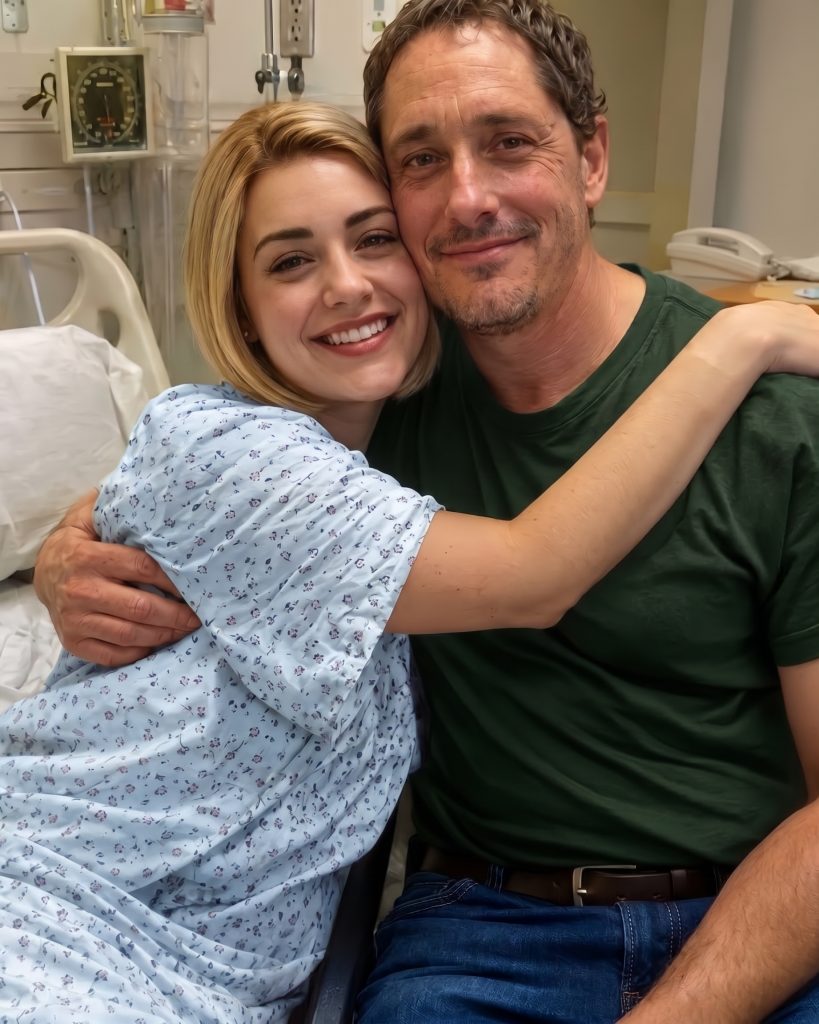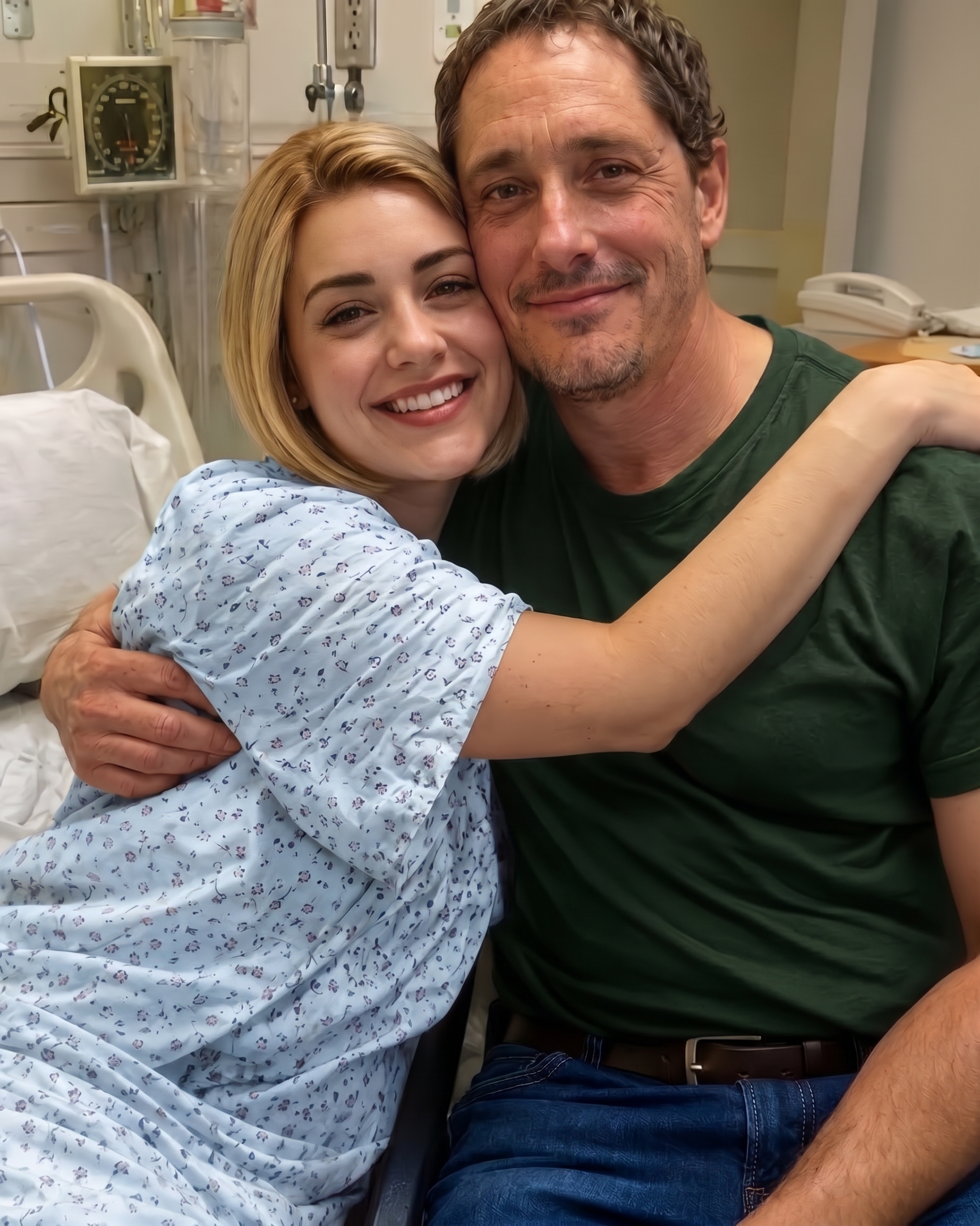
He thought agreeing to spend three hours as a dying woman’s boyfriend would be one small act of kindness. But when she handed him a mysterious wooden box and revealed a secret about his late wife, he discovered that their connection was far deeper than he could have imagined.
“Daniel, you’re going to be my boyfriend for the next three hours.”
I nearly dropped my coffee.
The 24-year-old woman beside me was smiling, but her hands trembled beneath the hospital blanket.
“I’m sorry, what?”
“I’ve never had a real date and I’m running out of time. Pretty please?”
Her name was Sophie.
She was one of the patients at the hospice where I volunteered, and she was young enough to be my daughter.
I was 56, widowed, and certainly not expecting to be asked out.
My wife, Claire, had died of cancer two years earlier. We’d been married for 12 years.
After she was gone, our house felt too big, the silence unbearable, and even ordinary routines reminded me that she wasn’t coming back.
Before she died, she suggested volunteering at a hospice.
She thought helping people through difficult moments might give me a sense of purpose.
That’s where I met Sophie.
Her treatments had stopped working, and the doctors had made it clear there wasn’t much more they could do.
Every morning, she asked someone to open her curtains so she could see the sunrise.
“Can’t waste a perfectly good sunrise,” she’d say.
I admired her refusal to let every conversation revolve around her illness.
“Sophie, you’re joking, right?” I asked.
“Nope. Come on, Daniel. It’s only three hours. One date. You can handle that, can’t you?”
“You’re asking the wrong person. I haven’t been on a date in years.”
“Perfect. Neither have I.”
I laughed.
“Besides, you’re old enough to be my father,” she said.
“That’s exactly what I was thinking.”
“Then we’re already off to a great start.”
Sophie wasn’t asking for a relationship.
She was asking for an afternoon.
“I want to go outside, eat something sweet, and pretend I’m just another girl having a normal day,” she explained. “I’ve never had someone take me on a proper date.”
Her smile weakened.
“Please, Daniel. It would mean the world to me.”
I thought about Claire and how much I’d come to appreciate the ordinary moments we’d once taken for granted.
“Alright,” I said. “Three hours.”
Sophie’s face lit up.
I spoke to the nurse in charge.
After checking Sophie’s condition, she gave us permission to spend some time in the hospice garden.
She reminded me to bring Sophie back if she became tired.
A few minutes later, I was pushing her wheelchair toward the courtyard.
I bought her strawberry ice cream from the small café near the entrance.
She took one bite, reached over, and stole some of my chocolate ice cream.
“Hey! Get your own.”
“Yours tastes better.”
“They’re both ice cream.”
“That’s what someone with bad taste would say.”
We sat near the pond and fed the ducks.
We talked about movies, music, and all the ridiculous things we’d do if we could spend one ordinary day without worrying about anything.
She wanted to visit New York, eat pizza from a street vendor, and watch a Broadway show.
“I’d probably fall asleep halfway through,” I told her.
“Then you’re not invited.”
For a while, I almost forgot where we were.
There was no hospital room or medication schedule.
There was just a young woman laughing at my terrible jokes and enjoying her ice cream.
Eventually, she asked about Claire.
“How long were you married?”
“Twelve years.”
“What was she like?”
I leaned back against the bench.
“Stubborn. Terrible at singing. Absolutely convinced she could cook, despite burning toast at least twice a week.”
Sophie laughed.
“She sounds wonderful.”
“She was. She also had this little thing she did whenever she wanted to tell me she loved me. She’d squeeze my hand three times. It was our little thing.”
I demonstrated against my palm.
Sophie’s expression changed.
She looked toward the pond, and her smile faded.
“That’s sweet,” she whispered.
“She would’ve liked you,” I added.
“Really?”
“Absolutely. She would’ve thought you were funny.”
“Good. I like her already.”
A little later, Sophie began to look tired.
She took a few careful breaths and rested her head against the back of her wheelchair.
“Are you okay?”
“I’m fine. Just having a wonderful date.”
I handed her water, and we moved to a quieter bench beneath a tree.
Then she asked another question about Claire.
“Did she ever talk about her life before she met you?”
“Of course. She grew up in another state, went to college, and worked in publishing. Why?”
“Did she ever mention having a baby?”
The question caught me off guard.
“No. Why would you ask that?”
She stared at the ground.
“Just curious.”
“Is there something you’re trying to tell me?”
“Not yet.”
I wanted to ask more, but she seemed uncomfortable, so I let it go.
Still, the question bothered me.
Claire and I had always been open with each other.
At least, I’d believed we were.
I checked my watch.
Our three hours were almost over.
“Well, Miss Sophie, I believe your boyfriend has fulfilled his contractual obligations.”
She looked at her watch, too.
“Not quite.”
She reached into the small bag hanging from her wheelchair and pulled out a wooden box.
It was about the size of a paperback book, with scratches along its edges and a small brass clasp.
“What’s that?”
“Something I’ve been keeping for a long time.”
“Is it a present?”
“In a way.”
She held it carefully.
“Daniel, I need you to understand something. I didn’t choose you by accident.”
My smile disappeared.
“What do you mean?”
“There’s something about Claire you never knew. I promised her I’d tell you when the time was right.”
My heart began pounding.
“Please don’t be angry with her,” Sophie said. “She had her reasons.”
“Why would I be angry? What did she do?”
“Just open it.”
I tried to lift the clasp, but my fingers weren’t cooperating.
Sophie placed her hand over mine.
“Whatever happens, Daniel, I need you to know that she loved you.”
“Why are you saying goodbye like that?”
She gave me a sad smile.
“Because our three hours are over.”
With trembling fingers, I finally lifted the lid.
Inside was something I never expected to see.
Suddenly, the entire afternoon felt different.
Inside the box was a photograph of Claire outside a hospital, holding a newborn wrapped in a pale yellow blanket.
She looked much younger, perhaps in her early twenties.
I recognized her immediately.
But the baby wasn’t mine.
Under the photograph were documents, a folded letter, a small silver bracelet, and an envelope with my name written across it.
“Where did you get this?” I asked.
“From my mother,” Sophie said.
“Your mother?”
“Claire was my biological mother, Daniel.”
I looked from the photograph to Sophie.
“No.”
“Yes.”
“But Claire never had children.”
“She had me.”
There was a birth certificate in the box, with Claire’s name printed under “Mother.”
The date was 24 years earlier.
Sophie had been born 24 years ago.
Her eyes and the little crease beside her mouth reminded me of Claire.
I just hadn’t known what I was looking at.
“How?” I whispered.
“She was 20 when she had me. She wasn’t married, and the man who got her pregnant wasn’t someone she could depend on. Her parents were strict, and she was terrified of what would happen if they found out.”
“She gave you up for adoption?”
“Yes. It was a closed adoption. She thought it would give me a better life.”
I picked up the silver bracelet. It read, “For my little girl. Always loved.”
“Did she ever see you again?”
“Yes, when I was older.”
I unfolded a letter in Claire’s handwriting, dated seven years earlier.
“To my daughter, I was young and frightened when I gave you up. I convinced myself it was the only way to protect you.”
“But I never stopped thinking about you. I wondered whether you liked strawberries, whether you laughed loudly, and whether you had someone to hold your hand when you were afraid.”
I hope that one day, if you find me, you’ll understand that giving you away was the hardest decision I ever made.”
I pressed the letter against my forehead.
“How did you find each other?”
“When I turned 18, I started looking for my biological parents. Eventually, I found a way to contact her.”
“How long did you know each other?”
“Six years.”
She nodded.
“She was scared you’d find out. She didn’t want to hurt you, but she also didn’t want to lose me again.”
A wave of anger rose inside me.
Not because Sophie was her daughter, but because Claire had carried this secret while I believed we shared everything.
“Did she meet you?”
“Several times, mostly in a café near her old office. She remembered everything I told her.”
“Why didn’t she tell me?”
“She was afraid.”
I asked why Claire had waited.
“She knew you wanted children, Daniel.”
That sentence hit me harder than anything else.
Claire and I had tried to have children.
After appointments and tests, we eventually stopped trying and told ourselves we were happy.
We were, but Claire sometimes cried because she thought she’d failed me.
I’d always told her she was enough.
“She was afraid you’d think she’d hidden something unforgivable,” Sophie said. “She knew having a daughter might bring back all those memories about the children you couldn’t have together.”
I looked down at the letter.
“She could’ve told me.”
“I know, Daniel.”
Sophie reached for my hand.
“She was afraid you’d see her differently. She didn’t want you to feel you had to choose between us. She didn’t want me to become a responsibility you inherited. She wanted you to meet me because you wanted to.”
There was another envelope in the box, with my name written across it.
My hands shook as I opened it.
“Daniel, I am sorry. There is something I have wanted to tell you for years. I have a daughter. Her name is Sophie.”
“I met her again when she was 18, and I have loved every moment of knowing her. I wanted to introduce you to her and watch the two of you become part of each other’s lives.”
“But I was afraid you’d wonder what else I had kept from you. I was afraid you would see me differently. Most of all, I was afraid I would lose the family I had built with you.”
I couldn’t see the page through my tears.
“You gave me a life I never thought I would have. You loved me without asking me to be anyone other than myself. Please don’t let my silence make you question my love. I loved you every single day. And I hope that one day, you can love Sophie, too.”
Sophie reached for my hand.
“She loved you so much, Daniel.”
“Why didn’t she tell me before she died?”
“She wanted to. She found out her cancer had returned, and we were talking about it when she was going through another round of tests.”
I remembered how exhausted and frightened Claire had been.
Near the end, I’d asked whether there was anything else she needed to tell me.
She’d squeezed my hand three times and whispered, “I love you.”
I’d believed those words were the whole conversation.
Sophie explained that Claire had made her promise to find me if anything happened.
She gave Sophie the box and told her to wait until she was ready.
“How did you know where I was?” I asked.
“She told me you were thinking about volunteering at a hospice.”
“Then you came here because of her?”
Sophie nodded. “I wanted to meet you, but I didn’t know how to walk up and say, ‘Hello, I’m your dead wife’s daughter.’”
Despite everything, I let out a broken laugh.
“That would’ve been quite an introduction.”
“I watched you for a while,” she said. “You never made people feel like they were dying. You made them feel like they were still living. Then you opened my curtains one morning and told me it was a beautiful day. I knew why Mom had loved you.”
Mom.
That was the first time I’d heard Sophie call Claire that.
I had thought Claire’s greatest fear was leaving me behind.
Now I understood she’d also been afraid of leaving her daughter behind for a second time.
“Why did you ask me to be your boyfriend?”
“Because I wanted one normal afternoon with you. Mom said you’d complain about the ice cream, make terrible jokes, and quietly make sure I had everything I needed.”
I laughed.
“That sounds about right.”
“She was right about you.”
I looked at her trembling hands.
“How much time do you have?” I asked.
“Nobody knows exactly.”
I wanted to demand another opinion, but I’d already watched someone I loved go through that fight.
Instead, I held Sophie’s hand and squeezed it three times.
One. Two. Three.
Sophie’s eyes widened.
“That’s what she used to do,” I whispered.
“I know,” she said. “I’d like you to do it, too.”
A nurse eventually came looking for us.
Sophie was tired, and it was time to return to her room.
“Can I visit you tomorrow?” I asked.
“You’re asking me out again?”
“Only if you’ll have me.”
She smiled. “You’re a little old for me, but I suppose I can make an exception.”
At her bedside, she asked me to place the box on the table.
“Thank you for opening it,” she whispered.
“Thank you for finding me,” I said, kissing the top of her head.
I visited Sophie every day.
I brought strawberry ice cream when she felt well enough, and we watched old movies and talked about Claire.
We traded stories about Claire.
I’d tell Sophie things she’d never heard; she’d tell me things I never knew.
My wife had been a terrible dancer, loved horror movies, and once tried to teach Sophie her favorite pasta sauce.
“She burned it,” Sophie told me.
“Of course she did,” I laughed.
We began building something new, not a replacement for what we’d lost.
A few weeks later, Sophie’s condition worsened.
She could no longer sit up without help.
She stopped asking for ice cream and asked me to open the curtains instead.
“Can’t waste a perfectly good sunrise,” she whispered one morning.
I opened them.
The sunlight filled the room, and she smiled.
Then she reached for my hand and squeezed it three times.
I squeezed back.
She passed away a few days later.
Losing her brought back everything I’d felt when Claire died, except this time, I was losing someone I’d only just begun to understand.
At her bedside, I found a folded note. It contained one sentence.
“Now you have someone else who remembers her, Daniel. Please don’t stop telling her stories.”
I keep the wooden box beside Claire’s photograph.
Sometimes, when people ask whether I had children, I say no.
Then I correct myself.
“I have a daughter. Her name is Sophie.”
She wasn’t mine by blood, and I never got to be part of her childhood.
But I got three hours of strawberry ice cream, terrible jokes, and a first date I’ll never forget.
I also got to know another piece of the woman I loved for 12 years.
I used to think that losing Claire meant I’d lost my family.
I was wrong.
I just hadn’t met all of it yet.
The Echoes in the Attic
The weeks immediately following Sophie’s funeral were filled with an eerie, hollow calm.
In a hospice, death is expected, framed by soft voices, rubber-soled shoes, and the scent of antiseptic intermingled with lavender soap. I had watched dozens of patients drift away during my volunteer shifts, offering what comfort I could: adjusting pillows, holding paper cups with bent straws, reading local news articles to eyes that were already looking far beyond the ceiling tiles.
I was comfortable with the deaths of strangers. It was an honor to sit with them at the threshold, to offer a quiet presence when their families were delayed or absent. But sitting beside Sophie as her breathing grew shallow, watching the ghost of Claire’s laughter play across her frail features, had ripped open every wound I thought had scarred over.
I spent my mornings back in the archive room of the hospice, organizing donated paperbacks and cataloging equipment, but my mind remained trapped in room 214. Every time I passed that door, now sanitized and reset for another soul arriving at their final chapter, I felt a physical ache in my chest.
One rainy Tuesday afternoon, three weeks after we buried Sophie beside her mother in the quiet hillside cemetery, a package arrived at my small house near the outskirts of the city.
It wasn’t mailed. It was delivered by a small, silver-haired man named Arthur Vance, who stood on my porch with an old leather briefcase gripped tightly in his pale, spotted hand.
“Daniel Mercer?” he asked, his voice low and scraped dry by age.
“Yes,” I said, shielding my eyes against the fine misty drizzle blowing off the roof eaves.
“I am Arthur Vance. I was your late wife’s estate attorney. And, for a brief time, Sophie’s legal representative.” He adjusted his wire-rimmed glasses, looking at me with a solemnity that instantly set my nerves on edge. “Sophie left explicit instructions regarding certain personal items. She asked that I deliver them to you directly once her final affairs were settled.”
I invited him inside. The house was quiet—too quiet. Since Claire died, I had stopped keeping the radio on in the background. The silence had become a physical presence, like dust settling on untouched furniture.
Arthur sat on the edge of the worn velvet armchair Claire had brought into our marriage. He placed his briefcase across his knees, popped the brass latches with two crisp snaps, and pulled out a heavy manila folder bound with thick red string, along with a small brass key attached to a faded blue tag.
“What is this?” I asked, sitting opposite him at the kitchen table.
“Before Claire passed,” Arthur began, keeping his gaze steady, “she established a small secondary trust. It was meant to cover Sophie’s medical expenses, living costs, and any final arrangements. Claire was meticulous, Daniel. She spent the last eighteen months of her life ensuring that Sophie would never be a financial burden to anyone, nor would her existence accidentally destabilize the life you and Claire built together.”
My stomach tightened. “She didn’t need to do that. I would have paid for everything. If I had known…”
“Claire knew you would have,” Arthur said gently. “That was precisely why she kept it separate. She didn’t want you spending your life savings on a child you had never met, nor did she want you to feel forced into a fatherly role out of guilt or financial obligation. She was protective of you, Daniel. Protective to a fault.”
He slid the manila folder across the smooth laminate of the table.
“Inside here are the deeds to a small storage unit on the east side of town. Sophie spent her final years gathering items from Claire’s past—things Claire had put away long before she met you. Sophie wanted you to have them. She believed that to truly know her mother, you needed to see the life Claire led before your paths crossed.”
After Arthur left, I sat at the table for a long time, staring at the brass key. The rain tapped rhythmically against the glass, a soft, insistent reminder of the passage of time.
I picked up the key. It was light, cool against my skin.
An hour later, I was driving through the gray twilight toward the industrial district. The storage facility was a sprawling labyrinth of corrugated steel doors, lit by flickering fluorescent tubes that buzzed like trapped insects. I found unit 104, unlocked the padlocked latch, and rolled the heavy door upward with a sharp metallic rattle.
The unit was smaller than I expected, smelling strongly of dry pine, cedar, and aged paper. Stacked neatly along the walls were cardboard boxes, sealed with packing tape and marked in Claire’s unmistakable, sloping handwriting.
In the center of the room sat a single, trunk-like wooden chest bound in tarnished brass straps.
I walked up to it, my boots kicking up faint puffs of dust from the concrete floor. I knelt beside the trunk, touched the cold metal latch, and lifted the lid.
Inside lay a collection of objects that felt like artifacts from another life: a vintage camera with a cracked lens, a stack of sketchbooks bound in coarse fabric, a series of journals dating back to the late 1990s, and hundreds of photographs that didn’t feature me at all.
I picked up the first sketchbook. Opening it, I found detailed charcoal drawings of city streets, train stations, and faces—strangers caught in candid moments. On the inside cover, written in dark black ink, was a name I had never heard: Claire Elizabeth Vance.
She had taken her mother’s maiden name back then.
As I flipped through the pages, I saw a young woman I barely recognized. The Claire I knew was soft-spoken, preferred practical clothing, and loved quiet evenings reading by the window. The woman in these sketches was vibrant, bohemian, lost in the chaotic energy of a world far larger than the quiet life we had built.
Near the bottom of the trunk rested a sealed envelope addressed simply: To whoever finds this first.
My hands trembled as I tore open the seal. Inside was a single sheet of heavy cream paper, written in Claire’s distinct hand, dated fifteen years ago—two years before I met her.
I have made my choice. I have left the past in the shadows where it belongs. If I am ever fortunate enough to find peace, to find a man who can love me without knowing the fracture in my heart, I will guard that peace with everything I have. Sophie is safe with my sister. She has a life, a future. I cannot be her mother without destroying the fragile sanity I have managed to rebuild. Forgive me, whoever reads this. Some secrets are not kept out of malice, but out of sheer survival.
I pressed the letter to my face, breathing in the faint, lingering scent of lavender and old paper. The grief hit me again, fresh and sharp.
Claire hadn’t just kept a daughter from me. She had kept a whole ghost of herself—a terrified, broken young woman who believed she was too damaged to deserve unconditional love.
The Unspoken Promise
As spring turned to summer, the hospice where I volunteered underwent a leadership change. The old director retired, and a sharp, efficient woman named Eleanor Vance—no relation to Arthur, though the coincidence made me pause—took over.
Eleanor was pragmatic, focusing on expanding the home-care division of the hospice to reach patients who wished to spend their final days in their own homes rather than in institutional rooms.
“We need volunteers who understand how to be present without being intrusive,” Eleanor told me during an evaluation meeting in her sunlit office. “I’ve reviewed your records, Daniel. Patients respond to you. You don’t try to fix them; you just stay with them. That is a rare quality.”
“I don’t have answers for them,” I admitted. “I just know what it feels like to sit in a room when the clock is ticking.”
“That is all most of them ask for,” she said, sliding a ledger toward me. “We have a new patient on our home-care registry. Her name is Martha Gable. She’s eighty-four, living alone in a small farmhouse five miles outside town. Her family lives out of state. She needs someone to visit twice a week—check on her, handle light errands, maybe just sit on the porch and talk. Are you open to taking this on?”
I hesitated. Since Sophie died, I had been reluctant to form deep bonds with anyone else. The risk felt too high, the cost too steep. But the thought of an old woman sitting alone in a farmhouse, watching the days bleed away in silence, pushed past my hesitation.
“I’ll go,” I said.
The following Thursday, I drove out to the Gable house. It was a weather-worn two-story home surrounded by overgrown apple orchards and untamed honeysuckle. The porch creaked as I walked up the steps, and when I knocked on the heavy wooden door, it was opened by an elderly woman with pale blue eyes and a sharp, knowing smile.
“You must be Daniel,” she said, leaning heavily on a carved wooden cane. “Eleanor said she was sending someone who wasn’t afraid of quiet people.”
“I don’t mind quiet, Mrs. Gable,” I said, offering a small smile.
“Call me Martha. Come in. The tea is already steepin’.”
Martha’s house was a living museum. Every surface was covered with framed photographs, hand-knit blankets, porcelain teacups, and stacks of yellowing books. But what caught my attention immediately was a large watercolor painting hanging in the main hallway.
It depicted an old wooden bridge spanning a rushing creek, surrounded by autumn foliage. The style was instantly recognizable—the sweeping strokes, the delicate interplay of shadow and light, the subtle signature in the lower right corner: C.E.V.
I froze in the middle of the hallway, my heart thumping against my ribs like a trapped bird.
Martha paused, looking back at me over her shoulder. “Ah. You’re looking at the painting. Beautiful, isn’t it?”
“Where did you get this?” my voice was barely above a whisper.
“A young woman gave it to me over twenty years ago,” Martha said, walking slowly into the kitchen. “She stayed in my guest cottage for a few months during a very difficult period in her life. She was pregnant, frightened, and had nowhere else to go.”
My hands shook as I followed her into the kitchen. “Her name was Claire.”
Martha turned, her pale eyes searching my face with sudden intensity. She set her cane against the counter and sat down heavily at the small wooden kitchen table.
“You knew her?” Martha asked softly.
“She was my wife,” I said. “We were married for twelve years before she passed away from cancer. And… recently, I met her daughter, Sophie.”
Martha’s eyes welled with sudden, shining tears. She reached out across the table, her liver-spotted hand trembling, and grasped my fingers tightly.
“Sophie… she found you?” Martha asked, her voice crackling with emotion.
“She found me,” I replied. “She stayed at the hospice where I volunteer. I was with her when she died.”
Martha closed her eyes, letting out a long, shuddering sigh. “Thank God. Oh, thank God. Claire carried that guilt like a stone around her neck every single day she stayed with me. She thought she was doing the right thing by letting Sophie be adopted by her sister, who had a stable home and money. But Claire never stopped loving that baby. Not for a single second.”
Sitting in that sun-drenched kitchen, miles away from the home I had shared with Claire, I began to learn the story of the months Claire had spent hiding from a world she thought had judged her.
Martha told me how Claire had arrived at the farm in the dead of winter, carrying nothing more than a single suitcase and a sketchpad. Martha, who had lost her own daughter years earlier, had taken the young woman in without asking questions. She gave her a safe place to sleep, fed her warm soups, and listened to her cry through the thin walls of the cottage during the long night hours.
“Claire was convinced she was cursed,” Martha said softly, pouring tea into two floral cups. “She believed that everything she touched broke. She told me once that if she ever found happiness, she would have to guard it like a thief, because she was sure the universe would come to take it back if she let her guard down.”
I drank the bitter tea, feeling the warmth spread through my hands.
“She didn’t guard it from the universe,” I whispered. “She guarded it from me. She was so afraid I’d leave her.”
“No, Daniel,” Martha corrected gently, leaning forward. “She wasn’t afraid you would leave her. She was afraid of ruining your happiness. Claire saw you as something pure—a second chance at a clean life. She didn’t want to bring the dirt and blood of her past into the home you were building together.”
“It wouldn’t have been dirt to me,” I said, my voice breaking. “It would have just been her.”
“I know,” Martha said, reaching out to pat my arm. “But when a heart has been broken as badly as hers was early on, it doesn’t always calculate things logically. It acts out of protection.”
The Archive of Forgotten Things
The visits to Martha’s farm became the center of my life over the next two years.
I helped maintain her orchard, fixed the sagging roof of her guest cottage, and spent long afternoons listening to her stories about Claire’s time on the farm. In return, I told Martha about the Claire I had known: the woman who loved burnt toast, who could spend three hours in a hardware store looking at paint samples without buying a single one, who held my hand every night until she fell asleep.
Together, Martha and I pieced together the fragments of Claire’s life like a jigsaw puzzle that had been scattered by a storm.
We found old letters Claire had sent to Martha long after she had married me—letters full of quiet joy, describing our small house, our trips to the coast, and how safe she felt in my arms. In every letter, Claire mentioned Sophie, noting that she was checking in on her through her sister, quietly watching her grow up from a safe distance, never daring to reach out directly for fear of disrupting the girl’s life.
He makes me feel real, Martha, Claire had written in one letter dated six years into our marriage. When I am with Daniel, the nightmares don’t come. I look at him and think that maybe—just maybe—I am allowed to be happy after all. But every time I hold his hand, I think of Sophie. I wonder if she has her father’s dark hair, or if she smiles like me. I pray every night that she is loved as deeply as Daniel loves me.
Reading those words in Claire’s familiar handwriting brought a strange kind of healing. The anger and confusion that had clouded my memory of our marriage began to dissolve, replaced by a profound, aching compassion.
Claire hadn’t kept Sophie a secret out of coldness or deceit. She had done it out of an overwhelming, tangled mess of fear, love, and self-sacrifice. She had lived her entire life on a high wire, balancing the deep guilt of her past with the fragile joy of her present.
In the autumn of my second year visiting the farm, Martha’s health began to decline rapidly. The heart that had welcomed so many lost souls began to give out, beat by slow beat.
I spent every night in her guest bedroom, keeping vigil just as I had done for Claire and Sophie. The hospice nurses came and went, but Martha wanted me to be the one sitting beside her when the end arrived.
On her final evening, as the autumn leaves rattled against the glass like dry bones, Martha motioned for me to come closer.
“Daniel,” she whispered, her voice frail as gossamer.
“I’m here, Martha,” I said, taking her dry, cool hand.
“In the cottage… under the floorboards in the closet… there is a green box,” she breathed, her eyes unfocused. “Claire left it… for when you were ready.”
“Claire?” I gasped. “Claire knew I would come here?”
Martha offered a small, exhausted smile. “Claire left that box with me years ago. She told me… ‘If anything happens to me, and if Daniel ever finds his way to you… give him this.’ She always knew… you would look for her, Daniel. She knew your heart better than you think.”
Martha passed away peacefully in the early hours of the morning, just as the first amber light of dawn broke over the apple trees.
After the funeral home attendants took her body away, I walked out to the empty guest cottage. The air inside was cool and heavy with the scent of pine and dry earth. I walked into the small bedroom closet, pulled back the faded rag rug, and found the loose floorboard Martha had described.
Prying it up with my pocketknife, I found a small metal tin wrapped in oiled cloth.
Inside was a series of audio cassettes, carefully labeled with dates spanning from 2008 to 2018.
Along with the tapes was a small, battery-operated cassette player and a note written in Claire’s clear, flowing hand:
Daniel, if you are listening to these, it means I am gone, and you have found Martha. It means you know about Sophie. I didn’t have the courage to say these words to your face because I was terrifyingly afraid of seeing disappointment in your eyes. But I couldn’t leave this world leaving you with only half of me. Press play, my love. Let me tell you the whole story.
Voices in the Dark
I sat on the edge of the narrow mattress in the guest cottage, the small cassette player resting in my lap. The morning sun was just beginning to hit the windowpane, casting long, golden bars across the wooden floorboards.
My thumb hovered over the black PLAY button. My heart beat heavily in my throat.
For two years, I had read Claire’s letters, looked at her sketches, and listened to other people talk about her past. But I hadn’t heard her voice since the afternoon she died in the hospital bed, whispering her final three-word promise into the quiet of the room.
I pressed the button.
The plastic gears inside the player whirred to life with a faint, steady hiss. Then, after a moment of static, her voice filled the small room—clear, intimate, and so close it felt as if she were standing right behind me, her breath warm against my neck.
“Hi, Daniel.”
A sob caught in my throat. I squeezed my eyes shut, tears slipping instantly down my cheeks.
“If you’re hearing this,” her recorded voice continued softly, accompanied by the faint background sound of rain falling against a window, “it means my worst fear and my greatest hope have both come true. It means I am no longer there to hold your hand, but it also means you survived the truth.”
She paused on the tape, and I heard the faint clink of a ceramic mug being set down—a sound I had heard ten thousand times in our kitchen.
“I started making these tapes the year after we were married,” Claire said. “Every time the guilt got too heavy, every time I looked at you across the dinner table and wanted to scream out the truth, I would drive out here to Martha’s and talk to this little recorder instead. It was my way of keeping myself honest, even if I was too much of a coward to hand them to you.”
Over the next four hours, I listened to tape after tape.
She talked about the day Sophie was born in a small, sterile clinic three towns over. She spoke of the overwhelming terror of being nineteen, broke, and entirely alone in the world. She described holding her baby girl for three days, counting every tiny toe, memorizing the shape of her small nose, before handing her over to her sister, Helen, who had a stable home and could give the child everything Claire could not.
“I didn’t abandon her because I didn’t love her, Daniel,” Claire’s voice cracked on the third tape, recorded in 2012. “I gave her away because I loved her more than my own life. I knew I was broken. I knew I had nothing to offer her except my own trauma and poverty. Helen gave her a home, a garden, a family. But every single day of my life, a piece of my heart remained in that nursery.”
Then she spoke about meeting me.
“When I met you at that little bookshop in Portland, Daniel, I was convinced I was done with love. I thought I had used up all my chances at happiness. But then you looked at me—really looked at me—and you didn’t ask me to prove anything. You were just kind. You brought me warm tea when my hands were cold. You listened to my silly ideas about architecture and painting without ever making me feel foolish.”
On the fifth tape, recorded in 2016—the year we tried and failed to conceive our own child through IVF—Claire’s voice was barely a whisper, thick with tears.
“Today we got the final test results,” she said, her voice shaking violently. “The doctor told us we can’t have children. I watched your face, Daniel. You tried so hard to be strong for me. You smiled, you kissed my forehead, and you told me I was enough. But I saw the pain in your eyes. I saw how much you would have loved to be a father.”
A long silence stretched on the tape, filled only by the soft hiss of the magnetic ribbon.
“I wanted to tell you then,” she whispered. “I wanted to pull you into my arms and say, ‘Daniel, you can be a father. I have a daughter. She’s twelve years old, she has my hair, and she’s living two hours away.’ But I froze. I was terrified you would hate me for keeping her from you for four years. I was afraid you would look at me and see a liar. I couldn’t risk losing the only safe place I had ever known—your love.”
I sat in the quiet cottage, holding the little plastic player against my chest, weeping openly.
“I wouldn’t have hated you, Claire,” I whispered to the empty room. “I would have loved her. I would have loved you both.”
The final tape was dated just two months before Claire was diagnosed with her terminal recurrence.
“Sophie is eighteen now,” Claire said, her voice calm, possessing a quiet resignation. “I saw her from across the street at her high school graduation last week. She looked so bright, Daniel. So strong. She doesn’t know me as her mother—she knows me as her aunt who sends cards on her birthday. But she’s happy. And if my cancer comes back—if I have to leave you sooner than we planned—I have asked Helen to make sure Sophie finds you.”
Claire’s breath hitched on the tape.
“Don’t stay alone, Daniel. Don’t let my silence lock you in an empty house. If Sophie comes to you, open the door. Let her show you the part of me I was too afraid to give you myself. I love you, Daniel. Yesterday, today, and for whatever comes after.”
The tape clicked off. The gears stopped whirring. Silence returned to the small room, but this time, it was no longer heavy. It was clean.
The Mosaic of Memory
Equipped with the tapes, the sketchbooks, and Martha’s stories, I returned to my small house.
The silence that had haunted the rooms for years felt different now. It was no longer an empty void created by loss; it felt like a canvas waiting to be painted.
I decided to leave my job at the archive firm and transition to full-time work at the hospice. I enrolled in a grief counseling certification program, driven by a desire to help others navigate the complex, hidden hallways of loss and secret sorrow that so many people carry in silence.
During my studies, I reached out to Helen—Claire’s sister and the woman who had raised Sophie.
We met at a quiet coffee shop midway between our towns. Helen was older than Claire, with sharp, perceptive eyes and a gentle demeanor that reminded me instantly of the family connection.
“I was angry at Claire for a long time,” Helen admitted, holding a warm cup of coffee between her palms. “I thought she was being selfish by keeping herself at a distance from Sophie. But over the years, as I watched how hard Claire fought her own inner demons, I realized she was doing what she thought was best for everyone. She was so afraid of contaminating Sophie’s life with her own grief.”
“Sophie told me she loved her,” I said softly.
“Sophie adored Claire,” Helen said, her eyes shining with tears. “Even when she thought Claire was just her quiet aunt who lived far away and sent hand-drawn birthday cards. When Claire died, Sophie was devastated. That was when I finally told her the truth—that Claire was her biological mother, and that Claire had left a box of memories for her to give to you when the time was right.”
Helen reached into her purse and pulled out a small leather-bound photo album.
“Sophie assembled this during her last few months at the hospice,” Helen said, sliding it across the table to me. “She wanted you to have a complete picture of her life—from the day she was born until the weeks before she checked into room 214.”
I opened the album. Inside were photographs of Sophie growing up: her first steps, her loose front teeth, her middle school soccer games, her high school art exhibits. And beside many of the photos were tiny notes written in Sophie’s neat print:
Age 7: Aunt Claire sent me a sketchbook for Christmas. I decided right then I wanted to be an artist.
Age 12: Aunt Claire came to my piano recital. She sat in the very back row so she wouldn’t disturb anyone, but she clapped louder than anyone else.
Age 18: Mom told me the truth about Claire. I wasn’t angry. I was just sad she had carried that secret alone for so long. I set out to find Daniel.
Flipping through those pages, I saw how Claire’s love had quietly wrapped around Sophie’s entire life, like an invisible thread connecting two distant shores. Claire hadn’t abandoned her daughter; she had loved her from the shadows, ensuring Sophie had a peaceful childhood while keeping her own heart perpetually tethered to the young girl.
And Sophie, in her final months, had used that same thread to drag me out of my own isolated grief, bringing me into the family circle I thought had ended when Claire’s heart stopped beating.
I spent the next year working with hospice patients, using my own experiences to comfort families struggling with unresolved guilt, hidden secrets, and sudden loss. I shared Claire’s story when appropriate—not as a warning, but as a testament to the fact that love is rarely clean or simple, but it is always worth forgiving.
One evening, while sitting in my study organizing my notes for a grief support group session, a young woman walked into the hospice office holding a familiar wooden box.
She was around twenty-two, with dark hair tied back in a loose knot and eyes that carried a subtle, cautious curiosity.
“Daniel Mercer?” she asked softly.
I stood up from my desk. “Yes?”
“My name is Maya,” she said, her hands trembling slightly as she held the box. “I was Sophie’s roommate during her first year of college… before she got sick.”
I stepped around the desk, gesturing for her to take a seat. “It’s very good to meet you, Maya. Please, sit.”
Maya sat down, placing the wooden box carefully on the edge of the desk.
“Sophie gave me this box right before she went into the hospice,” Maya said, her voice unsteady. “She told me that if anything ever happened to her, and after you had had time to heal, I should bring you the final piece of the puzzle.”
I looked at the box, feeling a familiar flutter of anticipation and wonder. “There’s more?”
Maya smiled—a small, bittersweet expression. “Sophie didn’t just leave you letters, Daniel. She was an art student, just like her mother. She spent her last semester working on a final project. She called it The Anatomy of Love. She asked me to deliver it to you when I felt you were ready to see it.”
The Final Exhibit
The following weekend, Maya took me to a small community gallery space on the ground floor of an old brick warehouse downtown.
The gallery was quiet, filled with the soft glow of track lighting aimed at various student installations. Maya led me past wooden sculptures and abstract canvases to a secluded alcove at the back of the room.
In the center of the alcove stood a large, three-dimensional mosaic structure crafted from stained glass, carved wood, copper wire, and hundreds of tiny photographic prints.
It was shaped like a massive, stylized heart, suspended from the ceiling by subtle steel cables so that it appeared to float in mid-air.
As I stepped closer, the track lights caught the glass, casting rich streams of amber, crimson, violet, and deep indigo across the gallery floor.
“Read the plaque first,” Maya whispered, stepping back to give me space.
I walked up to the small brass plate mounted on the wall beside the installation.
The Anatomy of Love
By Sophie Vance
Love is not a single, unbroken line. It is a mosaic made of fractured pieces, secret sacrifices, unspoken fears, and quiet forgiveness. We are not defined by the secrets we keep to protect those we love; we are defined by the courage it takes to let those secrets bring us together in the end.
Dedicated to my mother, Claire, who loved me from the shadows, and to Daniel, who showed me how to live in the light.
Tears welled in my eyes as I stepped closer to examine the details of the mosaic.
Entwined within the glass and copper were hundreds of small items from Claire’s and Sophie’s lives: tiny scraps of Claire’s old sketchbooks, pressings of dry honeysuckle from Martha’s farm, fragments of letters, small pressed sea glass from the beaches Claire and I used to visit, and miniature photographs of the three of us—taken separately over different decades, but arranged in the mosaic so that we all appeared to be standing together under the same sky.
In the very center of the heart was a hollow chamber made of clear, flawless crystal. Inside rested a single, carved wooden block featuring two hands clasped tightly together, with three small lines etched into the palm of the upper hand.
One. Two. Three.
The secret language of love Claire had shared with me, passed down to Sophie, and returned to me in the twilight of her life.
I stood in that silent alcove for a long time, watching the sunlight shift through the gallery windows, casting the colorful patterns of the mosaic across my skin.
For years, I had thought of my life as a series of tragic endings: losing the chance to have children, losing Claire to cancer, losing Sophie just as I had come to know her. I had viewed myself as a survivor standing alone in the wreckage of a collapsed home.
But looking at Sophie’s art, I finally saw the truth.
The home hadn’t collapsed. It had expanded.
Claire’s secret hadn’t destroyed our marriage; it had laid the groundwork for a broader, deeper capacity for love that I was only now beginning to fully understand. Sophie hadn’t entered my life to remind me of what I had lost; she had entered it to give me a future—a reason to keep opening the curtains every morning to let the sun shine in.
Maya walked up beside me, placing a hand gently on my shoulder. “She spent weeks working on this when she was exhausted,” Maya said softly. “She said she wanted to make sure that even when she was gone, you would look at this and know you were never alone.”
“She succeeded,” I whispered, wiping a tear from my cheek. “She really did.”
The Legacy of Room 214
Three years after Sophie’s death, I established the Sophie Vance Memorial Foundation for Home and Hospice Care.
Using the funds from Claire’s secondary trust—which Arthur Vance had turned over to me in full—along with contributions from local donors, we built a small residential center adjacent to the hospice. It was designed specifically for young adults facing terminal illnesses who needed a warm, home-like environment surrounded by art, music, and nature.
In the center of the facility’s main courtyard, we installed Sophie’s mosaic installation, The Anatomy of Love. It became a focal point for patients, families, and staff alike—a quiet sanctuary where people could sit, reflect, and find comfort in the midst of their hardest journeys.
I took on the role of director for the new residential wing. My days were no longer filled with the quiet melancholy of organizing old archive books. Instead, I spent my time meeting new families, listening to their stories, and ensuring that no patient ever felt forgotten or isolated.
One crisp October afternoon, a young man sat on the bench in front of the mosaic, holding his head in his hands. He was around twenty-five, wearing a worn denim jacket, his shoulders shaking with silent sobs.
I walked over to the coffee station, poured two cups of hot cider, and walked out into the courtyard.
“Mind if I join you?” I asked gently.
The young man looked up, quickly wiping his eyes with the back of his sleeve. He looked exhausted, haunted by the deep, familiar fatigue that comes from watching someone you love slip away.
“Sure,” he muttered, shifting over to make room on the bench.
I sat down and handed him one of the warm cups. “I’m Daniel.”
“Chris,” he said, taking a small sip. “My sister… she’s in room 108. She’s only twenty-two. It’s not fair, man. None of this makes any sense.”
I looked up at the stained-glass heart shining in the autumn sunlight.
“No,” I said softly. “It rarely makes sense. And it is almost never fair.”
Chris looked at me, surprised by my candid response. Most people in his life had probably offered him shallow platitudes—telling him to stay strong, or that everything happens for a reason.
“How do you deal with it?” Chris asked, his voice raw. “How do you keep breathing when the person who makes your world feel whole is leaving?”
I looked down at my own hands—hands that had held Claire’s as she took her last breath, hands that had squeezed Sophie’s three times in room 214, hands that had held Martha’s as the dawn broke over the apple orchard.
“You don’t try to fix the pain,” I told him quietly. “You just open the door and let it in. You let it sit with you. And then, slowly, you realize that the pain is just love with nowhere left to go. So you find new places to put it.”
I pointed toward the mosaic structure floating in the afternoon light.
“The girl who built that was twenty-two,” I said. “She was my daughter—though I only got to know her for a few short weeks before she died in a room right down that hallway. Her mother—my wife—kept her a secret from me for twelve years out of fear and love. When I found out the truth, I thought my life was over.”
Chris stared at me, his eyes wide. “What did you do?”
“I listened to her story,” I said. “I stopped asking why things had to be broken, and I started looking at what could be built from the pieces.”
Chris sat in silence for a long time, looking at the vibrant colors of the stained glass catching the wind-blown leaves falling from the oak trees overhead.
“Did it help?” he asked softly.
“It gave me a life,” I said. “A life full of memory, connection, and purpose. It didn’t take away the missing pieces, Chris. But it showed me that even a heart full of scars can still hold a tremendous amount of light.”
The Circle Expands
By the five-year anniversary of Sophie’s passing, the residential center had grown into a thriving community program. We had expanded to include bereavement counseling for children, art therapy workshops, and a network of home-care volunteers covering three counties.
I lived in a small cottage near the edge of the hospice grounds. It was filled with light, plants, and the things that mattered most to me: Claire’s sketchbooks, Martha’s watercolor of the wooden bridge, Sophie’s initial sketches for The Anatomy of Love, and the polished rosewood box that sat on my desk.
Every Sunday morning, I walked up the quiet hillside to the cemetery where Claire and Sophie lay side by side under the shade of a massive silver maple tree.
I brought two fresh white roses every week—one for the woman who had taught me how to love, and one for the daughter who had taught me how to forgive.
On one particularly bright spring morning, as I reached the crest of the hill, I noticed a woman standing by the gravesite. She was holding the hand of a little girl about five years old, who was wearing a bright yellow raincoat and small yellow rain boots despite the clear blue sky.
I paused at the edge of the path, not wanting to intrude.
The woman turned around, and I recognized her immediately. It was Maya—Sophie’s college roommate—whom I hadn’t seen in nearly two years since she had moved away to take a teaching position at an art institute in Chicago.
“Daniel!” Maya called out, a warm, bright smile breaking across her face.
“Maya,” I said, stepping forward with an open smile. “What a wonderful surprise. What brings you back to town?”
Maya looked down at the little girl beside her, whose dark, wavy hair and bright, inquisitive eyes instantly made my heart skip a beat.
“We came to visit,” Maya said softly, leaning down to adjust the little girl’s hood. “Daniel, this is my daughter.”
I knelt down on the grass so I was at eye level with the child. “Hello there,” I said gently.
The little girl looked at me with solemn, intelligent eyes, then offered a shy, sweet smile.
“What’s your name?” I asked.
The little girl took a step forward, held out her small hand, and said clearly:
“My name is Sophie.”
A wave of emotion—warm, deep, and overwhelming—rushed through my chest. Tears filled my eyes, but for the first time in years, they were not tears of grief. They were tears of pure, unadulterated joy.
I reached out and gently took her tiny hand in mine.
“That is the most beautiful name in the world,” I whispered.
Maya looked up at the silver maple tree, its branches swaying gently in the spring breeze. “When she was born, I knew there was only one name that made sense. I wanted her to grow up knowing the story of the brave girl who taught us all how to see beauty in the broken places.”
We walked back down the hill together, the little girl skipping ahead through the tall grass, her yellow boots shining like small drops of sunshine against the green field.
We spent the afternoon at my house, eating fresh strawberries, drinking tea on the porch, and telling stories. Little Sophie sat on the floor of my study, happily drawing pictures with a set of colored pencils I had kept from Claire’s art supplies.
Watching her draw—the intense concentration on her small face, the way she gripped the pencil, the spontaneous bursts of laughter when a line went crooked—was like watching a ray of light pass through a prism, scattering old memories into new, brilliant colors.
Claire was gone. Sophie was gone. But their presence was not erased. It was woven into the fabric of every life they had touched, propagating outward in endless concentric circles of love, memory, and grace.
The Horizon of Morning
Now, as I sit at my desk on a quiet Tuesday evening, writing these words into the journal I have kept for the past several years, the house is peaceful.
The rosewood box sits beside me, its wooden surface smooth from years of handling.
I open the lid one more time. Inside lie the letters, the tapes, the sketchbooks, the plastic ice cream lid, and the folded notes. They are no longer weight-bearing burdens of unresolved grief; they are treasures—monuments to a family that was lost, found, and rebuilt across time and space.
I often think back to that morning in the hospice room when I pulled back the heavy curtains and told a sick young girl that it was a beautiful day outside.
I didn’t know then that she was Claire’s daughter. I didn’t know that she had come looking for me, carrying a heavy burden of secrets and fear. I didn’t know that her brief presence in my life would completely reshape everything I believed about love, forgiveness, and family.
I thought I was just doing my job as a volunteer—opening a window to let in the light for a dying stranger.
Now I realize that she was the one opening the curtains for me.
She brought the light back into a house that had been dark for far too long. She showed me that love does not end when a heart stops beating, nor does it demand perfection or absolute transparency to be genuine and profound. Love is simply the willingness to stay, to listen, to forgive, and to keep holding out a hand even when the darkness feels overwhelming.
Tomorrow morning, a new group of volunteers will arrive at the residential center for their orientation.
I will stand at the front of the room, look into their nervous, eager faces, and tell them about Claire, about Sophie, about Martha, and about the mosaic floating in the courtyard.
I will tell them that our work is not about preventing loss—because loss is an inevitable part of the human journey. Our work is about ensuring that no one has to stand in the shadow of loss alone.
I close my journal, cap my pen, and walk over to the window.
Outside, the moon hangs high in the indigo sky, casting a soft, silver illumination across the quiet courtyard and the stained-glass heart of the mosaic. In the stillness of the night, I can almost hear the soft, rhythmic chime of three distinct squeezes against my palm.
One.
Two.
Three.
I smile into the quiet dark, press my hand against the windowpane, and whisper the words that have sustained me through every storm and guided me back into the light:
“I love you, too.”
THE END..!