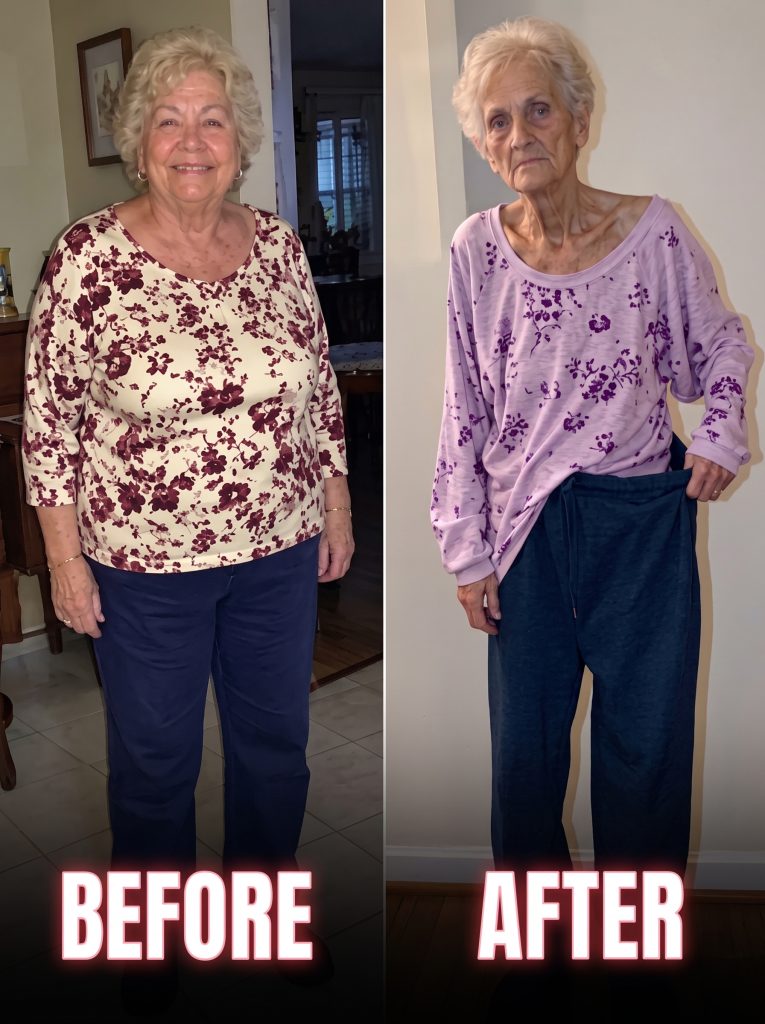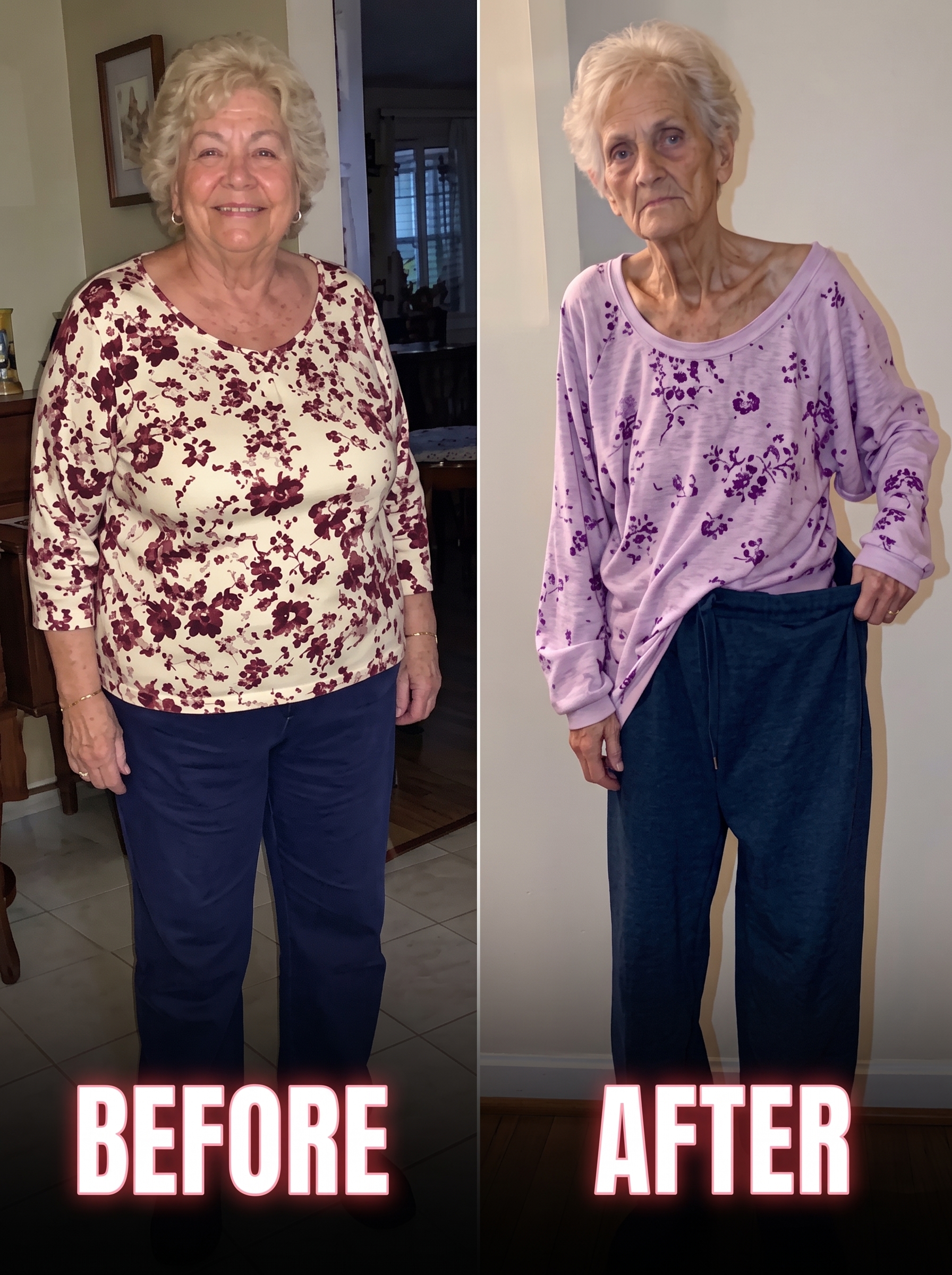
80-Year-Old Woman Spent Seven Days Visiting an Old Friend – She Returned Looking Half Her Size with a Suitcase That Wasn’t Hers
My 80-year-old mother left for a weeklong visit with an old friend.
When she returned, she looked half her size and carried a suitcase
that wasn’t hers. Then I called her friend and learned she hadn’t lived
at that address for eight years. Where had Mom really been?
I almost walked past my mother at the train station.
She was standing beside a bench, gripping the handle of an enormous black suitcase.
Her gray hair was flattened against her forehead, and the cardigan she’d worn for years hung loosely from her shoulders.
“Mom?”
She turned and smiled.
“Hello, sweetheart.”
I hurried toward her.
“What happened to you?”
“Nothing happened, Laura.”
Her cheeks looked hollow.
Even her voice sounded weaker than usual.
My mother, Evelyn, was 80, cheerful, and slightly overweight.
She loved baking and never missed Sunday dinner.
Seven days earlier, she’d left to visit her childhood friend Margaret, whom she hadn’t seen in 20 years.
Now she looked half her usual size.
“Are you sick?”
“Just a little stomach trouble.”
“I’m taking you to the hospital.”
“You’re taking me home.”
Then I noticed the suitcase.
“Where’s your blue bag?”
“Margaret gave me this one. Mine broke.”
She tightened her grip on the handle.
“Can we please go?”
I wanted to argue, but she looked exhausted.
I took the suitcase and guided her toward my car.
It was much heavier than I expected.
Mom had been excited about the trip.
Margaret lived three hours away, and the two women had known each other since childhood.
When Mom announced that Margaret’s daughter had invited her to visit, I was delighted.
“You haven’t seen her in forever,” I said.
“Twenty years,” Mom replied.
“Then you should go.”
Mom hesitated.
“I don’t like leaving you with everything.”
“Mom, I’m 52. I think I can survive a week without Sunday dinner.”
She laughed.
I drove her to the station the following Monday.
She carried a small blue travel bag containing clothes, medication, and a box of homemade cookies.
Before boarding, she gave me a telephone number.
“Margaret’s number. In case you need anything.”
I saved it.
We spoke briefly twice during the week.
Both times, Mom said she was having a lovely visit.
But she never put Margaret on the phone.
And whenever I asked what they’d been doing, she changed the subject.
I hadn’t thought much of it.
Not until I saw her at the station.
At home, Mom insisted on carrying the black suitcase upstairs herself.
She struggled with the first two steps before I took it from her.
“You’re not lifting this.”
“Just put it in my bedroom.”
I did.
She followed me inside, waited until I left, and locked the door.
Mom had never locked her bedroom door during the day.
That evening, she barely touched the soup I made.
I checked her temperature, encouraged her to drink water, and asked again about seeing a doctor.
“Tomorrow, perhaps,” she said.
“Mom, you look terrible.”
“Thank you, darling.”
“I’m serious.”
“So am I. I’m tired, not dying.”
She tried to smile, but I wasn’t reassured.
After she went to bed, I called Margaret.
A man answered.
“Hello?”
“Hi, may I speak to Margaret?”
There was a pause.
“Margaret hasn’t lived here for eight years.”
I checked the number.
“Are you sure?”
“Quite sure. I’ve had this number for years.”
“Do you know where she moved?”
“No, sorry.”
I thanked him and hung up.
Then I called Mom’s cell phone.
I heard it ringing upstairs.
She didn’t answer.
I stood at the bottom of the stairs, wondering why she’d given me a number that no longer belonged to her friend.
The next morning, I found Mom asleep in her armchair.
She was still wearing yesterday’s cardigan.
On the little table beside her lay a train ticket dated three days before I’d picked her up.
Underneath it was a luggage tag.
The name was Ellen.
Not Margaret.
Not Evelyn.
I looked toward the hallway.
Mom had left her bedroom door open, and the black suitcase stood beside her dresser.
I knew I shouldn’t go through her belongings.
But she was visibly ill, and she’d lied about where she’d been.
At that point, I couldn’t shake the feeling that something was seriously wrong.
I carried the suitcase into the hallway and opened it.
Inside were neatly folded clothes, a sealed brown envelope, and an old-fashioned digital camera.
The clothes looked too large for Mom.
Beneath them lay a child’s faded yellow sweater and a small wooden rolling pin.
I recognized the rolling pin.
Or thought I did.
There had been one just like it in my childhood kitchen.
I picked up the camera.
Its battery indicator was almost empty.
There were only four photographs.
The first showed Mom standing outside a modest brick house.
In the second, she sat beside a frail elderly woman in a bedroom.
The third showed a handwritten schedule taped to a refrigerator.
Meals, medication reminders, and notes about helping someone move safely.
Then I opened the fourth.
It was a photograph of an older printed picture.
A woman stood outside a little white house, holding a toddler in a yellow sweater.
I recognized the child immediately.
It was me.
And I recognized the woman.
“Aunt Maggie,” I whispered.
I hadn’t heard that name in decades.
At the bottom of the photograph, someone had written an address.
I knew the street.
It was where I’d spent countless afternoons as a little girl.
I grabbed my car keys.
I checked that Mom was sleeping comfortably, left her a note, and drove across town.
The little white house was still there, though its porch had been replaced.
We turned the eight hens loose in the coop by flashlight.
Every single one of them walked up the ramp and went to the exact same spot on the roost she’d left that morning. They shuffled and muttered and settled.
Colt latched the pop door. Then he stood there with his hand flat on it for a minute.
Lucille had left the yard light on. There was a plate of funeral ham in the oven, covered with foil. She’d gone to bed.
Before I went to sleep, I called the one name I had.
Mr. Zeller answered on the ninth ring.
He’s eighty-one. He still farms a little, south of town. He’s been a widower for three years.
I told him who I was and what I wanted, and that I’d pay him three dollars a hen and be glad to do it.
There was a long pause.
“Thursday,” he said.
“I could come tomorrow, Mr. Zeller. I don’t want to put you out.”
“Thursday. At dusk. Not before.”
And he hung up.
I knew Mom took him eggs. I didn’t know whether a man who says Thursday and hangs up on you is a man who means to help you.
Wednesday morning at eight, I called the radio station.
The fellow who runs the swap program didn’t make me explain it twice. At five minutes past nine, between a man selling a hay rake and a woman looking for canning jars, he read it out just the way I gave it to him.
He said that forty laying hens had been sold Tuesday from Rosalie’s place northwest of York. That they’d been sold by mistake, the day after her funeral. And that her daughter would be grateful to buy back any that could be spared, at three dollars apiece.
He gave Mom’s phone number.
Then he added something on his own.
“Folks,” he said, “most of you have eaten that woman’s eggs.”
The telephone in Mom’s kitchen rang eleven times before noon.
Two of the calls were about hens. The other nine were egg customers, calling to say they were sorry.
A woman named Connie, over by Waco, had six. She’d turned them straight in with thirty red hens of her own and couldn’t tell one from another.
“Look at their right legs,” I said.
She set the telephone down. When she came back, she was laughing.
“Well, I’ll be. Your mother was a smarter woman than I am.”
That was eighteen dollars. She sent us home with a jar of chokecherry jelly besides.
The other call was a man out past Bradshaw.
He wasn’t laughing.
His name was Denny. He was about sixty-five, retired off the railroad, and he had a neat little henhouse with a new tin roof.
He met us in the yard with his arms folded.
He had five of Mom’s hens. He hadn’t penned them separate. They were already scratching around with his own.
“I about didn’t call,” he said. “They’re laying good. I got three eggs out of those five this morning, and that’s the day after hauling them. I paid what was asked. I didn’t cheat anybody.”
“No, sir, you didn’t,” I said. “You did nothing wrong. That’s why it’s three and not two. And if you say no, I’ll thank you for your time and go home, and I won’t think one bit less of you.”
He looked over at Colt.
Colt had walked to the fence. He was standing very still with one hand held low, the way Mom taught him.
A red hen with a blue band came across that yard at a trot. She stopped right at Colt’s boots and squatted down flat, wings a little out. The way a hen will for somebody she knows.
“That’s one of ours,” Colt said. “I helped Grandma band the blue ones. I held them.”
Denny unfolded his arms.
“Well, shoot,” he said.
He rubbed the back of his neck.
“My mother kept hens. If somebody had sold hers out from under the casket, my dad would’ve gone to every farm in Hamilton County.”
He went into his shed and came back with a wire catching hook.
“Don’t wait for dark. I’ll get them. You’ll never catch that speckled one without it.”
He took the fifteen dollars, too. He said a man ought to take what’s offered when it’s offered honest.
That made nineteen hens back on Mom’s roost by Wednesday night. And fifty-seven dollars gone out of the can.
Dale got there at half past nine, still in his work coveralls and smelling like ammonia.
He didn’t come in the house first. He went straight to the coop with a trouble light and a handful of tools. And he fixed the latch on the pop door that Mom had been tying shut with baling twine since Christmas.
When he came in, Lucille was sitting at the kitchen table in her robe. She hadn’t gone to bed that night.
“Evening, Lucille,” he said.
That was all he said to her.
He washed his hands at Mom’s sink and ate what was in the oven. When he was done, he looked at me.
“How many?”
“Nineteen.”
“How many to go?”
“Twenty-one. Twelve tomorrow, if Mr. Zeller’s a man of his word. Nine I can’t find.”
Lucille turned her coffee cup a quarter turn on its saucer.
“I didn’t know they had bands,” she said. Nobody had asked her. “She never told me they had bands.”
Dale looked at her for a long moment.
And I’ll always be grateful for how he said the next thing. Because he could have said it a good many other ways.
“Rosalie would’ve told you anything you asked her, Lucille. She’d have walked you out there and shown you every one.”
My aunt got up. She rinsed her cup. She went down the hall.
Thursday at dusk, we drove to Mr. Zeller’s.
He was waiting by his henhouse in bib overalls and a canvas chore coat, with his hands in his pockets.
“You’re Rosalie’s girl,” he said.
“Yes, sir. This is my son, Colt.”
He nodded at Colt like that settled something.
I had the money counted out ahead of time. Thirty-six ones with a rubber band around them. I held them out.
He didn’t take his hands out of his pockets.
“Put that away.”
“Mr. Zeller, I mean to pay. You bought them fair, the same as everybody.”
“I know you mean to. I won’t sell you those hens, Annette.”
Colt looked at me.
I stood there holding my dead mother’s egg money, with the wind going through my jacket. And I honestly did not know what kind of man I was talking to.
Mr. Zeller turned and went up his porch steps. Slowly. One hand on the rail.
He was gone long enough that I could hear my own heart.
When he came back out, he was carrying an egg carton. He carried it in both hands, level, like something that might spill.
It was one of Mom’s.
I knew it before he got to the bottom step. She reused her cartons until they fell apart. Her customers brought them back empty every week, and every time she refilled one, she wrote on the lid in pencil. A name. The day she packed it. How many. When the lid filled up, she turned it and wrote down the side.
“Read it,” he said.
The lid was gray with old pencil. Line after line. Zeller, and a date, and 1 doz. Dozens and dozens of them, most too rubbed out to read.
But the last line was clear. Because nobody had ever written over it.
Zeller. No charge. Tell Dorothy the brown ones are for her.
“That was my wife’s last week,” he said. “Three years ago in March. Your mother came up this porch every Saturday for fourteen months while Dorothy was sick. And she never took a dime. Not once. I tried. I’d put two dollars in her coat pocket and find it under my sugar bowl.”
He cleared his throat.
“Dorothy couldn’t keep much down toward the end. She could keep down a soft egg.”
I couldn’t see the carton anymore.
Colt took it out of my hands so I wouldn’t drop it.
“I heard that radio Tuesday morning,” Mr. Zeller said. “I knew the place. And I knew that wasn’t her on the telephone. And I knew what kind of man buys a two-dollar hen.”
He looked off toward his henhouse.
“I went as fast as I go. Your aunt had sold twenty-eight by the time I got my boots on. I took what was left. It wasn’t my place to tell a grieving family its business. But it was my place to see that twelve of her hens didn’t get their necks wrung.”
He shrugged.
“I’ve been boarding them. That’s all. A man doesn’t charge for boarding.”
“Why Thursday?” Colt asked.
It was the first thing he’d said. And Mr. Zeller almost smiled.
“Open it, son.”
PART 4: Our Church Ended Mom’s Free Wednesday Supper After 34 Years So I Set Up Six Tables on My Lawn Across the Street
Colt lifted the lid.
Twelve brown eggs. Every one wiped clean. Every one set in with the small end down, the way Mom always did.
“A hen goes off laying when you move her,” Mr. Zeller said. “They gave me four the first day and three the second. It took until about four o’clock this afternoon to make the dozen. And I was not going to hand Rosalie’s daughter eleven eggs.”
I’m not a woman who cries in front of people.
I’d gotten through the visitation and the service and the cemetery with a dry handkerchief.
I cried in that old man’s yard until my son put his arm around me.
He’s taller than I am now. I hadn’t noticed until that very minute.
Mr. Zeller had the twelve hens penned by themselves, with fresh straw and their own waterer. He’d cut air holes in three apple boxes. He lifted the last hen out himself and held her a moment before he handed her to Colt.
A big old Barred Rock. Gray as a rainy day. Her red leg band had faded so much it was nearly pink.
“This one’s no layer,” he said. “I expect you know that.”
“That’s Pearl,” Colt said. His voice cracked on it. “You got Pearl.”
“I got her first,” Mr. Zeller said. “Nobody was going to want her for anything but the pot.”
I asked him to come Saturday. I told him there’d be coffee.
He said he’d think about it. Which, from a man like that, means yes.
Thirty-one hens went to roost in my mother’s coop that night.
Pearl took her place at the end by the window, where she’s slept since Colt was in second grade.
Friday morning, I went out to the back porch to see about the eggs.
Mom kept a second icebox out there. An old round-shouldered one that hummed. That was where the egg business lived. It was the only thing in that whole house Lucille hadn’t scrubbed.
I opened it.
Fourteen cartons, stacked two deep. And beside them, the bowl of loose eggs Colt had gathered since.
Mom had packed those cartons the Thursday she died. For the Saturday she didn’t live to see.
Every lid had a name on it, in fresh pencil. Pavlik, 2 doz. Schmidt. Pastor. The school cook. Fourteen names, in the same handwriting that had signed my report cards.
There was a fifteenth carton on the door shelf. Off by itself.
I heard Lucille come out behind me.
She had her car keys in her hand and her good coat on. I understood that she’d been about to tell me she was going home to Lincoln.
I didn’t say anything.
I took the fifteenth carton off the shelf, and I held it so she could read the lid.
Lu. Sunday. No excuses.
My aunt sat down on the porch step like somebody had cut her strings.
“I wasn’t coming,” she said.
I waited.
“She asked me for last Sunday, and I told her I had a hair appointment Saturday and didn’t feel up to the drive. It’s fifty miles, Annette. It’s fifty miles on a good road.”
She was looking at the carton. Not at me.
“And she said, then come this Sunday. And I said I’d see. I’d already thought up what I was going to tell her. I had it ready.”
“Aunt Lucille.”
“She packed me eggs. I told her for thirty years that store eggs were good enough for me. And she packed me eggs every single time. And I’d get them home, and they’d sit there until I threw them out.”
Her mouth wasn’t working right.
“I can’t sit down in this house. Do you understand me? If I’m scrubbing something, I’m not sitting in it. I thought if I could just get it emptied out, it would quit being hers.”
I sat down on the step beside her. The boards were cold.
I had a speech ready. I’d worked on it in the truck, driving between farms. Every word in it was true.
I looked at my mother’s sister, seventy-eight years old in her good coat, holding a carton of eggs she’d been too busy to come get. And I found I couldn’t say any of it.
Kim Kroeker had seen in five minutes, on her own front step, what I hadn’t let myself see in five days.
But I didn’t tell her it was all right, either. Because it wasn’t.
“I have thirty-one of them back,” I said. “Nine are gone, and I may never find them. Tomorrow is Saturday. Mom’s customers are coming to that door at eight o’clock like they have every Saturday since I was twelve. And they’ve all heard what happened, because I put it on the radio.”
I kept my voice even.
“I’m not going to tell them who sold her hens. I’m not going to tell them anything. You can be in Lincoln by then. Or you can be standing at that door handing out the last eggs she packed. I’d rather you were at the door. But that’s yours to decide.”
She didn’t answer right away.
“What about the realtor?” I said.
“I called her at seven this morning.” She wiped her face with the heel of her hand, hard, the way Mom used to. “I told her I’d spoken out of turn and the place wasn’t mine to list. She was very nice about it.”
Then she put her car keys in her coat pocket.
Saturday came up clear and cold. There was frost on the truck and a meadowlark singing on the fence post.
Lucille was dressed by six.
She had on Mom’s apron again. But there was no bucket this time, and no rubber gloves. She’d set the fourteen cartons out on the kitchen table in two rows, with the names facing the door. She had Lu’s carton off to one side, by the sugar bowl. She kept touching it.
The first car pulled in at ten minutes to eight.
I stood back by the stove with my coffee. And I let my aunt open that door.
It was the school cook. She had two empty cartons in her hand, the way they all did. Because you didn’t come for Rosalie’s eggs without bringing your empties back.
“I’m Lucille,” my aunt said. “I’m Rosalie’s sister. I’m the one who sold her hens. I thought I was helping, and I was wrong, and I’m sorry for it. These are yours. She packed them herself.”
The school cook looked at her.
Then she looked down at the name on the lid. In pencil. In a dead woman’s hand.
And she pressed that carton against her chest.
“Well,” she said. “Then I’m glad you’re the one handing it to me.”
Lucille said it fourteen times that morning.
She said it to every single one of them. The whole thing. She didn’t shorten it, and she didn’t dress it up.
Some of them were kind about it. One old farmer took his eggs, said “Two dollars,” shook his head, and walked back to his pickup without another word.
She stood there and took that too.
The empty cartons piled up on the counter. Thirty, forty of them. Soft as cloth at the corners. Every lid gray with my mother’s pencil. Years and years of Saturdays.
When there was a gap between cars, Lucille started reading them. She’d pick one up and tip it toward the window.
“She wrote the weather on this one,” she said once. “Twenty below. Left on your porch, do not come out.”
Mr. Zeller came at nine.
He’d shaved.
He drank one cup of coffee standing up and told Lucille, very gravely, that he was the fellow she’d thought was hard of hearing.
And she laughed. The first time I’d heard her laugh all week.
Nobody would take their eggs for nothing. I want that written down. I told every one of them there was no charge. And every one of them walked right around me and put three dollars in the coffee can anyway.
A little after ten, a tan Buick came up the lane at about four miles an hour.
It was Mrs. Pavlik.
She’s eighty-four. She’d been buying two dozen a week since the summer Mom started.
She didn’t stop at the house. She stopped right in front of the coop. She rolled down her window.
“Annette,” she said, “come and get these birds out of my automobile before they ruin the upholstery.”
There were two apple boxes on her back seat. And a laundry basket with a bath towel clothespinned over the top.
The towel was moving.
Nine hens.
“I’ve been on the telephone since Wednesday noon,” Mrs. Pavlik said, while Colt and Dale carried them out two at a time in the dog crate. “I have the church directory, and I’m not afraid to use it.”
She ticked them off on her fingers.
“A couple by the lake had four. The Schmidt girl’s neighbor had three. Two went to a man who was fixing to butcher them this very weekend. I told him I’d pray for him. He didn’t care for my tone.”
She sniffed.
“Count the legs. They’ve all got her bands.”
They did. Green and blue and yellow. Every one.
Forty.
I got the coffee can. By my count, I owed her twenty-seven dollars. I started counting it out.
“You put that away,” she said. Just exactly like Mr. Zeller.
“I broke my hip in the winter of ninety-eight. Your mother carried eggs up my back steps for two winters. And shoveled them first. I’ve owed that woman a good deal more than twenty-seven dollars for a long time.”
She looked past me, toward the kitchen door. Lucille was standing there with a dish towel in her hands.
“Is that the sister?”
“Yes, ma’am.”
“Send her out here.”
Lucille came. She came the whole way across the yard and stood beside the Buick window with her back straight. And she started in on her fourteen-times sentence.
Mrs. Pavlik lifted one finger off the steering wheel.
“I heard. Everybody has heard.”
She wasn’t unkind. But she didn’t soften it either.
“You sold thirty-five years of that woman’s mornings for the price of a loaf of bread apiece. I want you to know that I know it.”
“Yes,” Lucille said.
“Good. Now. I was the oldest of seven, and I buried a sister myself. I cleaned her house out in four days flat, and I gave away a quilt I’ve wanted back for twenty years. So I know something about that too.”
She put the Buick in gear.
“I take two dozen. I like them candled. Rosalie always candled mine. I’ll expect them next Saturday.”
And she backed that car all the way down the lane. Because she has never in her life learned to turn around in a farmyard.
Lucille watched her go.
“What’s candled?” she said.
So I showed her.
Dad built Mom’s candler out of a wooden box, with a sixty-watt bulb inside and a hole in the top about the size of a quarter. You take it in the pantry and shut the door, because brown eggs are hard to see through and you want it good and dark. You set the big end of the egg against the hole, and you turn it slowly.
“That bright place at the top is the air cell,” I told her. “Small is fresh. If you see a line like a hair, that’s a crack, and it goes in the house bowl, not in a carton. A dark speck, same thing. She never sold an egg she hadn’t looked through.”
My aunt held an egg up to the light in the dark of her sister’s pantry.
The shelves around us were bare. Wiped down to the wood. Neither one of us said a word about it.
“I can see it,” she whispered. “Annette, I can see right inside it.”
She set it in a carton. Small end down. Without being told.
PART 5: Our Church Ended Mom’s Free Wednesday Supper After 34 Years So I Set Up Six Tables on My Lawn Across the Street
Lucille went home to Lincoln on Sunday afternoon.
Before she left, she put the bank envelope in the coffee can. The whole eighty dollars. She never said a word to me about it.
She came back out the next Friday.
On her way, she stopped at the feed store and bought two sacks of layer pellets and a bag of oyster shell, and had Jeff load them in her trunk.
She comes every Friday night now. She sleeps in the spare room. And on Saturday morning, she’s at that kitchen door by eight.
We didn’t sell the place.
Dale and Colt and I moved out to the farm in June, when school let out.
Colt ordered twenty-five chicks through the feed store. He and Lucille banded them at the kitchen table. Orange, for this year. She held them. He did the bands.
Mrs. Pavlik made him take my picture that first Saturday, before she left.
It’s on the icebox now.
I’m standing in front of the coop with a red hen under one arm and Mom’s coffee can in my other hand. The dog crate is on the tailgate behind me with the last two hens in it. And I’m smiling like a fool.
The cartons still go out with a name in pencil on every lid. The customers still bring them back empty.
Lucille writes them now.
She and Mom learned their letters from the same teacher in the same country school, and their handwriting is so much alike that I have to look twice.
Last Saturday, I picked up an empty carton off the counter to see whose it was.
It said, Zeller, 1 doz, no charge.
And under that, in the same pencil, she had added:
Come for dinner Sunday. No excuses.
He came.