P1 The Woman Waiting to the Right 002
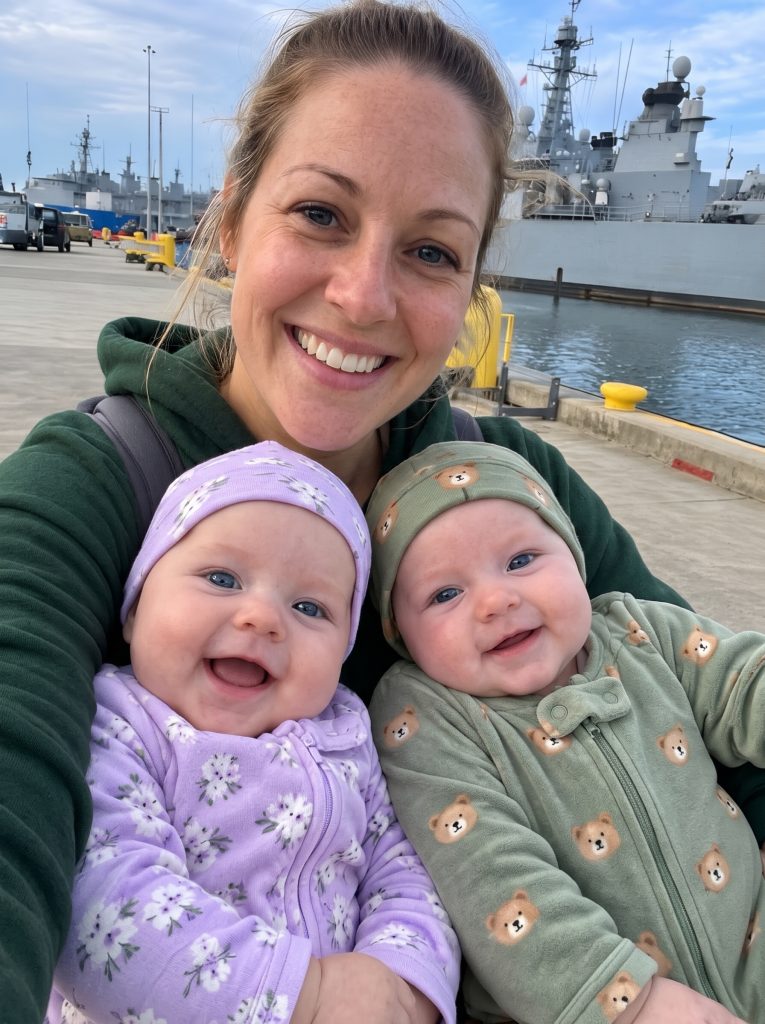
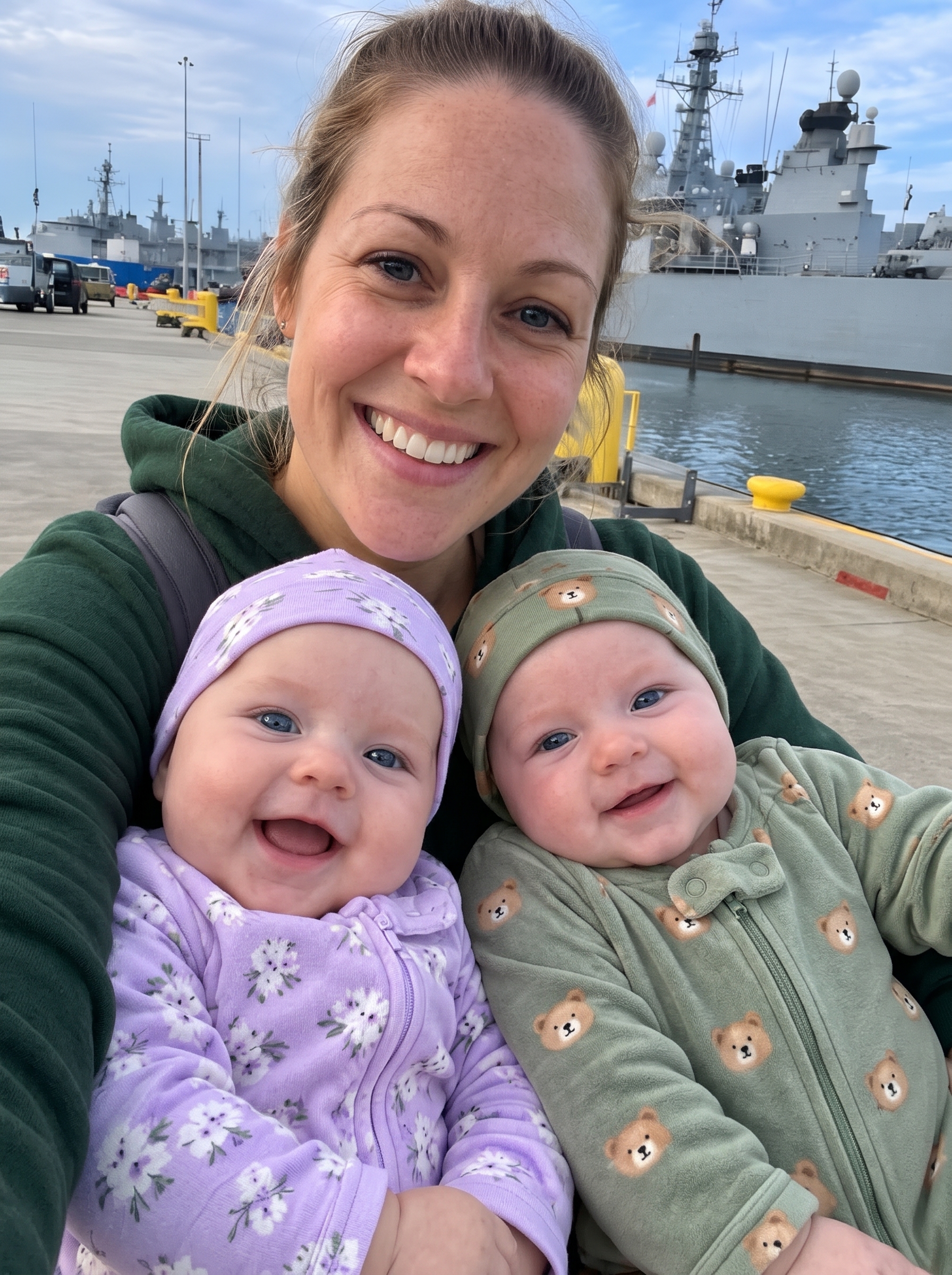
I arrived at the port with our baby twins to surprise my husband, who was returning from months at sea, but I caught him with his mistress — so I made him regret it.
My husband, Ryan, worked on a cruise ship and could be away from home for months at a time.
When he left for his trip, I was seven months pregnant — we were expecting twins.
Two months later, I gave birth to our beautiful daughters.
Ryan kept calling me and telling me how badly he wanted to finally see our girls.
So when I found out he would be returning from his trip three months later, I decided to surprise him.
We had agreed that we would wait for Ryan at home, but I wanted so badly for him to finally meet our daughters, to hug him as soon as possible, and then go home together.
That’s when I decided I would go straight to the port with our daughters to meet him. I didn’t tell him about it during those three months.
Then, the day before he arrived, I bought tickets to another city where his cruise ship was supposed to dock.
And I went to the cruise terminal.
I was holding our daughters in my arms when I finally saw him walking out of the terminal.
Through the crowd, I was just about to wave and call out to him.
But then I saw that he wasn’t alone.
He was with another woman.
She was pulling a suitcase, and he had his arm around her waist. They were laughing together, and then he leaned down and kissed her.
Everything inside me dropped.
I stood there frozen, unable to move.
Then Ryan noticed me.
He immediately walked over to me with the woman.
“Claire? What are you doing here?”
My voice trembled as I answered.
“I actually wanted to surprise you so you could finally see your daughters…”
Then the woman beside Ryan laughed and said:
“Well… this is awkward, to put it mildly.”
Then Ryan said:
“Please, just don’t make a scene. We met on the ship, and it just happened. I mean, you understand that I’m a young, attractive guy, and being alone for that many months just isn’t realistic.”
The woman smirked.
Ryan went on to explain that apparently he couldn’t stay faithful to just one woman because “that’s just male nature,” and proudly added that she “wasn’t the only woman he’d been with.”
I was in complete shock.
He wasn’t even trying to apologize or explain himself. He simply blamed me for his cheating and stood there smiling while I held our babies in my arms.
Then suddenly, I felt completely calm inside. I already knew exactly what I was going to do.
“You know what, honey?” I said. “I understand. I really do.”
Then I smiled.
“But there’s something you forgot. One very important detail. Please look to your right.”
The smile instantly disappeared from his face.
Twenty feet away stood his mother.
Judith had both hands pressed over her mouth.
Beside her was Ryan’s younger sister, Hannah.
They had come because I had invited them.
That had been part of my surprise.
Ryan hadn’t seen his family for five months, and I thought it would be wonderful if all of us were there when he stepped onto land—his mother, his sister, his wife, and the two daughters he had never held.
Judith had even brought a small blue-and-white banner Hannah had painted the previous evening.
WELCOME HOME, DADDY.
The banner hung uselessly between them.
Ryan looked at me.
Then at his mother.
Then at Hannah.
The woman beside him finally stopped smirking.
“Ryan?” she whispered.
Judith walked toward us slowly.
I had known her for eight years. She was normally the sort of woman who filled every silence because she couldn’t bear to leave one unattended.
That morning she said nothing.
She simply stopped in front of her son and looked at the babies.
Ryan swallowed.
“Mom, this isn’t—”
“Have you met your daughters yet?” Judith asked.
It was such a simple question that it seemed to strike him harder than anger would have.
“No.”
Judith nodded once.
“Then perhaps you should start there.”
Ryan looked down.
Our daughters were asleep.
Sophie had one tiny fist tucked against her cheek. Lily had somehow managed to free one foot from the blanket, as she always did.
Ryan’s face changed.
For the first time since he’d walked out of the terminal, the confidence disappeared.
“Which one is which?” he asked quietly.
I stared at him.
During our calls, he had asked that question dozens of times while looking at photographs.
Suddenly I couldn’t answer.
Not because I wanted to punish him.
Because something inside me had closed.
Hannah stepped forward.
“Claire,” she said softly, “give me one of them.”
I let her take Lily.
My arms had begun to ache, although I hadn’t noticed until then.
The woman beside Ryan cleared her throat.
“I’m Sabrina.”
Nobody responded.
Her face flushed.
She looked at Ryan. “You said your marriage was basically over.”
That caught my attention.
Ryan turned sharply. “Don’t.”
Sabrina stared at him.
“You said you were living separately.”
“We were,” he said.
“No,” I said.
Ryan looked at me.
I spoke quietly.
“We weren’t.”
Judith closed her eyes.
Sabrina’s expression changed.
The smugness disappeared, replaced first by confusion and then something that looked uncomfortably like embarrassment.
“You said she knew,” Sabrina said.
Ryan lowered his voice.
“This isn’t the place.”
“No,” I said. “It isn’t.”
I adjusted Sophie against my shoulder.
Strangely, I wasn’t crying anymore.
Maybe my mind had decided that tears belonged to a version of the day that no longer existed.
I looked at Ryan.
“There are spare keys to the apartment in the lockbox at your mother’s house. I’ll pack some clothes for you tonight.”
His eyebrows rose.
“Claire.”
“You can stay somewhere else.”
“That’s my home too.”
“Yes. Which is why I’m not changing the locks.”
I surprised myself with how steady my voice sounded.
“But I’m asking you not to come there tonight.”
“You’re overreacting.”
Hannah actually laughed.
Not because anything was funny.
It was the stunned, disbelieving sound people make when language fails them.
“Overreacting?” she repeated.
Ryan rubbed his forehead.
“Everybody calm down.”
I almost smiled.
There it was.
Everybody.
As though the problem were the reactions surrounding him rather than the choices at the center of them.
Judith spoke.
“Ryan, go.”
“Mom—”
“Go.”
He stared at her.
Ryan had always been able to charm his mother.
As a teenager, he’d talked his way out of curfews. In college, parking tickets. At our wedding, he had reduced her to happy tears with three improvised sentences about family.
That morning, none of it worked.
Sabrina pulled the handle of her suitcase upright.
“I’m getting a hotel.”
Ryan turned.
“Sabrina, wait.”
“No.”
She gave me a brief glance.
There was no apology in it yet.
Only shock.
Then she disappeared into the crowd.
Ryan looked like he wanted to follow her.
That hurt more than I expected.
He had two daughters six feet away, and for a moment, his body turned toward another woman.
He caught himself.
“Can I at least hold them?”
I looked at Sophie.
Then at him.
It would have been easy to say no.
Maybe part of me wanted to.
But I knew that someday Sophie and Lily might ask about the first time their father saw them, and I didn’t want my pain to decide every detail of their history.
I stepped forward.
“Sit down.”
There was a bench along the terminal wall.
Ryan sat.
I carefully placed Sophie in his arms.
His entire posture changed.
His shoulders became rigid.
“Support her head,” I said automatically.
“I know.”
“No, you don’t.”
He looked up.
I hadn’t meant it cruelly.
It was simply true.
He looked back down.
Sophie stirred.
Ryan’s eyes filled.
“Oh,” he whispered.
For one second, I saw the man I had married.
Then the second passed.
Hannah sat beside him with Lily, and Ryan reached across with one finger to touch her tiny hand.
Lily immediately wrapped her fingers around it.
Ryan’s mouth trembled.
Judith turned away.
And I realized something terrible.
Love didn’t disappear merely because trust did.
That would have been easier.
I still knew the shape of Ryan’s hands. I knew he hated olives, loved old detective movies, slept with one foot outside the blanket, and always hummed when he made coffee.
I also knew those same hands had been wrapped around another woman ten minutes earlier.
Both things were true.
That was the beginning of the hardest lesson of my life:
People did not become strangers merely because they betrayed you.
Sometimes they remained terribly familiar.
—
We took separate taxis.
Judith and Hannah came with me.
Ryan went somewhere else.
He texted repeatedly during the drive.
Claire, please.
Can we talk privately?
This got out of hand.
I didn’t know you were coming.
That final message stayed on my screen.
I didn’t know you were coming.
As though advance notice had been the missing ingredient in his fidelity.
I turned my phone facedown.
At the hotel, Judith helped warm bottles while Hannah spread two changing mats over the bed.
Nobody discussed Ryan for almost an hour.
We talked about diapers.
Formula.
How Lily sneezed three times whenever she woke up.
How Sophie seemed offended by socks.
Ordinary things.
Beautiful things.
The things that had composed my whole life while Ryan had been away creating another one.
Eventually Judith sat across from me.
“Claire.”
I looked up.
“I’m sorry.”
I shook my head.
“You didn’t do it.”
“No. But he’s my son.”
“He’s thirty-three.”
A tiny smile touched her face.
“Unfortunately, motherhood doesn’t always recognize birthdays.”
That nearly broke me.
I looked down before she could see my eyes filling.
Judith reached across the table.
“You don’t have to decide anything tonight.”
“I think I already have.”
“About the marriage?”
I nodded.
She squeezed my hand.
Then her expression changed.
“There’s something else.”
I looked up.
Hannah stopped folding a blanket.
Judith seemed suddenly uncomfortable.
“What?”
She glanced at Hannah.
Hannah shook her head slightly, as though warning her mother not to speak.
My stomach tightened.
“What is it?”
Judith sighed.
“Three weeks ago, Ryan called me.”
That wasn’t unusual.
Ryan often called his mother from port.
“He asked me something strange,” she continued.
“What?”
“He asked whether your grandfather’s house was still legally yours.”
My skin prickled.
Three years earlier, my grandfather had left me a small house outside the city. Ryan and I rented it out. It wasn’t glamorous, but the rent covered most of our mortgage.
“Why would he ask you that?”
“I thought perhaps you were considering selling.”
“I’m not.”
Judith looked troubled.
“He asked if his name had ever been added to the deed.”
I stared at her.
“It hasn’t.”
“I told him I didn’t know.”
I picked up my phone.
My hands were no longer calm.
I opened my banking app.
Our everyday account looked normal.
Then I opened our savings account.
For several seconds, I couldn’t understand what I was seeing.
The balance was wrong.
Not catastrophically wrong.
But wrong.
There should have been nearly thirty-one thousand dollars.
There was twenty-two.
I scrolled.
A transfer had been made twelve days earlier.
$9,000.
The destination was an account ending in 4817.
I didn’t recognize it.
Hannah came around the table.
“Claire?”
I refreshed the screen.
The number remained.
Nine thousand dollars.
Transferred from our savings.
Authorized through Ryan’s login.
A cold pressure formed beneath my ribs.
Judith whispered, “Did you know about that?”
“No.”
I clicked the transaction.
The description contained only three words.
PRIVATE BUSINESS DEPOSIT.
Hannah read them over my shoulder.
“What business?”
I couldn’t answer.
My phone vibrated.
Ryan.
This time it wasn’t a text.
It was a call.
I stared at his name.
Then answered.
“Claire.”
His voice sounded exhausted.
“We need to talk.”
“We do.”
A pause.
I looked again at the missing money.
“Where are you?”
he asked.
I ignored the question.
“What is account 4817?”
Silence.
Not confusion.
Silence.
Recognition.
I stood.
Judith and Hannah watched me.
“Ryan,” I said. “What did you do with nine thousand dollars?”
His breathing changed.
“Claire, there are things you don’t understand.”
“Then explain them.”
“I was going to.”
“When?”
Another silence.
Then he said something that made the hotel room seem to tilt beneath my feet.
“The money isn’t the part you should be worried about.”
My fingers tightened around the phone.
“What does that mean?”
Ryan exhaled slowly.
“You need to go home.”
“Why?”
“Because there’s an envelope in my desk.”
I stared toward the dark hotel window.
“What envelope?”
His answer came almost as a whisper.
“The one I hoped you’d never have to find.”
P2 The Envelope in the Desk 002
I did not go home that night.
That surprised Ryan.
It surprised me too.
For years, urgency had been one of the invisible strings he could pull in me.
Claire, I need you.
Claire, can you handle this?
Claire, it’s important.
And I would move.
I would fix.
I would accommodate.
But with Sophie asleep against my chest and Lily curled beside Hannah, I finally understood that not every emergency belonged to the person who announced it first.
“Whatever is in that desk,” I told Ryan, “will still be there tomorrow.”
“Claire, listen to me.”
“No.”
“You don’t understand.”
“That’s becoming obvious.”
I ended the call.
Then I turned off my phone.
For the first time in years, Ryan could not reach me.
The world continued.
—
We returned home the following afternoon.
Judith offered to come inside.
I declined.
Not because I wanted to be alone.
Because I needed to know whether I could still enter my own home without feeling like I had stepped into the scene of somebody else’s life.
The apartment smelled exactly as it had when I’d left two days earlier—laundry detergent, lavender hand soap, and the faint sour trace of the diaper bin I had forgotten to empty.
Nothing had changed.
Everything had.
I settled the girls in their bassinets and stood in the hallway.
Ryan’s desk was in the small spare room we’d once called the office and had begun transforming into a nursery.
Half the room belonged to the babies.
Half still belonged to Ryan.
A dismantled crib leaned against one wall.
His books occupied another.
I opened the top drawer.
Pens.
Receipts.
A passport photograph.
Nothing.
Second drawer.
Charging cables.
Old employee documents.
A birthday card I’d given him two years earlier.
I almost stopped.
The card had a ridiculous cartoon sailboat on the front.
Inside, I had written:
Wherever you go, come home to me.
I put it back.
The bottom drawer was locked.
I had forgotten it could lock.
The key was taped beneath the desk.
Ryan had once shown me when we bought the furniture.
I’d laughed.
“What secrets are you planning to keep in there?”
“Mostly tax documents,” he’d said.
I inserted the key.
The lock clicked.
Inside lay a thick cream envelope.
CLAIRE was written across the front.
Ryan’s handwriting.
I sat on the floor.
For a moment I couldn’t open it.
Then Sophie made a tiny sound from the nursery side of the room.
That did it.
I tore the envelope.
Inside were photocopies of documents.
A business proposal.
A lease application.
Bank statements.
And a letter.
Claire,
If you’re reading this, then something has gone wrong.
I stopped.
That sentence irritated me immediately.
Something has gone wrong.
As though betrayal were weather.
As though it had happened to him.
I kept reading.
I’ve been working on something for almost a year. I wanted to tell you after it was certain because I knew you’d worry about the risk.
I looked at the heading on the business proposal.
HARBOR LIGHT EXCURSIONS.
Ryan had talked for years about leaving cruise work.
He loved the sea but hated months away.
His dream was to run small private coastal tours.
I had supported the idea.
Someday.
When we had savings.
When the twins were older.
When we had a plan.
Apparently, he had decided someday without me.
The proposal listed Ryan as managing partner.
A second name appeared beneath his.
Evan Mercer.
I knew Evan.
Or thought I did.
He’d worked with Ryan three years earlier.
They’d stayed friends.
Then I reached the financial page.
Initial capital required:
$48,000.
Ryan’s contribution:
$24,000.
Nine thousand had already been deposited.
My chest tightened.
We did not have another fifteen thousand to spare.
Then I noticed something else.
Collateral:
Residential property, pending owner authorization.
My grandfather’s house.
I sat completely still.
He had not forged my signature.
Not yet.
But he’d apparently planned to ask—or pressure—me after committing enough money that refusal would become difficult.
I turned to Ryan’s letter.
I know you’re going to be angry that I used some of our savings, but I needed to prove to Evan that I was serious.
My eyes burned.
Our savings.
Money accumulated through years of postponed holidays, overtime, careful budgets, and every freelance project I had taken while pregnant.
Money meant to keep us secure while I was on maternity leave.
Money Ryan had risked without asking.
Then came the line that changed the shape of the whole thing.
Evan thinks we’ll launch in spring. The problem is that he doesn’t know I’m reconsidering the partnership.
I frowned.
I continued.
There have been things happening onboard that I haven’t told you. I got involved with people I shouldn’t have. Nothing dangerous. Nothing criminal. Just complicated.
I almost laughed.
Complicated.
Ryan adored that word.
It could transform almost any bad decision into fog.
I read faster.
I have been stupid. I know that. But I think someone is trying to use the business against me.
I stopped.
Someone?
The remainder of the page had been written later, in darker ink.
If I ask you to sell the house, say no.
No matter what I tell you.
No matter how convincing I sound.
Do not sell it.
I stared at those words.
The apartment was silent except for the soft mechanical hum of the bottle warmer.
Why would Ryan plan to ask me for something while simultaneously warning me not to agree?
I checked the envelope again.
There was one more item.
A photograph.
Ryan standing beside Evan Mercer.
And Sabrina.
All three were smiling on the deck of the cruise ship.
On the back, Ryan had written a date.
Four months earlier.
Sabrina hadn’t merely “met him on the ship.”
She had known his business partner.
I called Hannah.
She answered immediately.
“Did you find it?”
“Yes.”
“And?”
“I don’t know.”
“What does that mean?”
“It means Ryan has apparently been planning a business with Evan.”
Silence.
“You remember Evan?”
“Unfortunately.”
“Why unfortunately?”
Hannah hesitated.
“Because he asked me for money last year.”
I closed my eyes.
“What?”
“He said Ryan didn’t know.”
“How much?”
“Five thousand.”
“Did you give it to him?”
“No.”
“Why didn’t you tell us?”
“He told me it was for a surprise for Ryan.”
I stood.
“What kind of surprise costs five thousand dollars?”
“Exactly why I said no.”
Something cold moved through me.
“Hannah, did Ryan ever mention Harbor Light Excursions to you?”
“No.”
“Did Evan?”
Another pause.
“Not by that name.”
I gripped the phone.
“What did he call it?”
“Blue Meridian.”
I looked down at the proposal.
HARBOR LIGHT EXCURSIONS.
“Are you sure?”
“Yes.”
“Why?”
“Because after I refused him the money, he sent me some investment document. I deleted it.”
“Can you recover it?”
“Probably.”
“Please try.”
I ended the call.
Then someone knocked.
For one hopeful, foolish second, I imagined Judith carrying groceries.
It was Ryan.
I opened the door but did not move aside.
He looked terrible.
Yesterday he had been freshly returned from sea, tanned and confident.
Today his shirt was wrinkled. His eyes were red.
“Can I come in?”
“The girls are asleep.”
“I’ll be quiet.”
“I didn’t say yes.”
His jaw tightened.
Then relaxed.
“Right.”
I brought the envelope to the doorway.
“Explain.”
He looked down.
“You read it.”
“All of it.”
“Then you know.”
“No, Ryan. I know fragments.”
He glanced toward the hall.
“Can we not do this in the doorway?”
“We can.”
He rubbed his face.
“Evan and I planned the business.”
“Without me.”
“It was supposed to be a surprise.”
I stared at him.
“Do you understand that phrase doesn’t work on me anymore?”
He flinched.
Good.
Not because I enjoyed hurting him.
Because for the first time, words seemed to be reaching him.
“What does Sabrina have to do with Evan?”
Ryan looked away.
“She was supposed to handle bookings and marketing.”
“So you knew her before this voyage?”
“Yes.”
“How long?”
“About eight months.”
My throat tightened.
“And the affair?”
He said nothing.
“How long?”
“Claire—”
“How long?”
“Six weeks.”
Yesterday he’d behaved as though his infidelity had simply sprouted from loneliness at sea.
Now I understood there had been months of secret meetings, planning and messages before that.
“Was she the only one?”
“No.”
The answer was immediate this time.
At least he had stopped pretending.
I looked down the hall toward our daughters.
“Why the warning about the house?”
Ryan’s face changed.
“Evan started pressuring me.”
“For what?”
“More money.”
“Why?”
“He says our original costs increased.”
“Do you believe him?”
“No.”
“Then why did you transfer nine thousand?”
“Because—”
He stopped.
“Because Sabrina convinced you?”
His eyes met mine.
There.
I had guessed correctly.
Ryan leaned against the wall.
“She said Evan would replace me if I didn’t demonstrate commitment.”
“You risked our savings because your mistress told you to.”
“She wasn’t—”
He stopped himself.
“Don’t insult me further,” I said.
He nodded.
For several seconds neither of us spoke.
Then Ryan said, “I think the business is fake.”
I stared at him.
“What?”
“Not completely fake. But I think Evan has been pitching different versions to different people.”
Blue Meridian.
Harbor Light.
Hannah’s five thousand dollars.
“How many people?”
“I don’t know.”
“How much money?”
“I don’t know.”
“Does Sabrina know?”
Ryan looked toward the elevator.
“I don’t know.”
I studied him.
For the first time, I wondered whether Ryan’s arrogance at the terminal had been entirely arrogance.
Maybe some of it had been performance.
Maybe he had been desperately trying to act like the carefree man he had become because admitting fear would mean confronting everything beneath it.
That did not excuse him.
But it made him more complicated than the villain I wanted him to be.
“Why didn’t you tell me?”
He laughed once without humor.
“Because every bad decision made the next confession harder.”
That, at least, sounded true.
He looked at me.
“I kept thinking I’d fix one thing first.”
“The business?”
“Yes.”
“And Sabrina?”
His face tightened.
“That too.”
“And the other women?”
Silence.
I nodded.
“There it is.”
“Claire.”
“You don’t get to organize your betrayals by convenience.”
“I know.”
“No. I don’t think you do.”
Sophie cried.
The sound came through the apartment sharp and sudden.
I turned immediately.
Ryan took one step forward.
“Can I—”
“No.”
I went to the nursery.
Sophie quieted when I lifted her.
Ryan stayed at the doorway.
He watched us.
“I love them,” he said.
I looked at him over Sophie’s head.
“You don’t know them.”
His face crumpled slightly.
“I want to.”
“Then learn.”
“What does that mean?”
“It means being their father is separate from being my husband.”
The sentence surprised both of us.
Ryan nodded slowly.
“I’ll do whatever you ask.”
“No.”
He frowned.
“I’m not going to spend the rest of my life telling you how to be decent.”
That landed.
He looked down.
“I need you to leave.”
He reached into his jacket pocket.
“I brought something.”
He placed a second phone on the table.
Not his usual phone.
A small black handset I had never seen.
“What is that?”
“Evan gave it to me.”
I didn’t touch it.
“Why?”
“For business.”
“Does Sabrina use it?”
“Sometimes.”
“Password?”
“0308.”
Our anniversary.
Of course it was.
Ryan left.
I waited until the elevator doors closed before picking up the phone.
The device contained almost nothing.
No social apps.
No photographs.
Only an encrypted messaging application and several email screenshots.
Most exchanges were between Ryan and Evan.
Costs.
Permits.
Boat listings.
Then I found a conversation between Evan and Sabrina.
Ryan had taken screenshots.
The first messages were mundane.
Then one made my breath catch.
Sabrina:
He’ll put up the property. He wants this too much to walk away.
Evan:
And the wife?
Sabrina:
Leave her to me.
My hands went cold.
A later message read:
Once we have the collateral paperwork, Ryan becomes optional.
I scrolled.
There were dozens more.
Ryan hadn’t merely been cheating with Sabrina.
Sabrina and Evan had apparently been using him.
I should have felt vindicated.
Instead, I felt tired.
Because Ryan had still made every choice that allowed them to.
Then I reached the final screenshot.
It was dated only four days earlier.
Evan:
If Claire refuses, we’ll use the other signature.
Sabrina:
Does Ryan know?
Evan:
Not yet.
Sabrina:
He will lose his mind.
Evan:
By then it won’t matter.
Attached beneath the message was a scanned document.
I enlarged it.
A property authorization form.
My grandfather’s address appeared near the top.
At the bottom was a signature.
Claire Bennett.
My name.
Written in handwriting that was not mine.
P3 A Signature That Wasn’t Mine 002
There is a peculiar feeling that comes with seeing your own name written by somebody else’s hand.
It is not quite fear.
Not at first.
It is invasion.
A signature is such a small thing—just loops and lines, repeated so often that it becomes unconscious.
Mine had been copied carefully.
The C was almost right.
The final t in Bennett leaned too far forward.
Whoever had done it had practiced.
I photographed the screen with my phone.
Then I photographed it again.
After that, I called the bank.
Not Ryan.
Not Judith.
Not Hannah.
The bank.
The woman who answered spoke in the calm professional tone of someone accustomed to hearing panic through telephones.
She froze outgoing transfers from the joint savings account and gave me instructions for documenting the disputed withdrawal.
Then I called the company that managed my grandfather’s property.
No sale was pending.
No lien had been registered.
No transfer had occurred.
For the first time in an hour, I breathed fully.
A fake document was still a serious problem.
But the house was safe.
I contacted a solicitor the next morning.
Her name was Priya Shah.
She had silver-framed glasses and the useful habit of allowing silence to sit in a room without rescuing anyone from it.
I showed her the screenshot.
She studied it.
“Do you know who created this?”
“No.”
“Do you believe your husband did?”
“I don’t know.”
That was the answer I hated most.
Priya looked at me.
“Do you want my professional advice or personal reassurance?”
“Professional.”
“Good.”
She tapped the document.
“Then don’t guess.”
Something in my shoulders loosened.
For three days, everybody seemed to want me to decide who Ryan was.
Judith wanted to believe her son had been foolish but redeemable.
Hannah wanted to throw his belongings off a balcony.
Sabrina, apparently, wanted nothing to do with any of us.
Ryan wanted me to believe he had become trapped.
I wasn’t interested in choosing a narrative.
I wanted facts.
Priya continued.
“We document what you know. We protect your finances. We verify whether this document was ever submitted anywhere. And you make decisions about your marriage separately.”
Separately.
The word felt like a door opening.
Maybe I didn’t have to solve everything at once.
—
Sabrina called that afternoon.
I almost ignored the unfamiliar number.
“I’m assuming you don’t want to hear from me,” she said.
“You assume correctly.”
“I need five minutes.”
“Why?”
“Because Evan lied to me too.”
I closed my eyes.
“I don’t care.”
“You should.”
There was something in her voice that stopped me.
Not arrogance.
Fear.
We met in a crowded café the following morning.
I chose the location.
I sat near the window.
Hannah stayed two tables away with the twins, pretending poorly not to watch us.
Sabrina arrived without makeup, wearing jeans and a plain gray sweater.
She looked younger than she had at the port.
Perhaps confidence added years.
Perhaps shame removed them.
She sat.
“I owe you an apology.”
“Yes.”
She blinked.
I had no energy to make it easier for her.
Sabrina folded her hands.
“Ryan told me you two were separated.”
“You said that already.”
“I didn’t believe him completely.”
That surprised me.
She looked down.
“I saw photographs of you on his phone.”
“Then why—”
“Because I wanted to believe him.”
There was painful honesty in that.
She continued.
“He told me the marriage had been unhappy for years. He said you were only staying together until after the babies were born because you didn’t want stress during the pregnancy.”
My hands tightened around my cup.
“He told you I knew about you?”
“Eventually.”
“But you suspected he was lying.”
“Yes.”
“So you stayed anyway.”
She met my eyes.
“Yes.”
I appreciated that she didn’t defend herself.
It didn’t make me like her.
It made the conversation possible.
“What does Evan want?”
Her expression hardened.
“Money.”
“From Ryan?”
“From everyone.”
She explained.
Evan had spent years pitching small maritime businesses—excursion companies, charter boats, travel services.
Some were genuine ideas.
None seemed to launch.
He persuaded people to invest small enough amounts that they were embarrassed to complain when nothing happened.
A few thousand here.
Ten thousand there.
Promises changed.
Company names changed.
Deadlines shifted.
Ryan had become valuable because he had experience, industry contacts, and—most importantly—a wife who owned property.
“Did you forge my signature?”
“No.”
“Did Evan?”
“I don’t know.”
“You told him you’d handle me.”
Sabrina went pale.
“You saw the messages.”
“Yes.”
She stared at the table.
“I thought he meant convincing Ryan to persuade you.”
“That’s not what you wrote.”
“I know.”
“Did you know he had prepared paperwork?”
“No.”
I watched her face.
Maybe she was lying.
But something told me she wasn’t.
“Why are you helping me?”
She gave a humorless laugh.
“I’m helping myself.”
Fair enough.
She opened her bag and removed a folder.
“Evan owes me twelve thousand dollars.”
“For what?”
“I invested too.”
I stared at her.
“You’re his partner.”
“I thought I was.”
She slid documents toward me.
Different business name.
Different logo.
BLUE MERIDIAN COASTAL.
Hannah had been right.
Sabrina’s contract described a 20-percent ownership stake.
Ryan’s Harbor Light proposal described her only as a marketing consultant.
Evan had promised them both pieces of businesses that apparently did not exist in the same form.
Sabrina pointed to a bank routing number.
“That’s where I sent my money.”
I compared it to the screenshot of Ryan’s nine-thousand-dollar transfer.
Same destination.
Account ending 4817.
I leaned back.
“So Ryan really didn’t know?”
“About the different companies? No.”
“About you helping Evan pressure him?”
Her eyes dropped.
“No. He didn’t know that either.”
The answer should have pleased me.
Instead, I felt something close to grief.
Because the clearer Ryan’s victimhood in the business scheme became, the less useful it was as an explanation for everything else.
He had been deceived financially.
He had not been deceived into kissing Sabrina.
Those truths needed separate rooms.
I heard Priya’s voice in my head.
Don’t guess.
Sabrina pushed another page toward me.
“This is why I called.”
It was an email from Evan.
Three sentences.
The final one read:
Once Ryan signs the restructuring papers, his twenty-four-thousand obligation becomes personally guaranteed.
I frowned.
“Twenty-four thousand?”
“He only paid nine.”
“Apparently Evan considers Ryan liable for the rest.”
“Is he?”
“Not from anything I’ve seen.”
I looked at Sabrina.
“Where is Evan now?”
“Still onboard.”
That startled me.
“The ship left yesterday.”
“I know.”
“Then why did Ryan get off?”
“His contract ended.”
“And Evan’s?”
“Three more weeks.”
She hesitated.
“Claire, there’s something else.”
Of course there was.
“Ryan didn’t start questioning Evan because of money.”
“Why did he?”
“Because of you.”
I almost laughed.
“That’s convenient.”
“I’m serious.”
She leaned forward.
“About a month ago, Evan asked me how much your house was worth.”
I went still.
“I said I didn’t know.”
“He said Ryan had shown him photographs.”
“Ryan did?”
“Apparently.”
That hurt.
My grandfather’s house was not merely property.
He had built the porch himself.
My mother had learned to ride a bicycle in that driveway.
I had spent summers there eating strawberries over the sink.
Ryan knew all of that.
“He started talking about how easy it would be to leverage it,” Sabrina continued. “Ryan overheard him.”
“And?”
“They had a huge argument.”
“What did Ryan say?”
“That the house wasn’t his.”
A strange feeling moved through me.
It wasn’t forgiveness.
But it mattered.
Sabrina looked toward Hannah and the twins.
“After that, Ryan tried to get his money back.”
“And Evan refused.”
“Yes.”
“Then why didn’t Ryan tell me?”
“You’d have to ask him.”
I already knew.
Shame.
Pride.
Cowardice.
Pick one.
Pick all three.
—
That evening, Ryan came to see the girls.
We had agreed on two hours.
Judith stayed with me.
Not because I thought Ryan would do anything.
Because I wasn’t ready to be alone with him.
He changed Lily’s diaper badly.
Then less badly.
He fed Sophie.
He learned that she needed to be burped halfway through the bottle or she would complain loudly.
For almost an hour, we spoke only about the babies.
It was surreal.
Tender.
Awful.
When both girls finally slept, Ryan remained seated beside their bassinets.
“I met Sabrina,” I said.
His head snapped up.
“Why?”
“Because she has evidence.”
“Claire, don’t trust her.”
“I don’t.”
He looked away.
“Good.”
“But I don’t trust you either.”
He nodded.
That hurt him.
I could see it.
I let it.
“Did you show Evan pictures of my grandfather’s house?”
“Yes.”
“Why?”
“We were talking about what kind of office we’d want someday. I said I liked the porch.”
“That’s all?”
“That’s all.”
“Did you ever offer the property as collateral?”
“No.”
“The proposal says pending owner authorization.”
“I told Evan I’d ask you.”
My face hardened.
Ryan closed his eyes.
“I know.”
“You had already spent nine thousand dollars before you planned to ask.”
“I know.”
“So it wasn’t really a question.”
He looked at me.
“No.”
That answer mattered too.
Finally, no excuse.
He whispered, “I was going to make it difficult for you to say no.”
The honesty hit harder than denial.
I sat opposite him.
“Why?”
“Because I wanted the business.”
“More than our security?”
“I didn’t think of it that way.”
“That’s the problem.”
He nodded.
Tears appeared in his eyes.
I felt no satisfaction.
Only fatigue.
“I spent years telling myself I worked away because I was doing it for us,” he said. “Then I started resenting you for having the life I thought I was providing.”
I stared at him.
“What life?”
“Home. The babies. Normal mornings.”
“I gave birth without you.”
“I know.”
“I learned how to feed two newborns at three in the morning without you.”
“I know.”
“I cried in the shower because I was so tired I couldn’t see straight.”
His face collapsed.
“I know.”
“No, Ryan. You didn’t. That’s the point.”
The room became silent.
Then he said, “I was jealous of you.”
I almost couldn’t believe it.
“Of me?”
“Yes.”
“While I was pregnant with twins?”
“I didn’t say it was reasonable.”
“Clearly.”
He covered his face.
“I started telling myself I deserved something that was mine.”
“The business?”
“At first.”
“And then?”
He looked at me.
“The attention.”
There it was.
No male nature.
No loneliness.
No inevitability.
Attention.
He had liked being admired by people who didn’t know about bills, laundry, pregnancy appointments, or who had forgotten to order diapers.
People who saw charming Ryan.
Adventure Ryan.
Not exhausted, frightened, ordinary Ryan.
“I don’t expect you to forgive me,” he said.
“Good.”
“I just don’t want you believing the forgery was mine.”
“I don’t.”
Surprise flickered across his face.
“I also don’t think that changes what you did.”
It disappeared.
“I understand.”
“Do you?”
“I’m starting to.”
Before he left, I asked one final question.
“Who could have copied my signature?”
Ryan frowned.
“Evan has seen it.”
“Where?”
“On our old travel paperwork.”
My stomach tightened.
“What travel paperwork?”
“The emergency contact forms you signed when you came on the Mediterranean trip with me.”
That had been four years earlier.
“Would he still have those?”
“I don’t know.”
Ryan stood.
Then froze.
His face drained of color.
“What?”
He reached for his phone.
“Ryan?”
“The forms.”
“What about them?”
“They weren’t stored with Evan.”
“Then where?”
He looked at me.
“In the crew administration archive.”
I waited.
He swallowed.
“Sabrina had access.”
—
I called Sabrina immediately.
No answer.
Again.
Nothing.
Then Hannah called me from the kitchen.
“Claire.”
Something about her voice made me hurry in.
She held her phone.
“I recovered the old message Evan sent me.”
“And?”
She turned the screen toward me.
Attached was the investment proposal for Blue Meridian.
At the bottom were three listed founders.
Evan Mercer.
Sabrina Cole.
And a third name.
Hannah pointed.
“Do you know her?”
I read it twice.
Natalie Bennett.
My maiden name was Bennett.
Natalie was my older sister.
The sister I had not spoken to in six years.
My sister had not disappeared literally.
That would have been easier to explain.
Natalie lived only three hours away.
I knew this because our mother occasionally mentioned her in careful, neutral sentences.
Natalie changed jobs.
Natalie moved.
Natalie sent a Christmas card.
Six years earlier, Natalie and I had fought over our grandfather’s estate.
He had left the house to me.
Natalie received money of roughly equal value.
But she believed the house should have been sold and divided.
I refused.
The disagreement became a larger disagreement.
Old childhood resentments crawled out from places we’d forgotten to lock.
She said I was always Granddad’s favorite.
I accused her of appearing only when there was something to inherit.
We both said things that could not be unsaid.
Then we stopped speaking.
Now her name sat on a business proposal beside the man who had apparently forged my signature.
I called her.
The number was unchanged.
She answered after five rings.
“Hello?”
I couldn’t speak.
“Hello?”
“Natalie.”
Silence.
“Claire?”
Her voice sounded almost exactly the same.
Older, perhaps.
Softer.
But my body remembered it before my mind did.
“What is Blue Meridian?”
The silence changed.
“Where did you hear that name?”
“Answer me.”
“Claire—”
“Are you working with Evan Mercer?”
“No.”
My grip tightened.
“Were you?”
Another pause.
“Two years ago.”
I closed my eyes.
“Why?”
“He approached me about buying Granddad’s house.”
The floor seemed to tilt.
“What?”
“I didn’t know him then. He said he represented a small hospitality company.”
“How did he know about the house?”
“I assumed public records.”
“And you didn’t think to call me?”
A brittle laugh.
“We weren’t exactly calling each other.”
“Did you tell him I would sell?”
“No.”
“Did you give him my signature?”
“What? No.”
I sat.
“What happened?”
Natalie exhaled.
“He wanted to turn the property into short-term lodging for coastal tour clients. He asked whether I had any ownership claim.”
“You don’t.”
“I know.”
“Did you tell him that?”
“Eventually.”
“Eventually?”
“I was angry.”
There was no defense in her voice.
Only shame.
“I let him think there might be a dispute.”
My eyes closed.
Of course.
A family fracture had become an opening.
“What did you sign?”
“A confidentiality agreement and an expression of interest. Nothing involving you.”
“Why is your name listed as a founder?”
“What?”
I sent her the photograph Hannah had recovered.
Natalie was quiet for almost a minute.
Then she said, “That’s not the document I signed.”
My stomach tightened.
“Are you sure?”
“Claire, I’ve never seen this.”
“Did you give him money?”
“Three thousand.”
I leaned back.
There it was again.
Small enough to hesitate over fighting.
Large enough to matter.
“What happened?”
“He vanished.”
“Evan?”
“For almost a year.”
“And then?”
“He contacted me four months ago.”
Exactly when Ryan’s voyage began.
“What did he want?”
“He asked whether you were still married to Ryan.”
Every hair on my arms rose.
“Why?”
“He said Ryan was looking for investors.”
I stood.
“Did you talk to Ryan?”
“No.”
“Did you talk to Evan again?”
“No. I blocked him.”
I believed her.
Or wanted to.
Then Natalie said quietly, “Claire, there’s something I should have told you years ago.”
I shut my eyes.
Apparently my life had become a collection of sentences beginning that way.
“What?”
“Granddad nearly left the house to both of us.”
I said nothing.
“He changed his will shortly before he died.”
“I know.”
“No. You know that he changed it. You don’t know why.”
My throat tightened.
“Why?”
“Because I asked him to.”
I couldn’t speak.
Natalie’s voice shook.
“I was in debt. I had made a mess of things. He knew if he left me part of the house, I’d pressure you to sell it.”
The anger I had carried for six years suddenly lost its shape.
“He protected it from me,” she said. “Not because you were the favorite.”
I sat back down.
“Why didn’t you tell me?”
“Because I was ashamed.”
That word again.
The invisible architect of half our disasters.
Shame.
Ryan’s shame had built secrets.
Natalie’s shame had built silence.
Mine, I realized, had built pride.
We had all been protecting versions of ourselves until there was barely enough truth left to share.
“I thought you hated me,” I whispered.
“I did for a while.”
Despite everything, I laughed.
Natalie laughed too.
Then both of us began crying.
Six years disappeared badly.
Not magically.
Not cleanly.
But enough.
—
Natalie drove down the next morning.
When she entered my apartment, neither of us knew whether to hug.
Lily solved the problem by crying.
Natalie laughed through tears.
“Is that one of them?”
“No, I borrowed a random baby for the day.”
Her mouth fell open.
Then she laughed harder.
I had forgotten how easy it was to make her laugh.
She held Lily while I made coffee.
We talked.
Not enough to repair six years.
Enough to begin.
Natalie brought every document Evan had ever sent her.
Priya reviewed them that afternoon.
The pattern became clearer.
Evan did not run one giant criminal operation.
He did something smaller and perhaps more sustainable.
He found ambitious people.
People with dreams.
People with grudges.
People with enough money to risk but not enough power to chase him indefinitely.
Then he sold each person a slightly different future.
To Natalie, a hospitality venture.
To Sabrina, equity in a travel company.
To Ryan, independence and a business near home.
He had used the same bank account and recycled plans.
But one mystery remained.
My signature.
Sabrina finally returned my calls.
She arrived with her laptop.
“I didn’t forge it.”
“I believe you.”
She stared at me.
“You do?”
“Yes.”
“Why?”
“Because whoever did this had access to something older.”
Sabrina opened archived crew records.
With Ryan’s written permission and through the appropriate company process, she had obtained copies of the old travel documents.
There it was.
My signature.
Same looping C.
Same short underline.
And beside the file history was a record of who had accessed it.
Not Sabrina.
Not Evan.
Ryan.
Three months earlier.
I felt physically ill.
Sabrina whispered, “I’m sorry.”
I called him.
He came within an hour.
Natalie stayed.
So did Judith.
Ryan walked into a room containing his wife, his mother, his sister-in-law, and eventually Sabrina by video call.
He looked around.
“What happened?”
I placed the access record in front of him.
“Why did you open my old forms?”
He stared.
Then sat.
“I can explain.”
My heart sank.
Those might have been the four words I hated most.
“Do it.”
“Evan needed proof of address for the proposal.”
“My proof?”
“He said because your property might eventually be involved.”
“You told me you never authorized that.”
“I didn’t.”
“Then why did you send him my documents?”
Ryan’s voice cracked.
“Because I thought you’d agree later.”
The room became completely quiet.
I stared at him.
There was no mystery anymore.
Not really.
The forgery might not have been Ryan’s hand.
But he had opened the door.
He had handed someone the pen.
“I didn’t know he’d copy your signature,” he said.
“No.”
I looked at him.
“But you gave him a document containing it without asking me.”
His eyes filled.
“Yes.”
Natalie looked away.
Judith whispered, “Ryan.”
He covered his face.
“I’ve ruined everything.”
I expected anger.
Instead, I felt something stranger.
Clarity.
“You didn’t ruin everything,” I said.
He looked up.
“You ruined our marriage.”
His face went still.
“But my life is not everything.”
No one moved.
I had not planned the sentence.
Yet once spoken, it felt like the truest thing I had said in months.
My marriage was ending.
That was enormous.
Painful.
Terrifying.
But my life contained Sophie.
Lily.
My sister, unexpectedly returned.
Work I wanted to resume.
A house with a porch.
Friends I had neglected.
Mornings I had not yet lived.
Ryan had broken something central.
He had not broken the entire world.
Tears ran down his face.
“Is there really no chance?”
I thought about it.
Truly thought.
“No.”
He nodded.
Once.
Then again.
“Okay.”
It was the first decision of mine he accepted without argument.
That mattered.
Perhaps growth sometimes arrived too late to save one relationship but early enough to protect the next.
—
Two weeks later, Priya confirmed that the forged authorization had never been legally recorded.
The bank investigated the transfer.
Ryan cooperated fully.
Evan, confronted with documentation from several investors, agreed through counsel to return a substantial portion of the funds rather than allow the dispute to escalate.
It wasn’t dramatic.
There were no arrests in the night.
No television cameras.
No spectacular downfall.
There were emails.
Statements.
Forms.
Meetings.
The ordinary machinery by which complicated harm is sometimes corrected.
Sabrina recovered some of her investment.
Natalie did too.
Ryan’s nine thousand was returned to our joint account pending our separation agreement.
And Ryan moved into a small rental apartment fifteen minutes away.
He bought two bassinets.
A changing table.
Far too many stuffed animals.
For the first time in his adult life, he seemed to understand that love was not an emotion you announced.
It was work you repeatedly performed.
He began with small things.
He arrived on time.
He learned the girls’ feeding schedule.
He stopped asking me to remind him.
He attended a parenting class.
When he made mistakes, he corrected them instead of explaining them.
I noticed.
I did not interpret noticing as forgiveness.
That distinction became important.
One evening, while Ryan was visiting the twins, Natalie and I sat on the balcony.
“Do you hate him?” she asked.
I looked through the glass.
Ryan was walking Lily around the living room, humming badly.
“No.”
Natalie seemed surprised.
“I thought I would.”
“And?”
“I think hate would require me to keep organizing my life around him.”
She smiled faintly.
“Look at you.”
“What?”
“Getting wise.”
“Sleep deprivation.”
“Same thing.”
We laughed.
Then my phone rang.
Priya.
I answered.
“Claire, I need to ask you something.”
My stomach tightened automatically.
“What?”
“Did your grandfather ever have another property?”
I frowned.
“No.”
“Are you certain?”
“Pretty certain.”
There was a pause.
“Because while reviewing the records connected to Evan’s filings, we found a second address under your grandfather’s name.”
I sat upright.
Natalie looked at me.
“What address?”
Priya read it.
Natalie’s coffee cup slipped slightly in her hand.
I noticed.
“Natalie?”
She had gone pale.
“Claire,” she whispered.
“What?”
She stared at me.
“I know that address.”
“How?”
Natalie swallowed.
“Because Granddad took me there once.”
The night breeze moved around us.
“And?”
Her eyes filled with a fear I had never seen before.
“There was a woman living there.”
P5 The House by the Water 002
The address led to a narrow cottage near the coast.
Not the coast where Ryan’s cruise ship docked.
A quieter stretch two hours north, where the road narrowed between pine trees and the sea appeared only in flashes of blue.
Natalie drove.
I sat beside her.
For most of the journey, neither of us spoke.
“Why didn’t you ever tell me?” I finally asked.
“I was seventeen.”
“Still.”
“I thought Granddad was having an affair.”
I turned.
“What?”
Natalie tightened her hands around the steering wheel.
“He told me not to tell Grandma.”
Our grandmother had died years before him.
“Who was the woman?”
“I don’t know.”
“Did you meet her?”
“Briefly.”
“What was her name?”
“Margaret.”
That was all Natalie remembered.
Margaret.
The cottage.
Granddad bringing groceries.
A woman in her forties crying when she saw Natalie in the car.
Then our grandfather driving away in silence.
“For years, I thought that was proof he wasn’t who we thought,” Natalie said.
“And you never asked him?”
“Once.”
“What did he say?”
“That adults sometimes carry promises children shouldn’t have to carry.”
I looked out at the sea.
It sounded exactly like him.
Mysterious.
Tender.
Infuriating.
The cottage still stood.
Small.
White-painted.
Weathered.
A woman answered our knock.
She was in her late sixties.
When she saw us, she gripped the doorframe.
“Claire?”
I froze.
“How do you know me?”
Her eyes moved toward Natalie.
“And Natalie.”
Natalie whispered, “Margaret?”
The woman nodded.
Then she began to cry.
—
Margaret Ellis was not our grandfather’s mistress.
She was his niece.
Our mother’s cousin.
A branch of the family we had never known existed.
Decades earlier, Margaret’s father—Granddad’s older brother—had become estranged from the family.
The details were painfully ordinary.
Money.
Pride.
Words nobody apologized for quickly enough.
When Margaret’s parents died, our grandfather quietly helped her.
The cottage belonged partly to him because he had purchased it with Margaret after she lost her home during a difficult divorce.
“Why hide it?” I asked.
Margaret looked embarrassed.
“Your grandmother knew.”
Natalie and I stared at each other.
“So there wasn’t an affair?”
Margaret laughed through tears.
“Good heavens, no.”
Natalie covered her face.
“I have spent twenty years thinking Granddad had a secret girlfriend.”
That made Margaret laugh harder.
Eventually all three of us were laughing.
Not because the confusion wasn’t painful.
Because sometimes relief needed somewhere ridiculous to go.
Then Margaret explained why the property had appeared in Priya’s search.
Granddad had never removed himself from the deed.
His small ownership interest had passed into his estate.
Technically, it belonged to me.
But that wasn’t the real surprise.
Margaret went upstairs and returned with a wooden box.
“Your grandfather asked me to keep this.”
Inside were letters.
Dozens.
Some were addressed to my mother.
Some to Natalie.
Several to me.
None had been sent.
“He planned to give these to you himself,” Margaret said. “Then his health declined so quickly.”
My hands trembled as I opened mine.
Dear Claire,
If you’re reading this because Margaret finally became braver than I was, then please tell her I said I told you so.
I laughed.
Even dead, Granddad sounded like himself.
The letter continued.
A house is only wood and stone until people decide what it means.
Do not confuse ownership with love.
Do not keep something merely because losing it feels like losing a person.
People are not houses.
They live in us differently.
I stopped reading.
Natalie watched me.
“What?”
I handed her the letter.
She read.
Her face softened.
“He knew we’d fight.”
“Apparently.”
“Annoying man.”
“Extremely.”
At the bottom, he had written one final paragraph.
And if you and Natalie ever stop speaking over what I leave behind, I will consider that a spectacular failure of estate planning.
Natalie burst out laughing.
Then she cried.
Then I did.
We sat on Margaret’s faded sofa holding hands like girls.
Six years of silence did not disappear.
But it became something we could finally look at rather than live inside.
—
The legal issues surrounding the cottage were easy to resolve.
I signed my inherited share over to Margaret.
Priya asked if I was certain.
I was.
Granddad’s warning echoed in my mind.
Do not confuse ownership with love.
The house had never been mine in any meaningful sense.
Keeping it simply because I could would have been another version of the mistake we had all made—using possession as proof of significance.
Something else changed too.
I decided not to sell my grandfather’s original house.
But I stopped treating it as a shrine.
Natalie and I spent a weekend there.
We repainted the kitchen.
We repaired the porch.
We argued about curtains.
She won.
Mostly.
For the first time since Granddad’s death, the house felt less like something I had inherited and more like somewhere life might continue.
—
Ryan and I finalized our separation several months later.
He did not contest the terms.
We divided our finances fairly.
He repaid the portion of savings used without my knowledge.
We established a parenting schedule that expanded gradually as the girls grew.
There were difficult days.
Days when seeing him reminded me too clearly of the port.
Days when a harmless phrase made my stomach knot.
Days when I wondered whether leaving had been too easy.
Then I would remember that divorce did not need to be a war to be real.
Ryan regretted what he had done.
Deeply.
But his regret was not my reward.
That distinction saved me.
I had once imagined that if somebody hurt me badly enough, healing would require them to hurt equally.
It didn’t.
I needed safety.
Truth.
Choice.
I needed my future returned to me.
Ryan’s suffering could not provide that.
Only I could.
He changed in ways I had not expected.
He left cruise work.
Not for Harbor Light.
That dream was dead.
Instead, he took a shore-based logistics position.
Less glamorous.
Lower pay.
Home every night.
When I asked why, he looked through the playground fence toward Sophie and Lily.
“I spent years believing being a provider meant being gone.”
“And now?”
“Now I think sometimes it means being there when somebody throws up at two in the morning.”
I smiled despite myself.
“Profound.”
“I’ve matured.”
“Clearly.”
We could joke occasionally.
That surprised me.
There was no romance in it.
No secret reconciliation waiting around the corner.
Just two people who had once loved each other learning how to become something else without poisoning everything that remained.
—
Sabrina disappeared from our lives after the financial dispute ended.
Before she did, she sent me one message.
I’m sorry for the part I played. You didn’t deserve it.
I stared at the message for a long time.
Then replied:
Thank you for saying that. I hope you make different choices next time.
She responded:
Me too.
That was all.
Evan returned most of the disputed money under a settlement involving several investors.
He moved on.
Perhaps that was the least satisfying part.
Life rarely arranged itself so neatly that everyone received exactly what they deserved.
Sometimes people simply encountered consequences, lost trust, lost opportunities, and carried on.
I learned to accept that justice did not always arrive with music playing behind it.
Sometimes it looked like paperwork and boundaries.
Sometimes it looked like saying no.
—
The twins turned one on a bright Saturday in June.
We held the party at my grandfather’s house.
Our house, I had finally begun calling it.
Natalie hung strings of paper stars from the porch.
Judith baked two small cakes, one for each girl.
Hannah brought bubbles.
Margaret came too.
For the first time, four branches of a family that had spent years misunderstanding one another sat at the same long table.
Ryan arrived carrying two gifts and a diaper bag.
He paused at the gate.
For a second, I remembered the terminal.
Him walking toward me beside Sabrina.
The suitcase.
The kiss.
The terrible sentence about male nature.
Memory was strange.
It could remain vivid without remaining powerful.
“You’re early,” I said.
Ryan smiled.
“By three minutes.”
“Personal growth.”
“I’d like it noted.”
“Noted.”
He looked toward the porch.
“Is it okay if I come in?”
The question mattered.
A year earlier, Ryan had treated every boundary as an obstacle.
Now he asked.
“Of course.”
He walked inside.
Sophie saw him first.
“Dada!”
Ryan stopped.
His entire face transformed.
It was the first time either girl had called him that clearly.
He crouched.
Sophie ran toward him with the staggering determination unique to toddlers.
Ryan caught her.
Then he cried.
Nobody teased him.
Lily followed, mostly because she refused to allow Sophie exclusive access to anything.
Ryan gathered both girls into his arms.
I watched.
The pain wasn’t gone.
But it had changed.
Scars were not erased wounds.
They were evidence that the body had figured out how to continue.
Natalie came beside me.
“You okay?”
“Yeah.”
“Really?”
I considered it.
“Really.”
She leaned her shoulder against mine.
Across the garden, Ryan looked up.
Our eyes met.
He mouthed:
Thank you.
I didn’t need to ask what for.
For letting him become a father after failing as a husband.
For refusing to turn our daughters into weapons.
For drawing boundaries without erasing him.
I nodded.
That was enough.
—
After everyone left, I carried the sleeping girls upstairs.
The house was wonderfully messy.
Crushed paper hats.
Half-deflated balloons.
Cake frosting on a dining chair.
One tiny shoe abandoned beneath the piano.
I should have cleaned.
Instead, I went onto the porch.
The evening air smelled of grass and distant rain.
A car approached.
For a moment, I assumed Ryan had forgotten something.
It stopped outside the gate.
A man stepped out.
I didn’t recognize him.
He looked about forty.
Dark hair.
Nervous expression.
He held an envelope.
“Claire Bennett?”
“Yes?”
He walked toward the porch but stopped several feet away.
“My name is Daniel Mercer.”
Mercer.
My stomach tightened.
“Evan’s brother?”
He nodded.
“What do you want?”
“I’m not here on Evan’s behalf.”
I almost laughed.
“That isn’t reassuring.”
“I know.”
He looked down at the envelope.
“I found something while clearing our father’s storage unit.”
“About Evan?”
“About your grandfather.”
Every instinct told me to send him away.
I was tired of secrets.
Tired of envelopes.
Tired of dead people leaving mysteries for the living.
But then Daniel said a name.
“Margaret Ellis.”
I froze.
“What about her?”
“My father knew her.”
“How?”
“That’s what I’m trying to understand.”
He extended the envelope.
I didn’t take it.
“Why should I trust you?”
“You shouldn’t.”
The answer surprised me.
Daniel lowered his hand.
“But you should probably see what’s inside.”
“What is it?”
“A photograph.”
“Of what?”
“Your grandfather. My father. Margaret.”
He swallowed.
“And a fourth person.”
I stared at him.
“Who?”
Daniel looked toward the upstairs window, where my daughters slept.
Then back at me.
“A woman named Evelyn Bennett.”
My breath caught.
That was my grandmother’s name.
Daniel continued quietly.
“The photograph was taken in 1987.”
“So?”
“Look at the back.”
This time, I accepted the envelope.
Inside was an old photograph.
Four young adults stood beside a boat.
Granddad.
Grandma.
Margaret.
And Daniel’s father.
They were smiling.
On the back, in my grandmother’s handwriting, were seven words:
For the children, when the truth matters.
Below that was a list of three names.
My mother’s.
Margaret’s.
And someone named Thomas.
I looked up.
“Who’s Thomas?”
Daniel shook his head.
“I was hoping you could tell me.”
The porch light flickered on automatically above us.
Inside the house, one of the twins stirred through the baby monitor.
I looked again at my grandmother’s message.
For the children, when the truth matters.
A year ago, I would have been terrified.
I would have wanted answers immediately.
I would have mistaken urgency for necessity.
Now I folded the photograph carefully and returned it to the envelope.
“Not tonight,” I said.
Daniel blinked.
“What?”
“My daughters turned one today.”
“Oh.”
“I have frosting on my chair, balloons in my kitchen, and two sleeping babies upstairs.”
I looked at the photograph once more.
“Whatever Thomas means has waited thirty-nine years.”
A slow smile appeared on Daniel’s face.
“I suppose another night won’t hurt.”
“No.”
He handed me his card.
“When you’re ready.”
I watched him leave.
Then I sat on the porch steps.
The envelope rested beside me.
For once, a secret could wait.
That might have been the greatest change of all.
I no longer felt compelled to chase every unanswered question simply because somebody else had placed it in front of me.
Upstairs, Lily began fussing.
Then Sophie joined her.
I laughed.
“Coming.”
I stood.
Before going inside, I looked back at the dark garden.
At the gate.
At the road beyond it.
My life had not become simpler.
It had become mine.
And somewhere inside an old photograph waited another story—one connected to my grandfather, my grandmother, Margaret, the Mercer family, and a name none of us yet understood.
Thomas.
I turned off the porch light.
Then I went upstairs to my daughters.
The envelope remained on the table below.
Unopened again.
But not forgotten.
THE END!