I’d been retired barely two days when my daughter-in-law decided my new cabin by the lake would be ideal for her parents’ summer vacation.
She instructed me to ready the bedrooms, casually adding that I could sell the property if the arrangement bothered me.
Apparently, forty-one years of savings, quiet mornings beside the water, and my being the sole name on the deed counted for nothing once she found a use for my home.
I neither argued nor reminded her who owned it. I didn’t even raise my voice.
Instead, I made a discreet call, assembled a slim folder, and waited outside until their SUV came up my driveway as though they already owned the place.
At sixty-four, I’d retired and bought the cabin for a single purpose: to hear myself breathe again.
That was all I wanted. I had never pictured a glamorous retirement, a sprawling mansion, or a retreat that announced wealth to anybody passing by. No extravagance or millionaire’s hideaway. Just wood beneath my boots, lake breezes passing through the screen, a cup of cooling coffee, and mornings quiet enough to ease the ringing left in my ears by forty-one years at a steel mill.
Most of my life had been spent amid noise: furnaces roaring, forklifts beeping, steel scraping against steel, and men shouting above the equipment because a soft voice couldn’t get anything poured, cut, hoisted, or fixed.
Even after my final shift, I’d awakened twice in my city apartment, certain the factory whistle had sounded. Instead, there was only the refrigerator and my upstairs neighbor dragging something across the floor at 12:38 a.m.
So finding a three-bedroom log cabin with a green metal roof, a stone chimney, and a weathered dock needing sanding made the decision easy.
It smelled of cedar shavings, old lake water, and honest labor. The siding needed new stain, the boathouse door stuck, and the steps groaned beneath my feet. I welcomed every flaw. There was something comforting about knowing precisely what required my attention. A house that needs repairs makes no attempt to hide what it is, and after years of listening to promises over factory noise, I valued that kind of straightforwardness.
My son Elliot knew how much the place mattered. His mother had left when he was thirteen, and I’d raised him alone without asking him to choose sides.
I made lunches before dawn, attended games in freezing weather wearing work boots, showed him how to change oil in an old pickup, and sat through parent-teacher conferences still smelling faintly of the mill. Between extra shifts and fatherhood, I’d had little time for pride. Every ordinary responsibility mattered: making sure he was fed, getting to school when someone needed me, and coming home even when the workday had taken nearly everything out of me.
When Elliot married Sienna seven years before, I tried to build a decent relationship with her. I overlooked the comments about my apartment being industrial vintage without the deliberate styling, my restored maple table looking very rustic, and my supposedly charming job—said in that tone that means useful but unimpressive.
What did I offer in response? Silence. Unfortunately, those who never pay for what they take can mistake silence for consent.
Thirty-six hours after I moved in, I sat on the dock at 6:17 on Thursday evening when Sienna called.
Your son and I have decided my parents will stay at your cabin for the summer, she announced.
If you don’t like that, you can sell the place and move back somewhere you can actually be useful.
Water lapped quietly against the rocks. A loon called beyond the reeds, and my coffee had gone cold.
I asked only one thing.
Has Elliot agreed to this?
My husband understands that family sometimes requires sacrifices, she replied.
Unlike certain people.
Then came her instructions. Her parents would arrive Friday. I could pick them up if needed. Beverly’s back problems entitled her to the main bedroom, while Gordon required room for his paperwork. I was to clear the closets and not cause trouble.
These weren’t requests; they were orders. Asking means acknowledging another person’s choice. Ordering means treating that person as part of the furnishings.
I didn’t fight her. With reasonable people, a simple refusal suffices. With entitled ones, it only starts the argument. I decided to make the facts impossible to misunderstand.
At 7:04 p.m. I contacted the county clerk and confirmed the recorded deed. At 7:41 I printed the closing papers, property-tax receipt, and ownership document identifying exactly one proprietor: me.
I also printed Sienna’s 8:12 p.m. message.
Don’t embarrass everybody over a few empty bedrooms.
Across the top of a legal pad, I wrote in black ink:
My home is not available for reassignment.
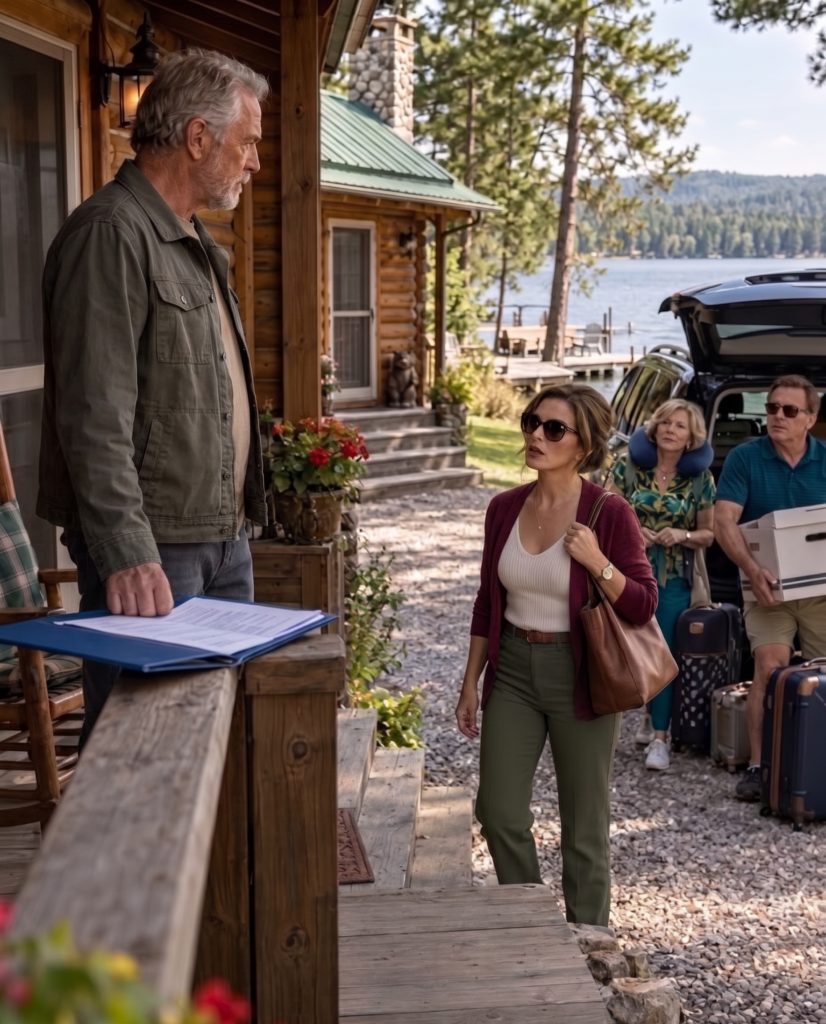
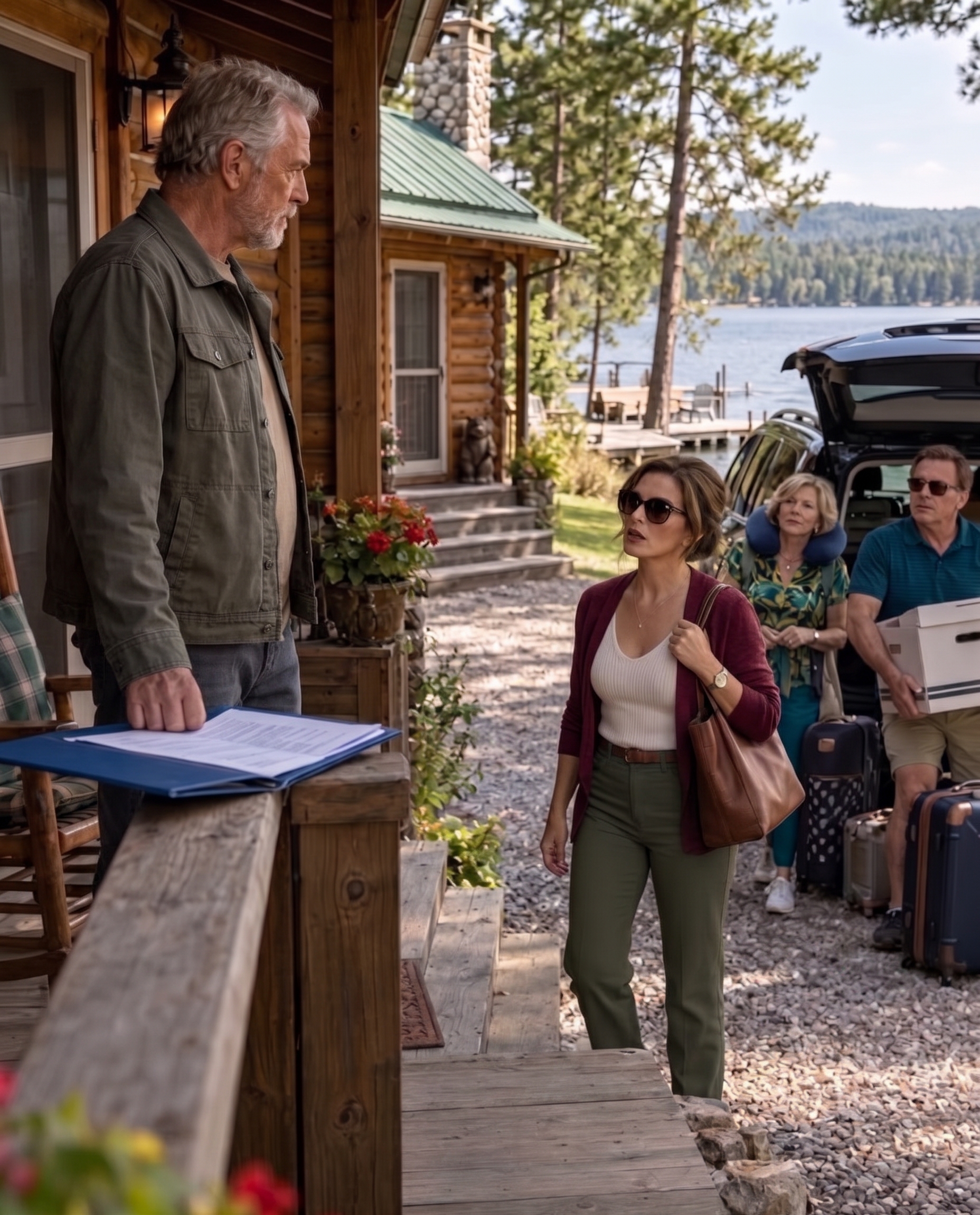
By Friday afternoon, not a single guest bed was prepared. The closets remained untouched, and the primary-bedroom door was closed. On the kitchen table lay a thin blue folder containing the deed, tax bill, insurance papers, copies of her texts, and an unsigned rental contract with market-rate conditions I knew they wouldn’t accept.
My hands were surprisingly steady. For a moment I wanted to shout about every hour beside the furnaces, every lost weekend, every exhausted supper eaten standing over the sink. I wanted her to understand that four decades on concrete hadn’t been endured so her parents could claim my peace as spare storage space.
But rage is an expensive way to spend the tranquility you’ve worked to earn. If I shouted until my throat hurt, I would still be left with the same ownership documents and the same unwanted visitors. I preferred to let the papers say what my anger could not improve.
I put on my old denim jacket, took the folder, and went onto the porch.
The driveway retained the afternoon heat. The small American flag by the mailbox snapped in the breeze, and the screen door squealed against its spring.
At precisely 4:26 p.m., an SUV turned off the road.
Sienna sat up front wearing sunglasses, smiling before they stopped. Beverly rode behind with a travel pillow around her neck, while Gordon hugged a banker’s box, apparently certain someone had already made room for its contents.
The hatch lifted, revealing two suitcases.
Sienna got out, surveyed the cabin beyond me, and said:
Good. You’re ready.
I opened my blue folder against the porch rail. For the first time in seven years, her confident smile faded before I even spoke.
I turned to the deed, displaying my name—the only one recorded—along with the county seal and property’s description for Sienna, Beverly, and Gordon.
No one said anything. Water brushed the stones below the lawn, and the screen door creaked behind my back.
Sienna finally declared the whole thing absurd because family shouldn’t need documents.
I laid out the property-tax receipt, then the insurance page, then a printout of her message:
“Don’t embarrass everyone over empty rooms.”
I had been retired for less than two days when my daughter-in-law called my new lakeside cabin the perfect solution for her parents’ summer plans.
Beverly studied it briefly. Her expression changed ahead of Sienna’s. She had come equipped with a travel pillow and luggage, not expecting to find her arrival documented as evidence.
Gordon put his banker’s box on the gravel with a muffled thud. Rather than looking at me, he turned to his daughter-in-law.
That reaction revealed something: Sienna must have described this arrangement differently during the drive. Perhaps she’d said I offered, or Elliot had handled it, or that I was being stubborn but would eventually agree.
Whatever her version, it hadn’t featured legal ownership records and her own remarks in print.
I set the unused rental contract on top. Its terms were uncomplicated: market rent, a security deposit, specified dates, and no automatic entitlement to bedrooms or storage. It certainly didn’t convert my home into a family holiday resort merely because someone found that convenient.
Sienna looked as though I’d struck her with the papers.
I hadn’t. That distinction mattered. I’d done nothing vindictive; I’d simply put the facts in front of everyone.
She accused me of embarrassing her parents. I replied that I hadn’t invited them into an embarrassing situation. It was the sharpest I allowed myself to sound.
Beverly quietly asked Sienna exactly what Elliot had agreed to. Sienna hesitated, and that hesitation did more than any speech I could have delivered.
Her phone vibrated. Elliot’s name shone on the screen between us.
Sienna attempted to step away, but the porch was small and the truth was already out in the open.
I asked her to use speakerphone. She stayed still, so I extended my hand. Perhaps because everyone was watching, she handed over the phone.
I answered with my son’s name. Elliot was bewildered: why had Sienna repeatedly called while he was driving home from work?
I repeated the question I’d asked her the previous evening. Had he consented to Beverly and Gordon living in my cabin all summer?
There was a pause—not the silence of someone caught lying, but of a man reconstructing what he thought he’d heard from his wife.
Then he said no.
One word, and the entire scene shifted.
Sienna went pale. Beverly shut her eyes. Gordon lifted his box from the ground and held it against his chest, no longer moving toward the doorway.
Elliot wanted to know what was happening. I didn’t dramatize it. I read Sienna’s text, followed by the first line of my rental agreement, and explained that her parents’ luggage was already in my drive.
Silence followed. I heard traffic on his end and my own breathing on this one.
I’d spent years shielding Elliot from having to choose between adults whenever possible. His mother’s departure had taught me how unfairly grown-ups could place their decisions on children.
But Elliot wasn’t thirteen anymore. He was a husband and a son, caught in a situation his wife had tried to organize without him knowing its full truth.
He asked to speak with Sienna. I returned the phone and she stepped off the porch. We didn’t need to overhear her words; her posture gave away enough.
Initially she stood rigid, chin raised, hand planted on her hip as though sheer confidence could settle everything. Then her arm dropped. She turned away from her parents and spoke Elliot’s name in a voice smaller than I’d ever heard from her.
Beverly perched on the SUV’s seat, rubbing the bridge of her nose.
Gordon finally faced me and explained he’d been told that I wanted company and that the cabin arrangement was settled.
I believed him. Not because he deserved unlimited trust, but because his embarrassment seemed genuine. A liar usually works hard to keep his expression animated. Gordon’s face was motionless.
I apologized to them for how they’d been brought into this, while making it clear the cabin wasn’t available. I could recognize the discomfort of two people arriving under a false impression without accepting responsibility for creating that impression myself. Both things could be true. Being kind needn’t mean yielding.
It had taken me sixty-four years to understand that.
Sienna came back holding her phone. No apology followed. Some people can’t admit wrongdoing while the consequences are still fresh: doing so would mean acknowledging that they gambled with another person’s life and lost.
She told her parents they should leave. She didn’t address me.
Beverly slowly got up. Gordon returned his box to the SUV, followed by the luggage. The rear hatch closed with a quiet, final thump.
Before getting into the passenger seat, Sienna glanced at the blue folder. My palm stayed over it—not as a threat, but as proof the documents would remain valid regardless of her feelings.
Their SUV reversed out at 4:58 p.m. I remember it distinctly. Only thirty-two minutes had passed since they arrived. In less than an hour, an entitled plan had collided with one folder and fallen apart.
When the dust cleared, Elliot remained on the line. He said my name the way he used to as a child when he realized he’d missed something important.
I told him I wasn’t asking him to punish his wife on my behalf. I only wanted him to recognize me as a person with a life of my own. There was an important difference.
He said he understood. I trusted him, although restoring belief after a family hurt isn’t as easy as flicking a switch. It’s more like replacing damaged boards on a dock, one by one.
That evening I latched the screen door and sat at the table, leaving the folder open.
Surprisingly, the cabin didn’t feel contaminated. I’d expected Sienna’s demands to echo through the rooms and ruin my first retirement week. Instead, my home felt more secure.
Perhaps defending a place without behaving cruelly makes it feel more truly yours.
I returned the deed to the folder, tucked it into the drawer by the stove, and brewed coffee despite the late hour. Retirement hadn’t erased my old habits.
Outside, the water turned deep blue. A truck passed without stopping. Nobody came up my driveway, ordered me to clear a closet, or called my quiet life a collection of empty rooms.
In the following days, Elliot visited alone. He arrived carrying a toolbox and sandwiches from a roadside diner.
We couldn’t address everything at once. The men in my family had never been talented at laying their feelings across a table.
So we talked while smoothing the dock and tightening loose porch screws, a few difficult pieces at a time. The work gave our hands something useful to do whenever the conversation stalled. Neither of us needed to fill every gap with an explanation.
He explained that Sienna had portrayed me as lonely and eager to share the cabin. She’d also suggested that rejecting the plan would harm Beverly’s health and embarrass everyone.
I listened, then told him being married didn’t oblige him to allow his wife to erase his father.
He didn’t challenge me. That was sufficient for our first day.
Sienna stayed away for two weeks. When she eventually appeared, she stood outside without her sunglasses. She looked younger, not necessarily gentler, but less protected by her usual armor.
Her apology was imperfect, as genuine apologies often are.
She described the pressure of solving several problems at once. Her parents had worries of their own, she said. And she acknowledged she should never have spoken to me that way.
I accepted that last admission, not the explanations as excuses. That distinction was necessary.
People who’ve taken too much sometimes try to return it wrapped in context. Explanations help us understand a wrong; they don’t erase it.
I said she could visit when invited. Beverly and Gordon could join us for dinner one day, provided everybody understood they’d be guests. Nobody, however, would be moving into my cabin for the summer.
She nodded without a rehearsed comeback. It was the closest we could get to a fresh beginning then. Whether anything better followed would depend on time and her ability to distinguish family from unrestricted access.
By the end of my first month, we’d sanded the dock smooth. Elliot helped apply stain to the exterior siding.
Beverly sent a brief, embarrassed letter apologizing for arriving without speaking to me herself. Gordon returned the unsigned rental agreement with a dry comment that the market rent had increased his respect for me more than he’d expected.
I laughed at that. It was the first genuinely amusing moment of the whole affair.
I kept the blue folder, not because I anticipated another intrusion, but because it reminded me of something I’d nearly lost sight of.
A peace-loving man still needs backbone. A tranquil house still requires a door he can lock. And a lifetime of work doesn’t become communal property simply because somebody says family persuasively.
Most mornings now, I sit on the dock holding my coffee. The planks feel smoother beneath my boots, and the porch steps still creak, though not quite as loudly.
Sometimes Elliot visits, occasionally bringing lunch. Other times we say almost nothing and let the lake fill the quiet. That suits me.
I didn’t spend forty-one years working so I could retire and win family arguments. I retired to hear myself breathe.
And after that Friday, no one in my family ever called my home empty rooms again.
I had been retired for less than two days when my daughter-in-law called my new lakeside cabin the perfect solution for her parents’ summer plans.
The Inheritance Blueprint
The quiet broke on an uncharacteristically hot Tuesday afternoon in late July. A sleek silver sedan—not Sienna’s usual vehicle, but a brand-new leased luxury crossover—pulled onto the gravel drive. Elliot was at the wheel, but Sienna sat in the passenger seat with an array of color-swatch folders tucked under her arm.
When they stepped out, Sienna didn’t approach with her former hostility, but with a terrifyingly polished efficiency. Elliot looked torn between genuine filial affection and the exhaustion of a man who had spent a two-hour drive being coached on family compromise.
“Dad,” Elliot began, wiping sweat from his forehead as he stepped onto the porch. “Sienna had an idea. Something to… bridge the gap after last month. A way to upgrade the property so everyone wins, without taking anything away from you.”
I invited them inside, though I left the blue folder right where it belonged—inside the top drawer near the stove.
Sienna spread three large architectural sketchpads across my dining table. The drawings depicted my single-story timber cabin transformed into a sprawling two-story compound. The open porch was replaced by a winterized sunroom, the master bedroom was expanded, and a brand-new detached guest cottage sat where my woodpile and garden shed currently stood.
“It’s an estate plan, Arthur,” Sienna said, her voice smooth, calibrated, and devoid of the sharp edge she’d used in June. “We’ve spoken to a financial consultant. Elliot and I are prepared to fund eighty percent of this renovation out of our own savings and a private equity line. We’d build the guest house specifically for Beverly and Gordon, but the entire title remains in your name during your lifetime. When the time comes… well, it significantly increases the overall valuation of the inheritance for Elliot.”
She placed a crisp set of legal draft agreements next to the sketches. It was a far more sophisticated trap than her crude attempt to dump her parents on my doorstep with luggage and a travel pillow. This time, she wasn’t asking to take my home; she was proposing to buy a share of my autonomy under the guise of an investment.
“You’re proposing to tear down the wood shed I built with my father in 1984,” I said, looking at the rendered lines on the glossy paper.
“It’s an eyesore, Arthur,” she replied simply. “And it’s inefficient. A modern guest house adds three hundred thousand dollars in equity to your estate.”
“I don’t live in equity, Sienna,” I said quietly. “I live in a home.”
Elliot shifted uncomfortably in his chair. “Dad, just look at the numbers. It wouldn’t cost you a dime. Sienna’s parents would cover their own construction cost for the secondary unit. They wouldn’t even be in your main house.”
I looked at my son. The tragedy of the situation wasn’t Sienna’s ambition; it was Elliot’s willingness to let his father’s peace be chopped up into financial instruments to keep harmony in his own marriage.
“If your in-laws have two hundred thousand dollars to build a cabin extension on my land,” I said, leaning back, “they have two hundred thousand dollars to buy a plot of land three miles down the road.”
Sienna’s calm facade cracked slightly. “Land on the lake is non-existent at that price point, Arthur. This is about family consolidation. It makes financial sense.”
“It makes sense for a real estate portfolio,” I told her. “Not for a sixty-four-year-old man who just spent forty-one years answering to a board of directors. I am not running a family land trust here.”
I didn’t yell. I didn’t get up. I simply folded her architectural sketches in half, smoothing the crease down the middle, and handed them back to her.
“The wood shed stays. The cabin stays as it is. If you want to build an estate, buy your own dirt.”
Elliot looked down at the table, recognizing the absolute finality in my tone. Sienna took the folded sketches back slowly, her fingers tightening around the paper until the thick stock crumpled.
The Uninvited Dinner
By August, the summer heat had baked the pine needles into a rich, fragrant carpet along the drive. Sienna hadn’t brought up the construction plan again, but silence in a family rarely means surrender; often, it’s just the quiet before a change in tactics.
On a humid Thursday evening, a rental delivery van backed into my driveway. Two delivery workers unloaded a massive commercial smoker grill, three ice chests, and several folding tables onto my lawn.
Ten minutes later, Gordon and Beverly arrived, followed by Sienna, Elliot, and four people I had never seen before in my life—an older couple in resort wear and two young adults glued to their phones.
I walked down the porch steps, my boots crunching on the gravel.
“Arthur!” Gordon called out, trying for a hearty, booming tone that sounded hollow against the quiet pines. He was wearing a fresh apron and holding a tongs set. “Hope you’re hungry! We brought the whole setup!”
Sienna stepped forward before I could speak. “Arthur, this is my uncle Richard and aunt Claire, and their kids. They’re visiting from out of state for the weekend. We realized your lakeside lawn is the only space big enough for a proper family cookout. We’re doing all the cooking, all the cleanup—you don’t have to lift a finger.”
She was testing the boundaries again, using social leverage instead of legal documents. In front of distant relatives, she assumed, a man of my generation would be too polite to make a scene. She was counting on my manners to override my boundaries.
“Elliot,” I said, stepping past Sienna and looking directly at my son. “A word inside.”
Elliot followed me into the kitchen. Outside, I could hear Gordon trying to start the smoker and the chatter of strangers drifting across my dock.
“Did you know about this?” I asked, keeping my voice low.
“She planned it last night, Dad,” Elliot said, defensively crossing his arms. “It’s just a dinner. It’s four hours. They bought three hundred dollars worth of steaks. Why does everything have to be a battle?”
“It’s a battle because nobody asked me if I wanted ten people on my property on a Thursday night,” I said. “This isn’t about steaks, Elliot. It’s about whether this property is my home or an event venue your wife books whenever she wants to host her relatives.”
“They’re family, Dad!”
“They are her family,” I corrected him firmly. “And even if they were mine, a host invites guests; guests do not appoint themselves.”
I walked back out onto the porch. The strangers were setting up lawn chairs directly over the vegetable garden bed I’d spent three weeks weeding. Gordon was struggling with the smoker’s propane tank.
“Gordon,” I said clearly from the top step.
The chatter stopped. The strangers turned to look at me.
“You are welcome to take that food down to the public park at the south end of the lake,” I said, my voice carrying cleanly across the yard. “It has pavilion tables, public grills, and a clear view of the water. But you will not be setting up an event on this lawn tonight.”
Beverly froze, a box of plastic cutlery in her hands. Sienna stepped forward, her cheeks flushed with dark anger.
“Arthur, this is absurd! My uncle flew in from Chicago! We have hundreds of dollars of fresh meat!”
“Then I suggest you get it to the park grills before it spoils,” I replied. “You have fifteen minutes to load the van.”
Richard, the uncle, looked thoroughly uncomfortable. “Look, mate, we were told this was a joint family retreat…”
“You were misinformed,” I told him gently. “Just as Gordon and Beverly were misinformed two months ago.”
The drive out was silent and humiliated. Elliot stayed behind for five minutes after the convoy left. He didn’t yell. He sat on the porch rail, staring down at his boots.
“You’re making her hate you, Dad,” he said quietly.
“No, Elliot,” I answered, sitting on the porch bench next to him. “I’m making her realize that I exist as an independent human being. If she hates me for that, it’s because she only valued me as long as I was convenient.”
I had been retired for less than two days when my daughter-in-law called my new lakeside cabin the perfect solution for her parents’ summer plans.
The Winter Assessment
Autumn arrived with a sharp drop in temperature. The leaves on the maples around the lake turned a brilliant, violent red before falling into the dark water. The lake quieted down as the summer residents packed up their boats and headed back to the city.
In November, I received a official letter in the mail. It wasn’t from Sienna, nor was it from Elliot. It was an official notice from the county tax assessor’s office announcing a mandatory reassessment of my property value, triggered by a “reported structural modification and secondary residence application.”
I read the letter twice. Someone had filed a formal inquiry with the county planning board regarding the construction of an auxiliary dwelling unit on my parcel—complete with preliminary site plans that cited my parcel ID.
I drove down to the county office in town the following morning. The clerk behind the counter, a woman named Martha who had gone to high school with my late wife, pulled up the file.
“Arthur,” Martha said, frowning at her screen. “A design firm submitted these preliminary site plans six weeks ago. They listed you as the owner, but the primary contact and applicant on the form is Sienna Vance.”
She had used the architectural sketches from July to initiate a formal county zoning review, hoping to get municipal approval before securing my consent—assuming that once the county approved the variance, I would feel pressured not to waste the permit.
“Cancel the application, Martha,” I said, signing the formal withdrawal affidavit she placed in front of me. “And put a flag on this parcel ID. No permits, inquiries, or applications are to be processed without my notarized signature in person.”
“Understood, Arthur. Is everything okay at home?”
“Everything is fine,” I said. “Just keeping the fence line clear.”
That evening, I called Elliot. I didn’t call Sienna.
“I went to the county office today,” I told him without preamble.
Silence on the other end.
“Dad…” Elliot sighed, sound deeply weary. “She thought if we got the municipal green light first, it would show you that the project was completely legal and safe.”
“She committed fraud, Elliot,” I said, my tone dropping an octave. “Filing county land applications under my parcel number without my signature is illegal. It’s not ‘showing me it’s safe.’ It’s a violation of federal and state property law.”
“She didn’t forge your signature!” he said defensively. “She signed as ‘authorized representative’!”
“She is not my representative. She is your wife.” I paused, letting the weight of the words settle. “Elliot, I love you. You are my son. But if she attempts one more legal or administrative maneuver involving this property, I will file a formal complaint with the county prosecutor’s office, and I will retain a real estate attorney to issue a formal order of protection regarding this address.”
“You’d take legal action against your daughter-in-law?” Elliot’s voice was shaking.
“I am protecting my home from a person who refuses to respect basic boundaries,” I said calmly. “I am sixty-four years old, Elliot. I spent my whole life being fair. But being fair does not mean letting someone carve up my life while I watch.”
He didn’t speak for a long time. When he finally spoke, his voice was barely a whisper. “I’ll handle it.”
The Fractured Holidays
Christmas that year was a quiet, stark affair. For thirty years, Christmas had been a noise-filled event of family gatherings, roast dinners, and wrapping paper scattered across the living room.
This year, Sienna refused to set foot in the cabin. She gave Elliot an ultimatum: either they spent the holidays at her parents’ house in the city, or he went to his father’s alone.
Elliot arrived at my cabin on Christmas Eve at 4:00 p.m. He brought a frozen turkey, a box of stuffing, and a small, somewhat crooked pine wreath he’d bought from a roadside stand near the highway. He looked twenty years older than he was—eyes sunken, shoulders hunched under his heavy winter coat.
We cooked in near silence. The kitchen smelled of sage, butter, and roasting meat, familiar smells that had drifted through this house since he was a boy.
As we sat down at the small wooden table near the wood stove, Elliot put down his fork and put his head in his hands.
“She wants to get a separation,” he said softly.
I set my own fork down. “Because of the cabin?”
“Because of… everything,” he murmured. “She says I don’t stand up for our family. She says I choose you over her. She says you’re an old, stubborn tyrant who’s holding onto a piece of dirt just to exert control over us.”
“And what do you think, Elliot?” I asked, my voice steady, though my chest felt tight.
He looked up at me, his eyes red-rimmed. “I think… I spent five years letting her manage our whole life because it was easier than fighting her. She picked our apartment, she picked our friends, she picked where we went on vacation. And when you said no to her in June… it was the first time in five years someone told her that her willpower wasn’t enough to get what she wanted.”
He looked around the small cabin living room, taking in the exposed wooden beams, the stone fireplace, and the quiet snow falling outside the window.
“She doesn’t hate the cabin, Dad,” he admitted. “She hates that she can’t own you.”
“A marriage built on total surrender isn’t a marriage, son,” I said gently. “It’s a custody arrangement. You don’t owe anyone your self-respect to keep the peace.”
“I don’t know how to fix it,” he said.
“You don’t fix a marriage by giving away things that aren’t yours to give,” I told him. “You fix it by deciding who you are, standing on your own feet, and seeing if the other person is willing to walk beside you instead of riding on your back.”
We finished our dinner in silence, but it wasn’t an uncomfortable quiet. It was the solemn silence of two men who understood that the real work of living wasn’t done on paper, but in the choices made when the wind blew cold.
I had been retired for less than two days when my daughter-in-law called my new lakeside cabin the perfect solution for her parents’ summer plans.
The Spring Awakening
Spring came slowly to the north woods. The lake ice thawed in mid-April, cracking with deep, resonant booms that echoed across the valley like artillery.
In May, Elliot came up alone every weekend. He didn’t bring architectural plans, rental drafts, or high-pressure ideas. He brought lumber, a belt sander, new brass hinges for the kitchen cabinets, and a crate of oil-based deck sealer.
He and Sienna were attending couple’s therapy in the city. They were living in separate apartments temporarily—a move Elliot had initiated himself after Sienna attempted to unilaterally list their city condo for sale without his agreement.
One Saturday afternoon, while we were resealing the dock planks under a bright, cool sun, a green sedan pulled into the driveway.
Gordon stepped out. He was alone. He wasn’t carrying a banker’s box or a barbecue tongs set. He wore simple work clothes—jeans and a flannel shirt—and held a wooden crate filled with garden tools and several bundles of perennial flowers.
Elliot paused his sanding. I wiped my hands on an old rag and walked down to meet him at the gravel line.
“Arthur,” Gordon said, holding his hat in his hand. He looked older, smaller than he had the previous summer, but his eyes were clear.
“Gordon,” I replied.
“I brought some hostas and daylilies,” Gordon said, gesturing to the crate. “Beverly wanted me to drop them off. She remembered your wife used to keep hostas along the shade path by the shed.”
I looked at the plants, then at him. “Beverly remembered that?”
“She did,” Gordon said quietly. “Look, Arthur… I came to apologize. Properly. Man to man.”
He set the crate down on the grass.
“Last summer… I knew Sienna was pushing things too hard. I knew she hadn’t cleared everything with you. But I was tired, Arthur. My retirement savings took a hit during the market downturn, our apartment lease was ending, and I just… I wanted to believe there was an easy answer. I let my daughter push you because it was convenient for me.”
It took courage for a man of sixty-five to stand on another man’s driveway and lay his weakness out like that.
“I appreciate you saying that, Gordon,” I said, offering my hand.
He took it, his grip firm and sincere.
“Can I help you guys with that dock?” Gordon asked, looking over at Elliot, who was watching from the water’s edge. “I used to do carpentry before I took that bank desk job thirty years ago.”
“Grab a brush, Gordon,” I said. “The stain’s in the shed.”
The three of us worked until sunset. We didn’t talk about leases, estate plans, or county permits. We talked about wood grain, weather patterns, and the best way to keep deer out of the hostas.
By the time Gordon left at 7:00 p.m., the dock was sealed, the garden bed was planted, and an unspoken accord had been struck. Respect isn’t built through legal documents; it’s earned when people stop trying to use each other.
The Boundary Established
By mid-summer, a year after the blue folder had first made its appearance on my porch table, the air had finally cleared.
Sienna called me herself in July. It was the first time she had called my phone directly without using Elliot as a buffer or an instrument.
“Arthur,” she said. Her voice was steady, subdued, but clear.
“Sienna,” I replied, sitting on the porch swing with my afternoon coffee.
“Elliot and I are moving back into our condo next week,” she said. “We’ve been in counseling for six months. We have a lot of work to do, but… we’re trying.”
“I’m glad to hear that,” I said, and I meant it.
“I wanted to ask…” She paused, taking a deliberate breath. “Elliot said you were having a small cookout for your sixty-fifth birthday next weekend. Gordon and Beverly said they were coming up for the day.”
“They are,” I said.
“Would it be… would it be alright if I came with Elliot?” she asked.
The question was key: she asked. No assumptions, no declarations of family rights, no passive-aggressive arrangements. A simple request from a daughter-in-law to a father-in-law.
“You are welcome to come, Sienna,” I said. “As a guest. We start eating at five.”
“Thank you, Arthur,” she said softly. “I’ll bring a salad.”
When Saturday arrived, the weather was flawless. The sky was a pale, clear blue, and the lake was as calm as glass.
Elliot and Sienna arrived together at 3:00 p.m. Sienna walked up the porch steps carrying a large glass bowl covered in foil. She didn’t have sunglasses on. She didn’t look around the property as if evaluating its square footage or potential expansion value. She looked at the fresh coat of stain on the dock, at the hostas blooming near the shed, and then at me.
“Happy birthday, Arthur,” she said, setting the bowl on the outdoor table.
“Thank you, Sienna,” I said.
We sat on the porch as Gordon grilled burgers on my old charcoal kettle—not a commercial smoker, just a simple iron grill that had served me for twenty years. Beverly sat on the porch swing, sipping ice tea and talking to Elliot about his work.
Sienna came to stand near the railing where I was watching the water.
“It’s very quiet here,” she said quietly, looking out across the blue expanse.
“It is,” I said.
“I didn’t understand that last year,” she admitted, staring at her hands. “I grew up in a house where if you weren’t moving, building, or acquiring something, you were failing. I thought your cabin was an underutilized asset.”
“It’s not an asset, Sienna,” I said gently. “It’s a sanctuary.”
She nodded slowly. “I see that now.”
I had been retired for less than two days when my daughter-in-law called my new lakeside cabin the perfect solution for her parents’ summer plans.
The Clear Horizon
By the time the sun began to dip below the tree line, painting the lake in shades of gold and deep purple, the guests prepared to leave.
Gordon and Beverly packed their small cooler into their trunk, said their warm goodbyes, and pulled down the drive.
Elliot hugged me tight near the truck. “Thanks for everything, Dad.”
“You’re a good man, Elliot,” I told him. “Keep standing tall.”
Sienna stepped up to me last. She held out her hand, then hesitated and gave me a brief, genuine hug instead. “Thank you for having us, Arthur.”
“Drive safe,” I said.
I stood on the porch and watched their red taillights disappear down the gravel track until the sound of their engine faded into the soft evening rustle of the pines.
The driveway was empty. The lawn was quiet. The hostas near the old wood shed swayed gently in the evening breeze.
I walked inside, grabbed the blue folder from the kitchen drawer, and walked back out to the porch. I didn’t burn it, nor did I throw it away. I simply laid it flat on the corner of the wooden table, putting a smooth river stone on top of it to keep the pages from blowing away in the wind.
It was no longer a weapon or a shield; it was simply a record of a line that had been drawn, tested, and held.
I walked down to the edge of the dock. The wood planks were solid and smooth beneath my boots, completely restored after a year of work. The water lapped gently against the pilings with a slow, hypnotic sound.
I sat down on the bench at the end of the pier, holding a fresh cup of dark coffee. The air was cool, smelling of lake water and pine bark.
I had spent forty-one years working in office towers, answering phones, meeting deadlines, and managing people’s expectations. I had spent another year defending the right to own my own silence.
Now, the evening was completely mine.
No one was coming up the drive to measure the rooms. No one was submitting plans to the county. No one was calling my retirement home an empty room.
I took a sip of coffee, leaned back against the timber railing, and listened to the quiet water fill the space where all the noise used to be.
THE END..!